
Melanoma & Skin Cancer
Latest News
Advertisement
Latest Videos































































Advertisement
More News

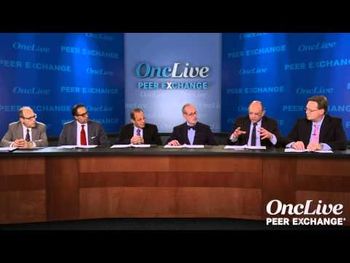
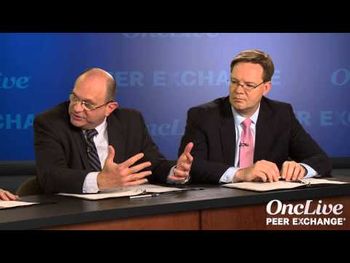

The concept of manipulating the immune system to treat cancer has experienced waxing and waning levels of enthusiasm over decades of clinical investigation.
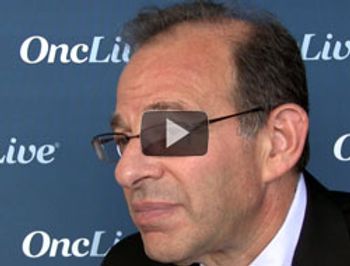
Mario Sznol, MD, professor, Internal Medicine, Yale Cancer Center, discusses a phase I trial that examined the combination of nivolumab and ipilimumab for the treatment of advanced melanoma.

At the recent National Comprehensive Cancer Network (NCCN) 19th Annual Conference, experts discussed this year's updates to the NCCN Clinical Practice Guidelines in Oncology. The meeting also included reviews of NCCN Task Force reports on issues in supportive care. We asked eleven NCCN panel members to select the most significant updates and insights presented at the conference.
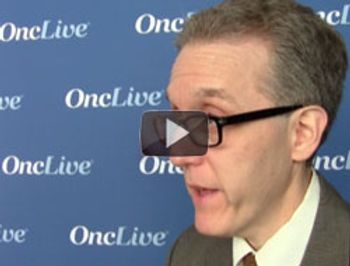
Jedd D. Wolchok, MD, PhD, medical oncologist, Memorial Sloan Kettering Cancer Center, Giant of Cancer Care, discusses the initial efficacy and safety results from the EORTC 18071 phase III trial, which looked at ipilimumab versus placebo after complete resection of stage III melanoma.

Long-term follow-up results demonstrated nearly doubled median OS with the combination of ipilimumab and nivolumab compared with either agent alone.

The intratumoral injection talimogene laherparepvec demonstrated promise in combinations and utility as a monotherapy in certain subsets of patients with unresectable melanoma.

The anti-PD 1 checkpoint inhibitor, pembrolizumab, continues to deliver impressive results in patients with advanced melanoma-producing long-lasting responses and improved overall survival, regardless of whether patients have been previously treated with ipilimumab.

The immunotherapy drug ipilimumab reduced the relative risk of cancer recurrence in the adjuvant setting by 25% compared to placebo for patients with high-risk, lymph-node positive melanoma.
Robert H. I. Andtbacka, MD, CM, from the Huntsman Cancer Institute, discusses OS findings from the phase III OPTiM study that explored T-VEC in patients with unresectable melanoma.
Lawrence Fong, MD, from the University of California, San Francisco, discusses the systemic antitumor effect and clinical response in a phase II trial of intratumoral electroporation of plasmid interleukin-12 in patients with advanced melanoma.

Study raises concern about surgical "margins" for acral melanoma tumors, known to target the darker skins of Asians, African-Americans and Hispanics
Anna C. Pavlick, DO, associate professor, Hematology and Medical Oncology, medical director, Clinical Trials Office, Perlmutter Cancer Center at NYU Langone, discusses a phase II trial exploring low-dose cyclophosphamide and ipilimumab in metastatic melanoma.
Jason J. Luke, MD, instructor, Department of Medicine, Harvard School of Medicine, staff physician, medical oncologist- melanoma, Dana-Farber Cancer Institute, discusses the controversy behind the COMBI-d trial results.

Keith T. Flaherty, MD, discusses upcoming combination therapies being explored in melanoma, specifically those involving CDK4/6, BRAF/MEK, immune checkpoints, and other novel approaches.
Steven A. Rosenberg, MD, PhD, Chief of Surgery at the National Cancer Institute, discusses the curative potential of immunotherapy for patients with cancer.

The combination of the BRAF inhibitor vemurafenib with the investigational MEK inhibitor cobimetinib was safe and effective in treatment-naive patients with BRAFV600 mutation-positive metastatic melanoma.
The FDA has assigned a priority review designation to the PD-1 inhibitor pembrolizumab (MK-3475) as a treatment for patients with unresectable or metastatic melanoma following progression on ipilimumab.
A novel immunotherapeutic known as IMCgp100 induced clinical responses with manageable toxicity in patients with advanced melanoma

A 10-year follow-up study of regional melanoma staging strategies found that patients who underwent sentinel-node biopsies had significantly greater disease-free survival rates (DFSRs) compared with patients monitored through nodal observation.
Advertisement
Advertisement
Trending on OncLive
1
FDA Approves Atezolizumab Plus Chemo for Stage III dMMR Colon Cancer
2
VIR-5500 Receives FDA Fast Track Designation in mCRPC
3
China’s NMPA Approves Adjuvant T-DXd for HER2+ Early Breast Cancer With Residual Invasive Disease
4
Individualized Neoantigen Vaccine Elicits Durable T-Cell Responses in Resected HPV– HNSCC
5