





Melanoma & Skin Cancer
Latest News
Advertisement
Latest Videos


































































Advertisement
More News

Jeffrey S. Weber, MD, PhD, specializes in cancer immunotherapy and has been involved in numerous trials of clinical drug development, vaccines, and studies on autoimmunity and melanoma.

Rajni Kannan discusses the importance patient education or managing the side effects associated ipilimumab and vemurafenib in metastatic melanoma.

Though located far downstream of the extracellular trigger that initiates its signaling pathway, the MEK protein is no less significant a player in the cascade of events that promotes key cellular processes.

Antoni Ribas, MD, from the UCLA Jonsson Comprehensive Cancer Center, discusses a phase I/II trial combining vemurafenib and ipilimumab for metastatic melanoma.
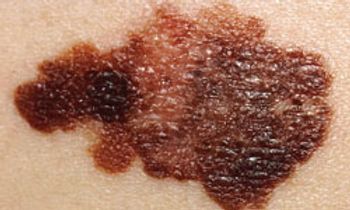
The incidence of melanoma, the deadliest of all skin cancers, is quickly rising, and the disease is responsible for more than 8000 deaths each year.
Nearly twice as many patients with metastatic melanoma who received a combination of ipilimumab and dacarbazine were alive after four years, suggesting that ipilimumab has long-term survival benefits.

Combining the new drugs dabrafenib and trametinib provided a clinically meaningful improvement in patients with melanoma that had BRAF V600 mutations.

Concurrent mutations in MEK1 and BRAF genes do not confer resistance to BRAF inhibitors in advanced melanoma, contrary to what investigators had expected.

The oral hedgehog pathway inhibitor vismodegib is effective for both the prevention and treatment of basal-cell carcinoma in patients with the rare disorder known as basal-cell nevus syndrome.

Dr. Aleksandar Sekulic, from the Mayo Clinic in Arizona, on the Hedgehog Pathway Inhibitor Vismodegib for Basal Cell Carcinoma.
Drugs that target the programmed death-1 pathway hold considerable promise for the treatment of patients with melanoma, particularly in integrating the agents into the sequence of therapy.

Dr. Antoni Ribas, from UCLA Jonsson Comprehensive Cancer Center, on the Benefits of MAPK Inhibition With Dabrafenib and Trametinib

GlaxoSmithKline is seeking the FDA's approval for single-agent use of dabrafenib and trametinib, two targeted therapies for the treatment of patients with metastatic melanoma who harbor BRAF V600 gene mutations.
It is difficult to overstate the excitement surrounding the development of two new effective therapeutic strategies in the management of metastatic melanoma.

Field-directed treatment with the investigational topical agent ingenol mebutate has been shown to be effective for actinic keratoses on the head and body.

Dr. Mark Kris, from Memorial Sloan-Kettering Cancer Center, on the Combination of Molecularly Targeted Therapies.

Dr. Steven Grunberg, from the Vermont Cancer Center, Describes the 2012 Multinational Association of Supportive Care in Cancer Symposium.
Immunotherapy is maintaining its momentum in clinical development programs, with explorations under way in many tumor types, including breast and lung cancers previously considered poor candidates for such modalities.

Dr. Axel Hauschild, from University Hospital, Schleswig-Holstein, Germany, Discusses the BREAK-3 Trial That Investigated the BRAF Inhibitor Dabrafenib.

Dr. Suzanne Topalian, from the Johns Hopkins University School of Medicine, on the PD-1 Targeted Immunotherapy BMS-936558.

Kathleen Madden, from NYU Langone Medical Center, on the Importance Educating Patients About Ipilimumab's Side Effects.

Dr. Julie Brahmer, from the Sidney Kimmel Comprehensive Cancer Center, on the PD-1 Immunotherapy BMS-93655 Clinical Trial

Trametinib and dabrafenib delayed disease progression and showed a trend toward improved survival in patients with advanced melanoma.

Dr. Caroline Robert, from the Institute Gustave Roussy in Paris, France, Discusses the MEK Inhibitor, Trametinib, METRIC Trial Results.

Dr. Suzanne Topalian, from Johns Hopkins University School of Medicine, on the PD-1 Targeted Therapy BMS-936558
Advertisement
Advertisement
Trending on OncLive
1
FDA Approves Atezolizumab Plus Chemo for Stage III dMMR Colon Cancer
2
VIR-5500 Receives FDA Fast Track Designation in mCRPC
3
China’s NMPA Approves Adjuvant T-DXd for HER2+ Early Breast Cancer With Residual Invasive Disease
4
Individualized Neoantigen Vaccine Elicits Durable T-Cell Responses in Resected HPV– HNSCC
5