



Melanoma & Skin Cancer
Latest News
Advertisement
Latest Videos
































































Advertisement
More News
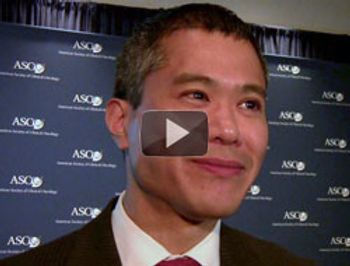
Richard D. Carvajal, MD, medical oncologist, Memorial Sloan-Kettering Cancer Center, discusses the background of the investigation of selumetinib for advanced uveal melanoma.
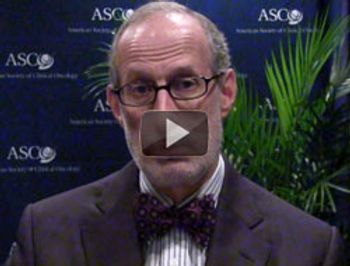
Jeffrey S. Weber, MD, PhD, from the Moffitt Cancer Center and Research Institute, discusses sequencing immunologic and targeted therapies in patients with advanced BRAF-mutated melanoma.
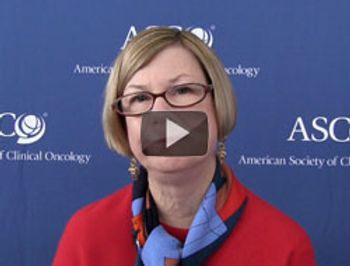
Sandra Swain, MD, medical director of the Washington Cancer Institute at MedStar Washington Hospital Center, highlights information presented at the 2013 American Society of Clinical Oncology (ASCO) Meeting.
Lynn M. Schuchter, MD, Chief, Hematology Oncology, Department of Medicine, University of Pennsylvania, discusses the treatment of advanced melanoma.
Using an intermittent dosing strategy with vemurafenib, instead of continuous dosing, has the potential to overcome the development of resistance in patients with melanoma treated with the drug.
Jeffrey S. Weber, MD, PhD, from the Moffitt Cancer Center and Research Institute, describes a single institution phase I/II trial exploring the anti-PD-1 antibody nivolumab in combination with a peptide vaccine for patients with unresectable melanoma.
Jedd D. Wolchok, MD, PhD, from the Memorial Sloan-Kettering Cancer Center, discusses a phase I trial exploring the combination of the anti-PD-1 antibody nivolumab and ipilimumab, a CTLA-4 inhibitor, for patients with advanced melanoma.

Yvonne M. Saenger, MD, Assistant Professor in Medicine and Dermatology, Hematology and Medical Oncology, Mount Sinai School of Medicine, discusses the idea of combining targeted and immune agents.
Robert Andtbacka, MD, from the Huntsman Cancer Institute, provides an overview of the phase III OPTiM trial that explored treatment with talimogene laherparepvecin patients with advanced melanoma.
Drugs currently approved by the FDA for treatment of melanoma include aldesleukin, dabrafenib, dacarbazine, ipilimumab, trametinib, and vemurafenib. This article will explore pharmacologic agents currently being investigated for the treatment of melanoma.
Antoni Ribas, MD, PhD, from UCLA's Jonsson Comprehensive Cancer Center, discusses preliminary results of an ongoing trial investigating the anti-PD-1 antibody lambrolizumab in patients with advanced melanoma.

Adding the white blood cell booster granulocyte-macrophage colony-stimulating factor to the immunotherapy ipilimumab extended survival in patients with metastatic melanoma when compared with ipilimumab alone and may be a safer alternative than monotherapy.

Nivolumab has demonstrated an overall objective response rate of 31% with a median duration of two years in patients with advanced melanoma.
Mario Sznol, MD, from the Yale Cancer Center, discusses the long-term follow-up results from an expanded phase I study investigating the anti-PD-1 drug nivolumab in patients with advanced melanoma.
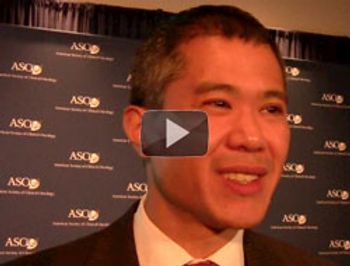
Richard D. Carvajal, MD, a medical oncologist at Memorial Sloan-Kettering Cancer Center, describes the success of MEK inhibition in patients with advanced uveal melanoma using the agent selumetinib.

The FDA approved both dabrafenib and trametinib for the treatment of patients with metastatic or unresectable melanoma, as well as a companion diagnostic to properly identify the patients exhibiting the mutations that are targeted by these agents.
Arta Monjazeb, MD, and Michael Kent, DVM, from the UC Davis Comprehensive Cancer Center, describe an early phase trial exploring the potential of translating successful treatment from dogs to humans with advanced melanoma or sarcoma.

Combining the checkpoint antibodies ipilimumab and nivolumab led to deep tumor regression in approximately one-third of patients with advanced melanoma.

An antibody that targets PD-L1 to unleash the body's immune system has demonstrated a 21% response rate in a phase I study of patients with multiple solid tumors, setting the stage for an advance in immunotherapy with broad implications for treatment.

Lambrolizumab, an investigational antibody designed to target the programmed death-1 (PD-1) pathway in patients with melanoma, received a breakthrough therapy designation from the FDA after promising results from a small single-arm study.
Patients diagnosed with melanoma are typically affected psychologically. Researchers summarized health-related quality of life (HRQOL) during the 12-week ipilimumab induction period in previously treated patients diagnosed with advanced stage III or IV melanoma.
Analysis of the cost-effectiveness of ipilimumab compared with best supportive care in previously treated patients with advanced (unresectable or metastatic) melanoma.
The novel immunotherapy talimogene laherparepvec has become the first oncolytic virus to successfully complete a phase III trial in advanced melanoma.

The FDA approved the radioactive diagnostic imaging agent technetium Tc 99m tilmanocept (Lymphoseek Injection) to identify lymph nodes for potential removal in patients with breast cancer or melanoma.

A new drug screening method revealed that cholesterol-reducing statin drugs used in combination with cyclin-dependent kinase inhibitors might serve as an effective treatment approach for certain types of melanoma.
Advertisement
Advertisement
Trending on OncLive
1
FDA Approves Atezolizumab Plus Chemo for Stage III dMMR Colon Cancer
2
VIR-5500 Receives FDA Fast Track Designation in mCRPC
3
China’s NMPA Approves Adjuvant T-DXd for HER2+ Early Breast Cancer With Residual Invasive Disease
4
Individualized Neoantigen Vaccine Elicits Durable T-Cell Responses in Resected HPV– HNSCC
5