



Melanoma & Skin Cancer
Latest News
Advertisement
Latest Videos































































Advertisement
More News

Although breakthrough successes are generating a renaissance for anticancer immunotherapies, the framework for translating promising research results into clinical practice remains very much under construction.

As melanoma becomes more prevalent and more lethal in the United States, a multidisciplinary approach for treating inoperable in-transit metastases has proved to be a viable and valuable option.

In an interview with OncLive, Jeffrey S. Weber, MD, PhD, from the Moffitt Cancer Center, University of South Florida, Tampa, explored the utilization of molecular and immune-targeted therapies as treatments for patients with advanced melanoma.
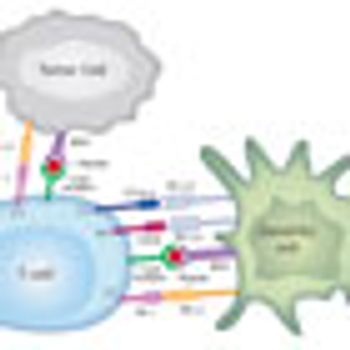
Inhibitory receptors such as anti-cytotoxic T-lymphocyte antigen 4 (CTLA-4) and programmed death 1 (PD-1) expressed on tumor-specific T cells lead to compromised activation and suppressed effector functions such as proliferation, cytokine secretion, and tumor cell lysis.

High-tech eyewear could soon help surgeons remove tumors from patients with breast cancer or melanoma by allowing them to see the margins of tumors more accurately when a dye is used to fluoresce a tumor's borders.

Merck announced the signing of three separate clinical collaboration agreements to evaluate the potential of its investigational anti-PD-1 immunotherapy MK-3475 across multiple tumor types
Immunotherapy has become an increasingly appealing therapeutic strategy for patients with cancer, with many late-stage clinical trials demonstrating overall survival (OS) advantages in melanoma and castrationresistant prostate cancer.
There has been considerable discussion within the oncology literature during the past several years regarding the level of evidence required to consider a new antineoplastic agent an acceptable "standard-of-care" in routine disease management.
The FDA has granted an accelerated approval to the combination of the MEK inhibitor trametinib and the BRAF inhibitor dabrafenib as a treatment for patients with unresectable or metastatic melanoma that harbors a BRAF V600E or V600K mutation.
Harriet Kluger, MD, associate professor of medicine (medical oncology), associate director, Hematology/Oncology Fellowship Program, Yale Cancer Center, discusses the changes and challenges of treating patients with melanoma.

The Malignant Melanoma Program at Wake Forest Baptist Health employs a multidisciplinary approach for the management of patients with all stages of this disease. The goals of the program are centered on unequivocal excellence in all areas of care for patients with malignant melanoma.

The investigational anti-PD-1 immunotherapy MK-3475 has demonstrated an overall survival rate of 81% at one year in patients with advanced melanoma, according to additional data from a phase Ib clinical trial presented at the 10th International Congress of the Society for Melanoma Research in Philadelphia.
Harriet Kluger, MD, associate professor of medicine (medical oncology), associate director, Hematology/Oncology Fellowship Program, Yale Cancer Center, discusses the future for immune therapies in melanoma.
Adjuvant therapy for patients with advanced melanoma and the optimal use of molecular testing are among the most pressing issues facing oncologists who treat patients diagnosed with the disease.

Vernon K. Sondak, MD, chair of the Department of Cutaneous Oncology at Moffitt Cancer Center, discusses the use of ipilimumab in the adjuvant setting for patients with melanoma.
After decades with few available therapies, a flurry of FDA drug approvals has provided oncologists with a variety of options for treating patients with advanced melanoma.
Jeffrey S. Weber, MD, PhD, medical oncologist, Moffitt Cancer Center, discusses the immunologic activities of targeted agents for the treatment of melanoma.

Steven A. Rosenberg, MD, PhD, chief of surgery, National Cancer Institute, professor of surgery, Uniformed Services University of Health Sciences, George Washington University School of Medicine and Health Sciences, accepts the "Giants of Cancer Care" Award for his work in immunotherapy.
Ragini Kudchadkar, MD, assistant professor, medical oncology, Moffitt Cancer Center, discusses the potential for combining therapies for the treatment of melanoma.

Anthony M. Magliocco, MD, chair of pathology, executive director of esoteric labs at Moffitt Cancer Center, discusses the difficulties of analyzing the genome of melanoma tumors.

Molecular testing and novel therapies have revolutionized the management of metastatic melanoma in recent years.
Omid Hamid, MD, chief, translational research and immunotherapy, director, cutaneous oncology and melanoma, The Angeles Clinic and Research Institute, discusses the treatment of melanoma.


Advertisement
Advertisement
Trending on OncLive
1
FDA Approves Atezolizumab Plus Chemo for Stage III dMMR Colon Cancer
2
VIR-5500 Receives FDA Fast Track Designation in mCRPC
3
China’s NMPA Approves Adjuvant T-DXd for HER2+ Early Breast Cancer With Residual Invasive Disease
4
Individualized Neoantigen Vaccine Elicits Durable T-Cell Responses in Resected HPV– HNSCC
5