



Melanoma & Skin Cancer
Latest News

Advertisement
Latest Videos





























































Advertisement
More News
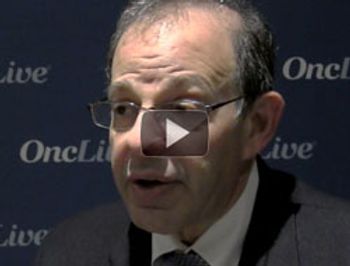
Mario Sznol, MD, professor of medicine (medical oncology), clinical research program leader, Melanoma Program, Yale Cancer Center, discusses how to manage toxicities in treatment of melanoma.

Jedd D. Wolchok, MD, PhD, played an important role in the development of ipilimumab, the first drug to target an immune checkpoint as an anticancer strategy. He was honored in the Melanoma category with a 2014 Giants of Cancer Care® award.

Immunotherapy advances are among the emerging treatment approaches that make it an exciting time for patients with melanoma and their physicians.

One in five Medicare patients with melanoma waits more than 1.5 months after diagnosis to undergo surgery.

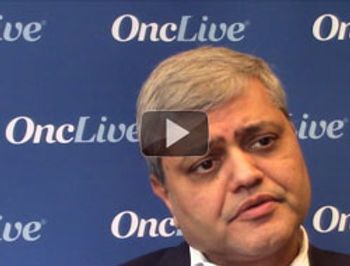
Sanjiv S. Agarwala, MD, Chief of Medical Oncology, Hematology, St. Luke's Cancer Center and Temple University, discusses the differences between cytokines and other types of immunotherapies.
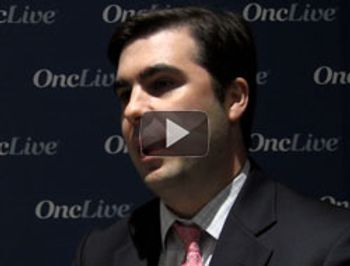
Richard W. Joseph, MD, Department of Hematology/Oncology, Mayo Clinic, discusses some improvements needed in the field of immunotherapy as a treatment for melanoma.

A trial comparing frontline pembrolizumab with ipilimumab for the treatment of advanced melanoma has met its progression-free survival and overall survival endpoints

OncLive interviewed Jason J. Luke, MD, who discussed the clinical implications of immunotherapies in melanoma, with optimal sequencing and combinations emerging as the most pressing questions that researchers are seeking to answer in ongoing clinical trials.
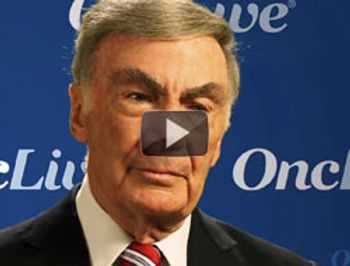
Former ABC News reporter Sam Donaldson, a melanoma survivor, describes the need for optimistic but realistic doctors.
Jeffrey Weber, MD, PhD, a senior member at the Moffitt Cancer Center, discusses the significance of molecular testing for patients with melanoma and when testing should occur.

Patients with NRAS-mutated melanoma had better responses and improved treatment outcomes compared with those who did not harbor the mutation, according to a recent retrospective study.

In an interview with OncLive, Ahmad A. Tarhini, MD, PhD, discussed the benefits and challenges of ipilimumab and other immunotherapies and how they could change the adjuvant treatment paradigm for melanoma.
Jason J. Luke, MD, FACP, assistant professor of medicine, Melanoma and Developmental Therapeutics Clinic, University of Chicago Medicine, discusses PD-1 inhibitors nivolumab and pembrolizumab as frontline immunotherapy choices for patients with melanoma.
A 10-year collaboration between scientists at The Wistar Institute and the University of Pennsylvania has recently resulted in the emergence of an exciting new target for cancer therapy, heat shock protein 70, that could be helpful in treating patients with melanoma.
Kevin B. Kim, MD, medical oncology, California Pacific Medical Center, discusses how treatment outcomes in melanoma have evolved over the last few years.
The FDA has accepted a supplemental Biologics License Application for ipilimumab for the adjuvant treatment of patients with stage III melanoma at high risk of recurrence following complete resection.

GlaxoSmithKline (GSK) and Novartis have announced that a multi-billion-dollar, 3-pronged deal to exchange and share various operations has been completed.


In an analysis of phase III data, the 5-year survival rate with ipilimumab plus dacarbazine in patients with advanced melanoma was 18.2% versus 8.8% with dacarbazine alone.

In an interview with OncLive, Suzanne L. Topalian, MD, director of the Melanoma Program at the Johns Hopkins Sidney Kimmel Comprehensive Cancer Center, discussed the rapid advance of nivolumab and potential next-steps.

Advertisement
Advertisement
Trending on OncLive
1
FDA Approves Atezolizumab Plus Chemo for Stage III dMMR Colon Cancer
2
VIR-5500 Receives FDA Fast Track Designation in mCRPC
3
China’s NMPA Approves Adjuvant T-DXd for HER2+ Early Breast Cancer With Residual Invasive Disease
4
Individualized Neoantigen Vaccine Elicits Durable T-Cell Responses in Resected HPV– HNSCC
5