


















































A panel of hematology cancer experts discuss the current treatment landscape and novel emerging therapies for patients with myelofibrosis.

Surgical Complications Unrelated to Timing of Neoadjuvant Chemotherapy in Lower-Extremity Sarcomas

Sequential Combo of Regorafenib and Nivolumab Shows Manageable Safety in Sorafenib-Pretreated HCC
A panel of hematology cancer experts discuss the current treatment landscape and novel emerging therapies for patients with myelofibrosis.
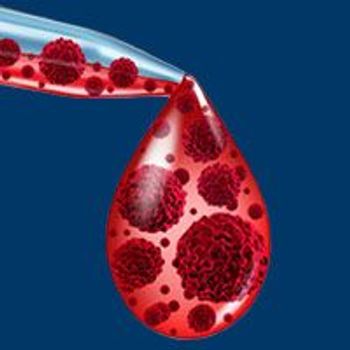
A single-center study at the Dana-Farber Cancer Institute/Brigham and Women’s Hospital assessed the real-world experience of 20 patients treated with idecabtagene vicleucel with relapsed and refractory multiple myeloma who had exhausted at least 4 lines of prior therapy.
Amputation is an independent predictor of poor outcomes among patients with high-grade bone sarcoma of lower extremity, and non-private insurance was found to be linked with increased likelihood of amputation and an advanced stage at presentation in this patient population.

Five years since the first FDA approval of CAR T-cell therapy in relapsed/refractory lymphoma, there is still much to learn about how to optimize its use, according to Sattva S. Neelapu, MD.
Research published in 2022 has advanced our understanding of the effect of neoadjuvant therapy on organ preservation for patients with locally advanced rectal cancer.

DNA damage homologous recombination repair genotypic variants are not created equal.
Findings of a retrospective study demonstrated a high dosing compliance with daratumumab compared with approved indications for patients with multiple myeloma in the real-world setting.

Fixed-duration bendamustine plus rituximab was effective in patients with previously untreated Waldenström macroglobulinemia, regardless of MYD88L265P mutation status, but the presence of the CXCR4WHIM mutation may be associated with resistance to the combination.

The FDA has approved durvalumab (Imfinzi) in combination with gemcitabine and cisplatin in adult patients with locally advanced or metastatic biliary tract cancers.

Sacituzumab govitecan displayed encouraging progression-free survival rates compared with single-agent chemotherapy in patients with locally recurrent inoperable or metastatic hormone receptor–positive, HER2-negative breast cancer, according to findings from the phase 3 TROPiCS-02 study.

Adana A.M. Llanos, PhD, MPH, discusses key research on the social and biological factors that influence disparities in breast cancer, how these factors work in tandem to affect patient outcomes, and how this knowledge can be deployed in the real world.

Michael Dickinson, MBBS, expands on data from a phase 2 dose-expansion study of glofitamab in heavily pretreated, highly refractory large B-cell lymphoma, explains the effect bispecific antibodies could have on treatment, and highlights other research efforts surrounding glofitamab-based therapies.
A dramatic presentation at the 2022 American Society of Clinical Oncology Annual Meeting changed treatment standards seemingly overnight for women with previously treated metastatic HER2-low breast cancer. However, fundamental questions remain.

Press Release
Researchers at Fox Chase Cancer Center have discovered that the drug efflux pump MDR1 promotes resistance to a promising new class of drugs called PROTACS—proteolysis-targeting chimeras.

For the first time, the American Society for Radiation Oncology has issued recommendations on the use of radiation therapy to treat patients with IDH-mutant grade 2 and grade 3 diffuse glioma, including oligodendroglioma and astrocytoma.

The first-in-class dual PIM/FLT3 kinase inhibitor, SEL24/MEN1703, showcased encouraging efficacy and a tolerable safety profile in patients with acute myeloid leukemia whose tumors harbor a IDH1/2 mutation.

Shaji Kumar, MD, and Jonathan Kaufman, MD, review the advances with translocations such as t(11;14), treating practices, and emerging markers in multiple myeloma.

Erlotinib continued to elicit a disease-free survival and overall survival benefit vs vinorelbine/cisplatin chemotherapy in patients with EGFR-positive non–small cell lung cancer, according to updated OS data and an exploratory analysis from the phase 2 EVAN trial.
Belantamab mafodotin monotherapy demonstrated anticancer activity with a tolerable safety profile in heavily pretreated patients with relapsed or refractory multiple myeloma.

Press Release
New treatments, particularly immunotherapies, are providing durable benefits for patients with hepatocellular carcinoma.

Chemotherapy prior to transanal excision surgery demonstrated favorable responses that led to increased organ preservation rates among patients with early rectal cancer, according to findings from the phase 2 NEO trial.

Daratumumab combinations elicited significant progression-free survival, overall survival, overall response rate, and minimal residual disease–negativity benefits vs control in pretreated patients with relapsed or refractory multiple myeloma across clinically relevant subgroups.

Although cutaneous T-cell lymphoma, a group of non-Hodgkin T-cell lymphomas, remains a rare disease, incidence has increased steadily since the 1970s.

The Hong Kong Special Administrative Region’s Department of Health has accepted for review a biologics license application seeking the approval of tafasitamab plus lenalidomide in patients with relapsed or refractory diffuse large B-cell lymphoma.
First-line treatment with pivekimab sunirine generated responses with favorable tolerability in patients with blastic plasmacytoid dendritic cell neoplasm, according to data from the phase 2 CADENZA trial.