




































































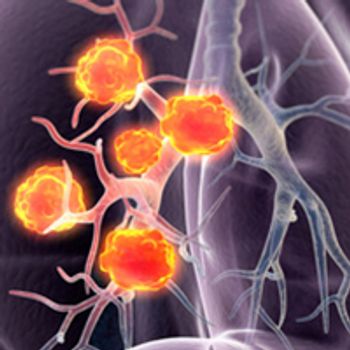
Sintilimab plus pemetrexed and cisplatin significantly improved progression-free survival vs pemetrexed and cisplatin alone in patients with advanced, EGFR-mutant non–small cell lung cancer who progressed on prior EGFR TKI therapy.
Sintilimab plus pemetrexed and cisplatin significantly improved progression-free survival vs pemetrexed and cisplatin alone in patients with advanced, EGFR-mutant non–small cell lung cancer who progressed on prior EGFR TKI therapy.
Press Release
Jefferson Health’s Sidney Kimmel Cancer Center welcomes transdisciplinary population health researcher Terry Hyslop, PhD, as Co-leader of the Cancer Risk and Control Program.
Investigators hope to add RLY-4008, the first highly selective FGFR2 inhibitor, to the growing arsenal of treatment options for patients with cholangiocarcinoma.
Treatment with adjuvant capecitabine following concurrent chemoradiotherapy resulted in superior failure-free survival compared with observation and CRT for patients with locally advanced nasopharyngeal carcinoma carrying at least 2 high risk factors.

Single-agent cemiplimab demonstrated safety and efficacy in patients with locally advanced or metastatic cutaneous squamous cell carcinoma who comprised group 6 of the phase 2 EMPOWER-CSCC-1 trial that was in line with what was previously reported in groups 1, 2, and 3 of the study.
Yuan Yuan, MD, PhD, discusses the role immune checkpoint inhibitors have played in the treatment of triple-negative breast cancer, ongoing efforts to investigate the role of immunotherapy in breast cancer, and the work Cedars-Sinai is conducting to promote breast cancer awareness.
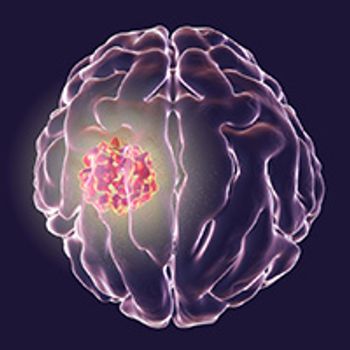
Bevacizumab along with reirradiation extended progression-free survival compared with bevacizumab alone for patients with recurrent glioblastoma multiforme.
Megan Kruse, MD, discusses the evolving treatment landscape in HR-positive, HER2-negative breast cancer, how the approval of fam-trastuzumab deruxtecan-nxki has affected sequencing choices in HER2-positive disease, and the importance of addressing racial disparities in breast cancer care.
The combination of cediranib and olaparib significantly improved radiographic progression-free survival compared with olaparib monotherapy in patients with metastatic castration-resistant prostate cancer.

Press Release
Rare skin cancer is focus of work by Fred Hutch scientist who will receive support honoring runner Gabe Grunewald.
The FDA has accepted and granted priority review to the new drug application for quizartinib in combination with standard cytarabine and anthracycline induction and standard cytarabine consolidation chemotherapy, and as continuation monotherapy following consolidation, for the treatment of newly diagnosed adult patients with FLT3-ITD–positive acute myeloid leukemia.
Bridget A. Oppong, MD, discussed the importance of recognizing and addressing gaps in outcomes between patients with breast cancer in different racial groups. She also addressed the need for better advocacy for Black patients and advocated for improved screening guidelines to close the gap in racial disparities in breast cancer care.
The FDA has approved durvalumab (Imfinzi) in combination with tremelimumab (Imjudo) for the treatment of adult patients with unresectable hepatocellular carcinoma.
Xevinapant plus chemoradiotherapy more than halved the risk of death vs placebo plus chemoradiotherapy without increasing toxicity in patients with unresectable, locally advanced head and neck squamous cell carcinoma.

The China National Medical Products Administration has granted a breakthrough therapy designation to ivonescimab for use in combination with chemotherapy in patients with EGFR-mutated advanced non–small cell lung cancer in whom prior treatment with an EGFR TKI has failed.
Kathleen N. Moore, MD, MS, discusses the incidence of TSC1 and TSC2 mutations in different gynecologic tumor types, the trial design and eligibility criteria for the PRECISION 1 study, and the importance of genetic testing to identify these mutations and treat them early.
The combination of encorafenib and binimetinib led to sustained improvements in progression-free survival and overall survival, without new safety signals in patients with BRAF V600–mutant melanoma, according to 5-year follow-up of the phase 3 COLUMBUS trial.
Immunotherapy and targeted therapy combinations containing BRAF and MEK inhibitors have carved out roles in different settings of melanoma, which has given clinicians different options for treatment sequencing.

The Florida Department of Health has awarded Nagaraj Nagathihalli, PhD, an associate professor at Sylvester Comprehensive Cancer Center at the University of Miami Miller School of Medicine, a $583,200 grant to study tobacco risk, tumor progression, and therapeutic options for pancreatic cancer.
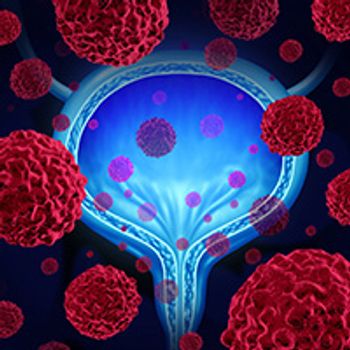
Chemoresection with mitomycin C, a nonsurgical treatment modality, significantly reduced the need for transurethral resection of bladder tumors or office biopsy and tumor fulguration following recurrence in patients with recurrent nonmuscle invasive bladder cancer.
A new focus of research has reconsidered the mechanisms in regulating transcription as a novel target for advanced pancreatic ductal adenocarcinoma.

Stacey A. Cohen, MD, discusses the results of real-world analysis of patients with resected stage I-III colorectal cancer, how circulating tumor DNA status correlated with recurrence rates, and how these real-world data compared with previous observational studies.
Paul A. DiSilvestro, MD, discussed the pivotal SOLO-1 trial of maintenance olaparib in patients with BRCA-mutated ovarian cancer, updated survival data with the agent in this population, and the next steps for future research.
Rana R. McKay, MD, discusses the evolution of frontline treatment options for metastatic RCC, and the key clinical trials that have shifted the treatment paradigms in metastatic castration-resistant prostate cancer, nonmetastatic castration-resistant prostate cancer, and advanced prostate cancer.
Press Release
Lucio Gordan, MD, chief medical officer of Therapeutics & Analytics for Florida Cancer Specialists & Research Institute, is a featured speaker at the Illumina Genomics Forum in San Diego.