










































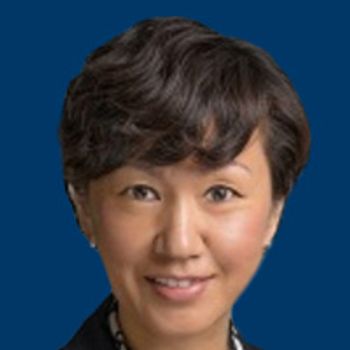
Hye Sook Chon, MD, discusses the progress of maintenance therapy in ovarian cancer.

Is Neoadjuvant Chemo Becoming Standard of Care for Advanced Ovarian Cancer?
Hye Sook Chon, MD, discusses the progress of maintenance therapy in ovarian cancer.

The FDA granted a breakthrough therapy designation to the combination of bempegaldesleukin (NKTR-214) and nivolumab (Opdivo) for the treatment of patients with previously untreated unresectable or metastatic melanoma.

Konstantinos Arnaoutakis, MD, discusses pivotal updates in stage III disease, immunotherapy combinations in advanced non–small cell lung cancer, and advances in EGFR- and ALK-mutated lung cancer.

Aditya Bardia, MD, MPH, discusses the recent momentum in metastatic triple-negative breast cancer treatment.

Adding the CDK4/6 inhibitor ribociclib to fulvestrant significantly improved overall survival as a first- or second-line treatment for postmenopausal women with hormone receptor–positive/HER2-negative breast cancer, according to findings from a preplanned interim analysis of the phase III MONALEESA-3 trial.
The FDA has approved pembrolizumab for the treatment of patients with recurrent locally advanced or metastatic squamous cell carcinoma of the esophagus whose tumors express PD-L1 (combined positive score ≥10) as determined by an FDA-approved test, with disease progression after ≥1 prior lines of systemic therapy.
The FDA has approved darolutamide for the treatment of patients with nonmetastatic castration-resistant prostate cancer.

David Samuel Dicapua Siegel, MD, highlights key research in multiple myeloma and the renewed focus on improving quality of life.

Jane Meisel, MD, provides insight on how genomic assays are helping to individualize treatment plans and strategies to determine the optimal duration of endocrine therapy.

With its long-standing commitment to patients, the designation makes City of Hope the highest ranked cancer hospital in the West.

Matthew Steliga, MD, discusses key surgical updates in lung cancer and the shifting role of surgery with the emergence of novel therapies.

Abemaciclib plus fulvestrant improved overall survival in patients with hormone receptor–positive, HER2-negative breast cancer.
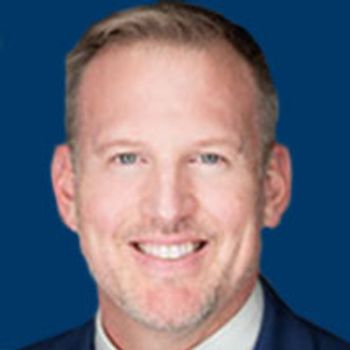
Robert M. Wenham, MD, discusses frontline management strategies for patients with newly diagnosed advanced ovarian cancer as well as the complexities of maintenance therapy.

C. Ola Landgren, MD, PhD, shares his expert insight on recent shifts in multiple myeloma management.
Sylvester Comprehensive Cancer Center, part of the University of Miami Leonard M. Miller School of Medicine, has received the prestigious NCI designation from the National Cancer Institute.

The European Medicines Agency’s Committee for Medicinal Products for Human Use has granted a positive opinion to the triplet regimen of atezolizumab (Tecentriq), carboplatin, and nab-paclitaxel (Abraxane) for the first-line treatment of patients with advanced, nonsquamous non–small cell lung cancer who do not have EGFR or ALK molecular aberrations.
Financial pledge from Pelotonia represents one of the largest gifts ever to The Ohio State University and honors the 2,265 riders who participated in the inaugural ride in 2009.
PD-L1–positive natural killer cells may prove to be another important immune effector cell for checkpoint inhibitor-based cancer immunotherapy.

Kenneth C. Anderson, MD, discusses available and emerging frontline treatment regimens for patients with newly diagnosed multiple myeloma and evaluated the utility of minimal residual disease in the paradigm.
The European Medicines Agency's Committee for Medicinal Products for Human Use has recommended approval of pembrolizumab (Keytruda) in combination with axitinib (Inlyta) for the frontline treatment of patients with advanced renal cell carcinoma.
The European Medicines Agency’s Committee for Medicinal Products for Human Use has recommended approval of atezolizumab in combination with carboplatin and etoposide for the frontline treatment of patients with extensive-stage small cell lung cancer.

Pembrolizumab in combination with chemotherapy led to a statistically significant improvement in pathological complete response rates compared with placebo plus chemotherapy in the neoadjuvant phase of a neoadjuvant/adjuvant treatment regimen in patients with triple-negative breast cancer, meeting one of the dual primary endpoints of the phase III KEYNOTE-522 trial.

The European Medicines Agency's Committee for Medicinal Products for Human Use has recommended approving elotuzumab (Empliciti) for use in combination with pomalidomide (Pomalyst) and low-dose dexamethasone for the treatment of patients with relapsed/refractory multiple myeloma following 2 or more prior therapies, including lenalidomide (Revlimid) and a proteasome inhibitor.

The European Medicines Agency’s Committee for Medicinal Products for Human Use has recommended approval of larotrectinib for the treatment of adult and pediatric patients with solid tumors that have an NTRK gene fusion without a known acquired resistance mutation, are metastatic or where surgical resection is likely to result in severe morbidity, and have no satisfactory alternative treatments or that have progressed following treatment.

The European Medicines Agency's Committee for Medicinal Products for Human Use has backed approval of TAS-102 for the treatment of adult patients with metastatic gastric cancer, including adenocarcinoma of the gastroesophageal junction, following treatment with at least 2 prior systemic regimens for advanced disease.