









































The CAR T-Cell therapy MB-102 has been granted an Orphan Drug Designation by the FDA, according to Mustang Bio, Inc, the manufacturer of the investigational treatment.
The CAR T-Cell therapy MB-102 has been granted an Orphan Drug Designation by the FDA, according to Mustang Bio, Inc, the manufacturer of the investigational treatment.
Celestia S. Higano, MD, FACP, shares insight on key trials in prostate cancer.

A new molecular mechanism discovered by UT Southwestern researchers indicates that drugs currently used to treat less than 10 percent of breast cancer patients could have broader effectiveness in treating all cancers where the drugs are used, including ovarian and prostate cancers.
Richard T. Penson, MD, MRCP, discusses novel strategies with PARP inhibitors and the use of biomarkers to create more personalized treatments for patients with platinum-sensitive ovarian cancer.
Elias Jabbour, MD, highlights the evolving armamentarium and next steps in the treatment paradigm for acute myeloid leukemia.
Paul G. Richardson, MD, reviews the results of the phase III ICARIA-MM trial as well as preliminary data regarding melflufen in relapsed/refractory multiple myeloma.
Mollie Meek, MD, highlights key lung cancer screening trials, offered insight into how to successfully implement an effective program, and stressed that collaboration is critical in order to provide the best patient care.
Richard S. Finn, MD, discusses results from the KEYNOTE-240 trial and explained how they are still clinically meaningful for patients with hepatocellular carcinoma.
The FDA has approved PF-05280586, a biosimilar for rituximab, for the treatment of adult patients with CD20-positive B-cell non-Hodgkin lymphoma as a single agent or in combination with chemotherapy, or for patients with CD20-positive chronic lymphocytic leukemia in combination with chemotherapy.
David Polsky, MD, PhD, discusses findings from an analysis in patients with BRAF-mutant, unresectable, metastatic melanoma, as well as the next steps for validating these findings and potentially using circulating tumor DNA to help inform treatment decisions.
The FDA has granted a breakthrough therapy designation to the combination of pembrolizumab and lenvatinib for the first-line treatment of patients with advanced unresectable hepatocellular carcinoma that is not amenable to locoregional therapy.
Stephen V. Liu, MD, discusses the impact of immunotherapy in the first-, second-, and third-line settings of small cell lung cancer, as well as novel agents and targets on the horizon.
The FDA has updated the label for durvalumab for patients with unresectable, stage III non–small cell lung cancer whose disease has not progressed following concurrent platinum-based chemoradiation to include overall survival data from the phase III PACIFIC trial.
David F. McDermott, MD, provides insight on pembrolizumab in non-clear cell renal cell carcinoma (RCC) and the next steps for research in the overall RCC paradigm.
Angeles Alvarez Secord, MD, discusses the available treatment modalities for patients with platinum-sensitive and -resistant recurrent ovarian cancer.
Michel Velez, MD, provides perspective on the clinical experience with neratinib in patients with early-stage HER2-positive breast cancer as well as promising data that may lead to an indication in the metastatic setting.
Yuqin Song, MD, PhD, discusses the clinical activity with zanubrutinib in patients with relapsed/refractory mantle cell lymphoma.
Keerthi Gogineni, MD, MSHP, discusses several trials in the breast cancer field, specifically looking at de-escalation therapies.
Claud M. Grigg Jr, MD, highlights data from pivotal trials with combinations in both clear cell and non-clear cell renal cell carcinoma, as well as challenges with identifying biomarkers for immunotherapy.
Jubilee Brown, MD, discusses the importance of molecular testing immediately after an ovarian cancer diagnosis and how molecular testing will shape the field of ovarian cancer.

The combination of regorafenib and nivolumab will be compared with regorafenib alone in a phase III trial of patients with microsatellite stable colorectal cancer, following encouraging phase Ib findings of the REGONIVO study.
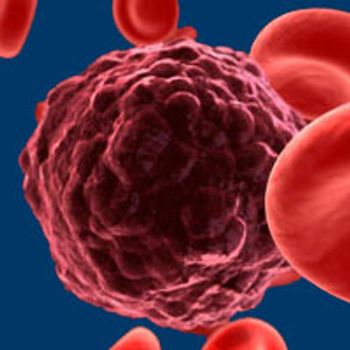
Monocytic myeloid-derived suppressor cells increased with ibrutinib treatment in a preclinical model of chronic lymphocytic leukemia, suggesting a role for ITK inhibition in this cell population.
Brian Van Tine, MD, highlights the latest developments in soft tissue sarcoma, including data from key trials and further research being conducted in the rare tumor field.
Matthew Powell, MD, discusses the trials that are generating excitement for combination immunotherapy as well as the impact of PARP inhibitors in the treatment of patients with ovarian cancer.

Rory McCulloch, MD, discusses the results of a retrospective analysis looking at rituximab, bendamustine, and cytarabine in patients with mantle cell lymphoma who have relapsed on a BTK inhibitor.