









































Noa Biran, MD, discusses treatment breakthroughs and emerging advances in the field of multiple myeloma.
Noa Biran, MD, discusses treatment breakthroughs and emerging advances in the field of multiple myeloma.

Edouard J. Trabulsi, MD, discusses emerging multimodal treatment approaches for patients with locally advanced prostate cancer.

Stuart L. Goldberg, MD, discusses the management of patients with acute myeloid leukemia as well as those with myelodysplastic syndrome.
Tanios Bekaii-Saab, MD, discusses emerging treatments offering hope to patients with pancreatic cancer.

Adding trastuzumab to chemotherapy increased progression-free survival for patients with advanced HER2/neu-positive uterine serous carcinoma.
Bert H. O’Neil, MD, discusses the role of molecular testing throughout GI cancers and highlights the current and developing treatment landscape for patients with colorectal cancer.
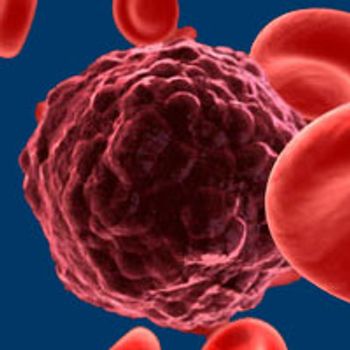
Findings from a small, retrospective study showed that external beam radiation therapy induced an overall response rate of 86% in patients with relapsed/refractory follicular lymphoma.

Manish A. Shah, MD, discusses the advancements being made in the treatment of patients with advanced gastric and gastroesophageal junction cancer.

Nivolumab induced an overall response rate of 20.5% in patients with recurrent or metastatic nasopharyngeal carcinoma (NPC).

Jared Weiss, MD, shares his insight on challenges in the field of non–small cell lung cancer, such as optimal sequencing.

William K. Kelly, DO, discusses the evolving imaging techniques and emerging therapeutic approaches in prostate cancer.

The FDA has approved blinatumomab for the treatment of patients with minimal residual disease–positive B-cell precursor acute lymphoblastic leukemia.
Shubham Pant, MD, shares his insight on the future direction of the treatment landscape of colorectal cancer.
Jason M. Long, MD, discusses the latest developments with minimally invasive surgical approaches in the treatment of patients with non–small cell lung cancer (NSCLC).

Robert B. Den, MD, discusses bone-targeting agents in prostate cancer and the potential future of combinations.

M. Patricia Rivera, MD, discusses the potential of lung cancer screening, challenges in its adoption, and methods to enhance its efficacy.
Edward S. Kim, MD, recaps the findings from the PACIFIC study of durvalumab and discussed the treatment of patients with stage III NSCLC.

Reshma Mahtani, DO, discusses the tolerability of CDK 4/6 inhibitors for the treatment of patients with metastatic breast cancer.

Veda Giri, MD, discusses the developing role of genetic testing for the screening and management of patients with prostate cancer.

First-line platinum-containing chemotherapy plus the anti-PD-1 agent pembrolizumab, followed by pembrolizumab maintenance, appeared feasible and safe for patients with advanced ovarian cancer, preliminary data from a small clinical trial suggested.

Japanese regulators have granted a Sakigake designation to trastuzumab deruxtecan (DS-8201), for the treatment of patients with HER2-positive gastric cancer that is refractory to trastuzumab (Herceptin).
The FDA has granted a priority review to a supplemental biologics license application for nivolumab plus ipilimumab for the treatment of adult patients with microsatellite instability-high or mismatch repair deficient metastatic colorectal cancer following progression on a fluoropyrimidine, oxaliplatin, and irinotecan.

EP2006, a filgrastim biosimilar, produced safety results equivalent to those observed with referent filgrastim in a combined analysis of 2 phase III breast cancer studies from the United States and Europe.

A rolling new drug application has been completed for larotrectinib (LOXO-101) for the treatment of adult and pediatric patients with locally advanced or metastatic solid tumors harboring an NTRK gene fusion.
The European Medicines Agency’s Committee for Medicinal Products for Human Use has recommended adding the option of a 4-week dosing schedule to the label for nivolumab for the treatment of patients with advanced melanoma and previously treated renal cell carcinoma (RCC).