











































The FDA has approved daratumumab in combination with bortezomib, melphalan, and prednisone for the treatment of patients with newly diagnosed multiple myeloma who are ineligible for autologous stem cell transplant.
The FDA has approved daratumumab in combination with bortezomib, melphalan, and prednisone for the treatment of patients with newly diagnosed multiple myeloma who are ineligible for autologous stem cell transplant.
Bradley J. Monk, MD, FACOG, FACS, discusses the promise of new therapies and regimens in patients with ovarian cancer in the recurrent setting.

Bradley A. McGregor, MD, discusses the growth of combination therapy in the treatment of patients with kidney cancer.

Maggie DiNome, MD, discusses the evolution of surgical approaches in patients with early-stage breast cancer.

The FDA has granted a priority review to a supplemental biologics license application for atezolizumab for use in combination with bevacizumab, carboplatin, and paclitaxel for the first-line treatment of patients with metastatic nonsquamous non–small cell lung cancer.

Kelly McCann, MD, PhD, discusses the therapies available for patients with HER2-positive breast cancer and the potential benefit with additional subtyping in the field.

The National Institute for Health and Care Excellence has authorized the use of midostaurin in combination with standard chemotherapy for the treatment of patients with newly diagnosed FLT3-positive acute myeloid leukemia.

The FDA has approved combination therapy with dabrafenib and trametinib for the treatment of patients with unresectable or metastatic BRAF V600E–positive anaplastic thyroid cancer.

Immunotherapy has arrived in the gastrointestinal cancer landscape, and while not all patients will benefit from these agents, those who do are likely to have long-lasting responses, explained John L. Marshall, MD.

Results from a recent study may show why some patients with chronic lymphocytic leukemia are resistant to tisagenlecleucel, while potentially offering a pathway to enhance patient response.
A supplemental biologics license application has been submitted to the FDA for the use of pembrolizumab in combination with standard chemotherapy as a treatment for patients with metastatic squamous non–small cell lung cancer.
The FDA has issued a complete response letter to Sandoz (Novartis) regarding a biologics license application for the rituximab biosimilar GP2013.

Saad Z. Usmani, MD, discusses the clinical applications of minimal residual disease and managing patients with relapsed/refractory multiple myeloma.
Susan A. McCloskey, MD, discusses the use of postoperative radiation in patients with breast cancer.
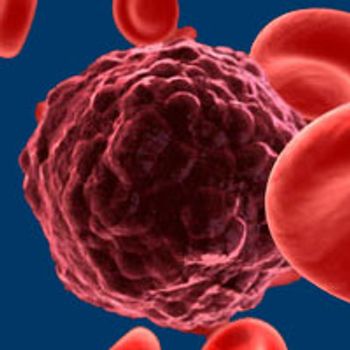
Selinexor induced an overall response rate of 25.4% in patients with penta-refractory multiple myeloma, according to top-line results from part 2 of the phase IIb STORM trial.

The FDA has approved tisagenlecleucel (Kymriah) for use in adult patients with relapsed/refractory large B-cell lymphoma—including diffuse large B-cell lymphoma (DLBCL), high-grade B-cell lymphoma, and DLBCL arising from follicular lymphoma—after 2 or more lines of systemic therapy.

Sara Hurvitz, MD, shares insight on the 3 CDK4/6 inhibitors approved in HR-positive breast cancer, and looks toward the future of these agents, which will likely include combination strategies.

David S. Snyder, MD, details mutations and discusses investigational treatments within the field of myeloproliferative neoplasms.
The FDA has approved the combination of dabrafenib and trametinib for the adjuvant treatment of patients with BRAF V600E– or V600K–positive stage III melanoma following complete resection.

Adolescent and young adult patients with cancer placed a high importance on prognostic information, and obtaining that knowledge was associated with improved well-being.

Second-line regorafenib (Stivarga) continued to show antitumor activity regardless of prior dose or time to progression on frontline sorafenib (Nexavar) for patients with unresectable advanced hepatocellular carcinoma.
The FDA has granted a priority review to a biologics license application for the PD-1 inhibitor cemiplimab for the treatment of patients with metastatic cutaneous squamous cell carcinoma (CSCC) or patients with locally advanced CSCC who are not eligible for surgery.

The European Medicines Agency’s Committee for Medicinal Products for Human Use has recommended adding final overall survival data from the phase III ASPIRE trial to the label for carfilzomib for the treatment of patients with relapsed/refractory multiple myeloma.

The FDA has granted a priority review to a supplemental biologics license application for frontline pembrolizumab for use in combination with standard chemotherapy for patients with metastatic nonsquamous non–small cell lung cancer.

OncLive® is proud to announce the inductees of the 2018 Giants of Cancer Care® recognition program.