




































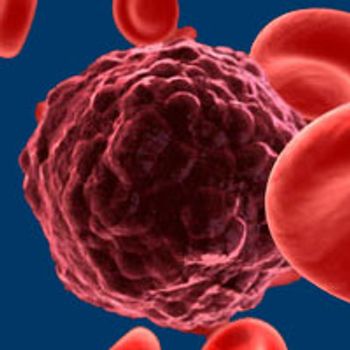
Julio Chavez, MD, discusses the current state of CLL and emerging regimens moving through the pipeline.
Julio Chavez, MD, discusses the current state of CLL and emerging regimens moving through the pipeline.

Experts are trying to determine whether combination regimens with additional HER2-directed therapies or alternative therapies could improve responses in HER2-positive breast cancer without added toxicities.
Reed Friend, MD, discusses the revised steps in diagnosing patients with multiple myeloma and prognostic factors, as well as existing challenges and hopes for the field’s future.
The European Commission has approved the use of fulvestrant (Faslodex) to treat estrogen receptor-positive, locally-advanced or metastatic breast cancer in postmenopausal women not previously treated with endocrine therapy.

Frontline osimertinib (Tagrisso) significantly improved progression-free survival versus standard of care in patients with locally-advanced or metastatic EGFR-positive non–small cell lung cancer.

Corey Langer, MD, discusses KEYNOTE-189, the current arena in NSCLC treatment, and the obstacles that remain in effectively treating patients with non-driver mutations.
Frontline durvalumab (Imfinzi) did not improve progression-free survival in patients with stage IV metastatic non–small cell lung cancer compared with standard platinum-based chemotherapy.
Checkpoint inhibitors against PD-1 and PD-L1 have shown promise, both as monotherapies and in combination with chemotherapy for patients with triple-negative breast cancer.
Elizabeth Plimack, MD, recaps recent advances in bladder cancer and discusses the need for diverse approaches to further improve patient outcomes.
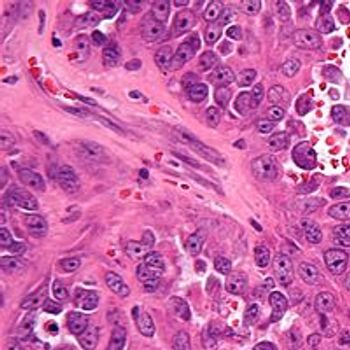
Long-term follow-up showed that trabectedin (Yondelis) was associated with high rates of survival and clinical benefit rate for patients with advanced high grade soft tissue sarcomas.
Andrea Apolo, MD, discusses a pooled analysis of the phase Ib Javelin Solid Tumor study, and a phase I study of cabozantinib, nivolumab, and ipilimumab.
Rami Komrokji, MD, shares his insight on the various types of MPNs, how these diseases can be diagnosed and managed, and the next steps needed to improve patient outcomes.

The Association of Community Cancer Centers (ACCC) and Advisory Board's Oncology Roundtable announced today their collaboration to launch a comprehensive survey that will capture the successes and challenges cancer programs across the country are facing in the current healthcare environment. Pfizer Oncology provides funding and support to ACCC for the "Trending Now in Cancer Care" survey.
The FDA has accepted supplemental Biologics License Applications seeking to add a second dosing schedule for nivolumab (Opdivo) across all of the PD-1 inhibitor’s monotherapy indications.
Brian Rini, MD, discusses the KEYNOTE-426 study and the promise of emerging combinations in renal cell carcinoma.
Mohamed Kharfan-Dabaja, MD, discusses the future of PNH treatment, the various symptoms that can present in PNH, and the challenges that still remain for further improving outcomes.
Shane A. Meehan, MD, discusses the continued importance of IHC testing in melanoma, even with the emergence of novel molecular assays.
Pembrolizumab (Keytruda) did not meet the primary endpoint of overall survival in the phase III KEYNOTE-040 trial in patients with previously-treated recurrent or metastatic head and neck squamous cell carcinoma.

Sattva S. Neelapu, MD, discusses the latest results for axicabtagene ciloleucel (KTE-C19) for transplant-ineligible patients with relapsed/refractory non-Hodgkin lymphoma and the CAR T-cell therapy’s potential to be a new standard of care.
Loretta Nastoupil, MD, discusses the positive interim analysis and shared her thoughts on areas of future investigation for patients with relapsed follicular lymphoma.

Systemic chemotherapy administered post-surgery reduced the risk for distant recurrence in women with node-positive stage IB-IIB cervical cancer.

The FDA has approved ipilimumab for the treatment of patients aged ≥12 years with unresectable or metastatic melanoma.
William Oh, MD, reviews some of the biomarkers under investigation in GU cancers and possibilities for major advances in the field over the next few years.
Russell Berman, MD, discusses ongoing surgical advances in the treatment of melanoma.
The European Medicines Agency’s Committee for Medicinal Products for Human Use has taken a positive position on indications for atezolizumab in non­-small cell lung cancer and urothelial carcinoma.