






Ovarian Cancer
Latest News
Advertisement
Latest Videos

































































Advertisement
More News

Robert L. Coleman, MD, FACOG, FACS, professor, Department of Gynecologic Oncology and Reproductive Medicine, The University of Texas MD Anderson Cancer Center, discusses advances made in the treatment of ovarian cancer.

For all the positive data associated with PARP inhibitors in patients with epithelial ovarian cancer who have known BRCA mutations and despite several agents winning FDA approval over the past few years, PARP inhibitors aren’t curing patients.

Shannon Westin, MD, discusses the evolving role of PARP inhibitors in ovarian cancer, novel investigational agents, and the importance of molecular testing.
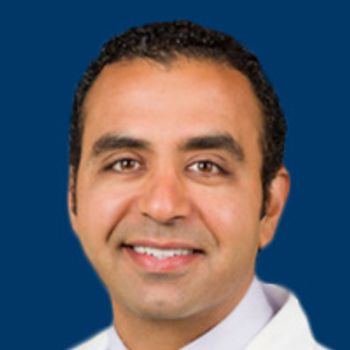
Targeted therapy is effectively established as an option for patients with ovarian cancers. However, beyond PARP inhibition in the BRCA-mutated or homologous recombination deficient population, questions remain about how to best treat these patients.

Katherine Kurnit, MD, OBGYN oncology fellow at the University of Texas MD Anderson Cancer Center, compares the benefit of gastrointestinal-based versus gynecologic-based adjuvant chemotherapy regimens in patients with mucinous ovarian cancer.

Results from a recent retrospective study indicate that treatment with a gastrointestinal-based adjuvant chemotherapy regimen may be more beneficial than that of a gynecologic-based one in patients with mucinous ovarian cancer.
Genomic testing to guide treatment decisions for women with ovarian cancer is in its early days. However, as more platforms become commercially available, physicians will need to understand the similarities and differences between tests.

Shannon N. Westin, MD, MPH, associate professor, The University of Texas MD Anderson Cancer Center, discusses advances made with PARP inhibitors in the ovarian cancer treatment paradigm.
Several ongoing trials are examining combinations of PARP inhibitors and immunotherapy agents as frontline maintenance for patients with ovarian cancer.

The FDA has issued a letter to healthcare providers that they should monitor patients with a type of peripheral arterial disease who have been treated with vascular balloons that were coated with paclitaxel or stents that release paclitaxel in the femoropopliteal artery in the leg.

Neil Horowitz, MD, discusses surgical options for patients with newly diagnosed ovarian cancer.

Panagiotis A. Konstantinopoulos, MD, director, Translational Research, Gynecologic Oncology, Dana-Farber Cancer Institute, associate professor of medicine, Harvard Medical School, discusses the disappointing results of the JAVELIN 200 trial in ovarian cancer.

Nearly 1 IN 5 women who undergoes ovarian cancer surgery is readmitted for complications, but a web-based app may improve patient monitoring so complications and adverse events can be addressed quickly by the patient’s care team.
Joyce F. Liu, MD, MPH, highlights the recent changes in the newly diagnosed ovarian cancer space and what the oncology field could see by the end of 2019.

Ursula A. Matulonis, MD, director, Gynecologic Oncology, Dana-Farber Cancer Institute, professor of medicine, Harvard Medical School, discusses the use of immunotherapy in patients with recurrent ovarian cancer.

Huma Q. Rana, MD, clinical director, Cancer Genetics and Prevention, instructor of medicine, Harvard Medical School, Dana-Farber Cancer Institute, discusses genetic testing guidelines for patients with ovarian cancer.

Joyce F. Liu, MD, MPH, assistant professor of medicine and director of clinical research for gynecologic oncology at Dana-Farber Cancer Institute, discusses the use of bevacizumab (Avastin) in the treatment of patients with newly diagnosed advanced ovarian cancer.

Maurie Markman, MD, president of Medicine and Science, Cancer Treatment Centers of America, editor-in-chief, OncologyLive, and 2018 Giant of Cancer Care for Gynecological Cancers, discusses the treatment of ovarian cancer as a chronic disease.
The impact of subsequent lines of treatment on trial outcomes can be substantial, seriously challenging the relevance of OS as an objectively meaningful study endpoint.

After years in development, several PARP inhibitors have achieved indications in ovarian cancer treatment, while others continue in development and expanding indications.

The phase III JAVELIN Ovarian 100 study exploring frontline avelumab in ovarian cancer has been ended after an independent panel determined the study would not meet its primary endpoint of progression-free survival.

The PARP inhibitor olaparib demonstrated a statistically significant and clinically meaningful improvement in objective response rate in patients with BRCA-mutant ovarian cancer who have relapsed on at least 2 prior lines of therapy.

Diana P. English, MD, a gynecologic oncologist at Stanford Hospital and Clinics, discusses the development of the antibody drug conjugate (ADC) mirvetuximab soravtansine in ovarian cancer.
The FDA has approved olaparib as a maintenance treatment for patients with deleterious or suspected deleterious germline or somatic BRCA-mutated advanced epithelial ovarian, fallopian tube, or primary peritoneal cancer who are in complete or partial response to frontline platinum-based chemotherapy.

Peter Levonian, MS, senior genetic counselor, Stanford Medicine, discusses the potential risks of genetic testing in ovarian cancer.
Advertisement
Advertisement
Trending on OncLive
1
Dr Cercek on the FDA Approval of Dostarlimab for dMMR/MSI-H Locally Advanced Rectal Cancer
2
Weigh Benefit Against Burden: Defining Lurbinectedin’s Role in a Shifting Small Cell Lung Cancer Landscape
3
Vilamakitug Meets OS Threshold in Phase 1/2 Refractory mCRC Trial
4
Dr Warren on the Goal of the 4WARD Trial Evaluating Mavorixafor in Chronic Neutropenia
5