


Ovarian Cancer
Latest News
Advertisement
Latest Videos





























































Advertisement
More News
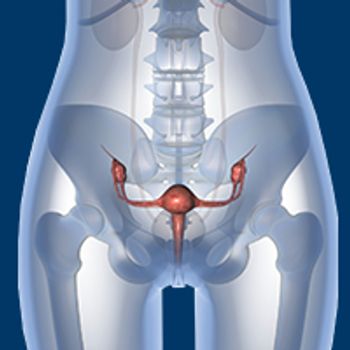
The addition of the dendritic cell-based immunotherapy DCVAC/OvCA to standard carboplatin and gemcitabine led to a significant improvement in overall survival in patients with relapsed, platinum-sensitive, epithelial ovarian cancer.
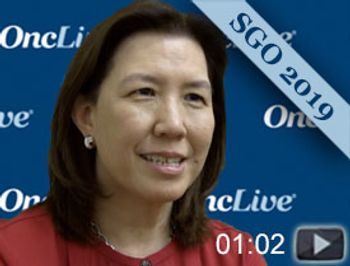
Karen H. Lu, MD, professor and chair in the Department of Gynecologic Oncology and Reproductive Medicine at The University of Texas MD Anderson Cancer Center discusses the challenges of risk-reducing salpingo-oophorectomy in women with an increased risk for hereditary ovarian cancer.
Jonathan Ledermann, MD, professor of medical oncology at UCL Cancer Institute in London, discusses the growing use of PARP inhibitors in maintenance therapy for ovarian cancer in an interview during the 2019 SGO Annual Meeting.

Combination therapy with pembrolizumab, bevacizumab, and metronomic cyclophosphamide induced a 95% disease control rate and 40% overall response rate among women with recurrent ovarian cancer.
Lenvatinib in combination with weekly paclitaxel induced activity among those with recurrent endometrial and platinum-resistant epithelial ovarian cancer, resulting in a 65% overall response rate.
Kathleen N. Moore, MD, associate director for clinical research, gynecologic oncologist at The Stephenson Cancer Center, The University of Oklahoma, explores the impact of the SOLO-1 trial in the field of ovarian cancer, in particular, the benefits olaparib provides and the light it shines on the importance of using genetic testing to inform treatment decisions.
Adverse events decreased among patients with high-risk ovarian cancer who received a 200- or 300-mg individualized starting dose of niraparib, based upon baseline bodyweight and platelet count, compared with a 300-mg fixed starting dose.

Prior exposure to PARP inhibitor treatment may not lead to resistance in future use with these agents in women with recurrent epithelial ovarian cancer, suggesting that repeat use could become more common.
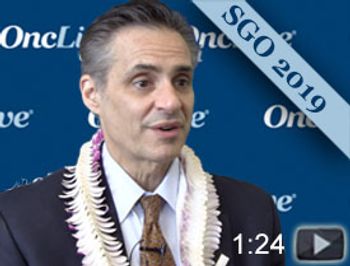
Robert Coleman, MD, professor in the Department of Gynecologic Oncology and Reproductive Medicine, The University of Texas MD Anderson Cancer Center, discusses the effect of age on the efficacy of rucaparib (Rubraca) in patients with recurrent ovarian carcinoma.
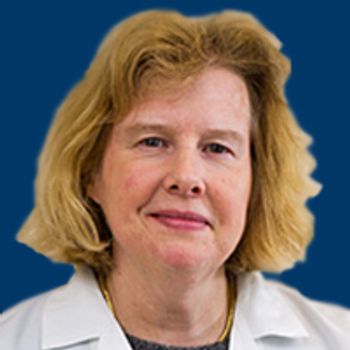
Patients with recurrent ovarian cancer who received niraparib maintenance therapy experienced more progression-free time without experiencing symptoms or toxicity compared with placebo; the benefit was 4-fold for those with germline (g) BRCA-mutated disease and 2-fold for non-gBRCA-mutated ovarian cancer.
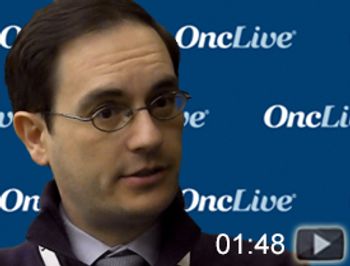
Panagiotis A. Konstantinopoulos, MD, PhD, director of Translational Research, Gynecologic Oncology, Dana-Farber Cancer Institute, associate professor of medicine, Harvard Medical School, discusses the role of immunotherapy in the treatment of patients with ovarian cancer.
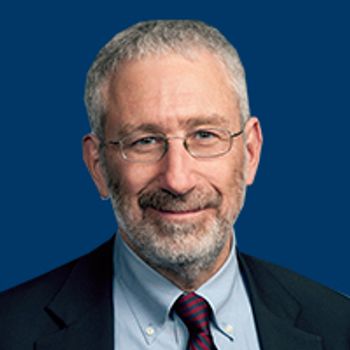
The immediate future of clinical investigation in ovarian cancer is remarkably exciting, with a number of novel agents and combination strategies currently being examined in multiple clinical trials.

Susana Campos, MD, MPH, assistant professor of medicine, Harvard Medical School, and Dana-Farber Cancer Institute, discusses differences between PARP inhibitors in recurrent ovarian cancer.
Mirvetuximab soravtansine did not improve progression-free survival compared with chemotherapy in patients with folate receptor alpha–positive, platinum-resistant ovarian cancer and in an overall patient population, missing the primary endpoint of the phase III FORWARD I trial.
The role of intraperitoneal chemotherapy in epithelial ovarian cancer has been a controversial subject for almost 3 decades; now, investigators are moving away from its use.
Rachel N. Grisham, medical oncologist, Memorial Sloan Kettering Cancer Center, discusses MEK inhibition in the treatment of patients with low-grade serous ovarian cancer.

Chip Landen, MD, associate professor, Division of Gynecologic Oncology, University of Virginia Health System, discusses the molecular subtypes of ovarian cancer.
Ramez N. Eskander, MD, assistant clinical professor, Department of Reproductive Medicine, University of California, San Diego Moores Cancer Center, discusses the need for more effective biomarkers in the treatment of patients with ovarian cancer.

Although there have been numerous studies evaluating the role of different therapy schedules, cytotoxic agents, and routes of administration in ovarian cancer, the backbone of therapy remains a combination of a platinum and a taxane.
Amer Karam, MD, associate clinical professor of Gynecologic Oncology at Stanford Hospital and director of Robotic Surgery and Outreach in the Division of Gynecologic Oncology at Stanford Medicine, discusses the use of laparoscopy in advanced ovarian cancer.
Rachel N. Grisham, medical oncologist, Memorial Sloan Kettering Cancer Center, discusses frontline treatment options for patients with low-grade serous ovarian cancer.
Ramez N. Eskander, MD, assistant clinical professor, Department of Reproductive Medicine, University of California, San Diego Moores Cancer Center, discusses combination approaches with immunotherapy in ovarian cancer.
Huma Q. Rana, MD, discusses the evolution of genetic testing in ovarian cancer and the genes that are associated with an increased risk of subsequent cancer development.
Susana Campos, MD, MPH, highlights the success with PARP inhibitors in the relapsed and maintenance ovarian cancer settings.
Ursula A. Matulonis, MD, highlights available and emerging treatment options and strategies for patients with recurrent ovarian cancer.
Advertisement
Advertisement
Trending on OncLive
1
Dr Cercek on the FDA Approval of Dostarlimab for dMMR/MSI-H Locally Advanced Rectal Cancer
2
Weigh Benefit Against Burden: Defining Lurbinectedin’s Role in a Shifting Small Cell Lung Cancer Landscape
3
Vilamakitug Meets OS Threshold in Phase 1/2 Refractory mCRC Trial
4
Dr Warren on the Goal of the 4WARD Trial Evaluating Mavorixafor in Chronic Neutropenia
5