
Ovarian Cancer
Latest News
Advertisement
Latest Videos


























































Advertisement
More News
Frontline maintenance therapy with the combination of olaparib and bevacizumab improved median progression-free survival versus bevacizumab and placebo for patients with newly diagnosed, advanced ovarian cancer.
Frontline maintenance therapy with the PARP inhibitor niraparib improved median progression-free survival by 5.6 months compared with placebo for patients with newly diagnosed, advanced ovarian cancer who responded to platinum-based chemotherapy.
The frontline combination of veliparib, carboplatin, and paclitaxel followed by maintenance veliparib monotherapy led to a 32% reduction in the risk of progression or death compared with placebo plus chemotherapy with placebo maintenance for patients with high-grade serous ovarian cancer.
The combination of cediranib and olaparib improved progression-free survival in patients with platinum-resistant ovarian cancer, although the difference from chemotherapy did not achieve statistical significance.
We traveled to Pasadena, California, for a State of the Science Summit™ on Ovarian Cancer, which featured insights from City of Hope faculty.
Camille C. Gunderson, MD, discusses the phase III open-label GOG-252 trial in advanced ovarian cancer.
Kathleen Moore, MD, director, Oklahoma TSET Phase I Program, and associate professor, Section of Gynecologic Oncology, Stephenson Cancer Center, discusses research evaluating repeat exposure to PARP inhibition in patients with platinum-sensitive ovarian cancer.
A large pool of evidence exists to support the use of HIPEC in ovarian cancer, and hyperthermic and other novel intraperitoneal chemotherapies should continue to be incorporated into novel clinical trial designs.
Mansoor Raza Mirza, MD, chief oncologist, Department of Oncology in Rigshospitalet, Copenhagen University Hospital, discusses results from the phase II NSGO-AVANOVA2/ENGOT-OV24 trial comparing niraparib with niraparib plus bevacizumab in patients with recurrent platinum-sensitive ovarian cancer.
In the past 5 years, the FDA has awarded 4 drugs 9 new indications for the treatment of advanced ovarian cancers. Although these approvals represent a welcome expansion of the therapeutic toolkit for this challenging malignancy, the arrival of new options has outpaced efforts to discover the best use for each medication.
Rebecca C. Arend, MD, discusses several ongoing trials exploring the use of immunotherapy in patients with advanced ovarian cancer.
Camille C. Gunderson, MD, discusses the various maintenance options available in advanced ovarian cancer, as well as what factors should be considered for selecting each approach.
Debra Richardson, MD, FACOG, FACS, discusses the current indications for PARP inhibitors in the recurrent setting and ongoing work being done to broaden their utility in the field.
Linda R. Duska, MD, discusses the ongoing debate between upfront surgery and neoadjuvant chemotherapy in ovarian cancer and the data that support both options.
Kathleen Moore, MD, combs through the various investigational strategies exploring management of resistance to PARP inhibitors in ovarian cancer.
Laura L. Holman, MD, discusses ongoing efforts in ovarian cancer screening and what may lie ahead for generations to come.
Linda R. Duska, MD, discusses neoadjuvant chemotherapy versus upfront surgical debulking in patients with advanced ovarian cancer.
Alexander Olawaiye, MD, discusses the trials that led to the expanded approvals of PARP inhibitors as maintenance therapy in women with platinum-sensitive ovarian cancer.
Jessica L. Berger, MD, evaluates the treatment approaches available for patients with newly diagnosed advanced ovarian cancer.
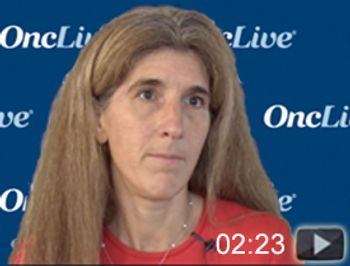
Kathleen Moore, MD, director, Oklahoma TSET Phase I Program, and associate professor, Section of Gynecologic Oncology, Stephenson Cancer Center, poses unanswered questions pertaining to the use and reuse of PARP inhibitors in ovarian cancer treatment.
At the 2019 OncLive® State of the Science Summit™ on Ovarian Cancer, we asked experts from the University of Pittsburgh Medical Center about the intriguing research being conducted at their institution.
Madeleine B. Courtney Brooks, MD, MPH, sheds light on the current treatment paradigm of recurrent ovarian cancer.
Brian Orr, MD, discusses the challenges with immunotherapy in ovarian cancer treatment while pointing to early promising data with combination regimens.
John Comerci, Jr, MD, provides an overview of advances made in ovarian cancer and remaining challenges to address with future research.
Advertisement
Advertisement
Trending on OncLive
1
Dr Cercek on the FDA Approval of Dostarlimab for dMMR/MSI-H Locally Advanced Rectal Cancer
2
Weigh Benefit Against Burden: Defining Lurbinectedin’s Role in a Shifting Small Cell Lung Cancer Landscape
3
Vilamakitug Meets OS Threshold in Phase 1/2 Refractory mCRC Trial
4
Dr Warren on the Goal of the 4WARD Trial Evaluating Mavorixafor in Chronic Neutropenia
5