

Ovarian Cancer
Latest News

Latest Videos

CME Content
More News

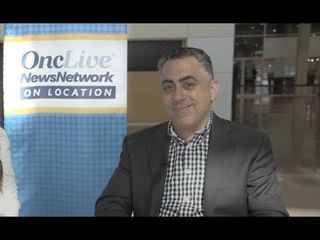
Mike Janicek, MD, medical director, Genetics Division, Arizona Oncology, discusses progress with genetic testing in ovarian cancer.

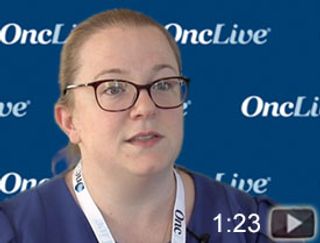
Heather Dalton, MD, gynecologic oncologist, Arizona Oncology, discusses the standard of care for patients with ovarian cancer.

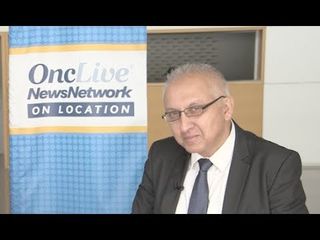
Bradley J. Monk, MD, FACOG, FACS, professor and director of the Division of Gynecologic Oncology at Creighton University School of Medicine at St. Joseph's Hospital and Medical Center, Arizona Oncology, discusses the FDA approval of rucaparib (Rubraca) as a maintenance therapy for patients with recurrent epithelial ovarian, fallopian tube, or primary peritoneal cancer who are in a complete or partial response to platinum-based chemotherapy.

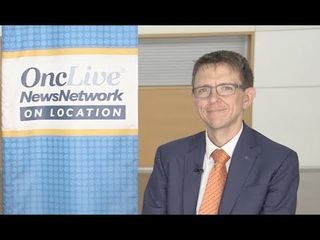
David O'Malley, MD, gynecologic oncologist and an assistant professor in the Department of Obstetrics and Gynecology at The Ohio State University Wexner Medical Center, The Ohio State University Comprehensive Cancer Center, discusses the FDA approval of rucaparib (Rubraca)

The FDA has approved rucaparib for use as a maintenance treatment for patients with recurrent epithelial ovarian, fallopian tube, or primary peritoneal cancer who are in a complete or partial response to platinum-based chemotherapy.

Angeles Alvarez Secord, MD, gynecologic cancers specialist, Duke Cancer Center, discusses determining the management strategy for patients with ovarian cancer.

Michael Birrer, MD, PhD, discusses the effect that PARP inhibitors have had on the treatment of ovarian cancer, and the potential for combinations with these agents.

Mansoor Raza Mirza, MD, chief oncologist in the Department of Oncology in Rigshospitalet, Copenhagen University Hospital, Denmark, discusses the impact of PARP inhibitors in ovarian cancer.

Michael Birrer, MD, PhD, UAB Comprehensive Cancer Center in Alabama, discusses the role of PARP inhibitors in the treatment of patients with ovarian cancer.

First-line platinum-containing chemotherapy plus the anti-PD-1 agent pembrolizumab, followed by pembrolizumab maintenance, appeared feasible and safe for patients with advanced ovarian cancer, preliminary data from a small clinical trial suggested.

Currently approved PARP inhibitors have demonstrated similar efficacy in the setting of maintenance therapy for patients with ovarian cancer but differ with respect to the type and frequency of grade 3/4 adverse events, results of a network meta-analysis suggested.

Combination therapy with the PARP inhibitor olaparib and the PD-L1 inhibitor durvalumab induced objective responses in more than 70% of patients with relapsed, platinum-sensitive, BRCA-mutated ovarian cancer.

Patients with platinum-resistant/refractory ovarian cancer had durable responses with the combination of the PARP inhibitor niraparib (Zejula) and pembrolizumab (Keytruda).

Almost half of patients with platinum-resistant ovarian cancer had objective responses to combination therapy with pembrolizumab plus the antifolate antibody-drug conjugate mirvetuximab soravtansine.

Lavanya Palavalli Parsons, MD, clinical fellow, The University of Texas Southwestern Medical Center, discusses the role of PARP 7 in overall survival of patients with ovarian cancer during the 2018 Society of Gynecologic Oncology Annual Meeting.

Ursula A. Matulonis, MD, director, Gynecologic Oncology, Dana-Farber Cancer Institute, professor of medicine, Harvard Medical School, discusses the TOPACIO trial, which explored preliminary activity and safety of niraparib (Zejula) and pembrolizumab (Keytruda) in patients with platinum-resistant ovarian cancer, during the 2018 Society of Gynecologic Oncology Annual Meeting.

To access the value of the maintenance therapies and biomarkers to direct treatment for patients with platinum-sensitive recurrent ovarian cancer, investigators used ASCO’s Net Health Benefit and ESMO’s Magnitude of Clinical Benefit Scale.

Mansoor Raza Mirza, MD, chief oncologist in the Department of Oncology in Rigshospitalet, Copenhagen University Hospital, Denmark, discusses a study of safety and dose modification for patients with low body weight receiving niraparib (Zejula) in the ENGOT-OV16/NOVA phase III trial during the 2018 Society of Gynecologic Oncology Annual Meeting.

Baseline body weight and platelet counts were early predictors for future AE-related dose modifications for niraparib (Zejula) in women with platinum-sensitive, relapsed, high-grade serous epithelial ovarian, fallopian tube, or primary peritoneal cancer.

Bradley J. Monk, MD, professor and director of the Division of Gynecologic Oncology at Creighton University School of Medicine at St. Joseph’s Hospital and Medical Center in Phoenix, Arizona, discusses how to decide which PARP inhibitor to use when treating a patient with ovarian cancer during the 2018 Society of Gynecologic Oncology Annual Meeting.

The use of immune checkpoint inhibitors in women with recurrent ovarian cancer has a clinical benefit but a higher rate of adverse events than previously reported in other tumor types.

Floor J. Backes, MD, associate professor at The Ohio State University Comprehensive Cancer Center, discusses combinations with PARP inhibitors in the treatment of patients with ovarian cancer.

David O'Malley, MD, a professor in the Department of Obstetrics and Gynecology at The Ohio State University Comprehensive Cancer Center, discusses combinations with PARP inhibitors in ovarian cancer.

Kathleen N. Moore, MD, assistant professor, Stephenson Cancer Center, The University of Oklahoma, discusses challenges with immunotherapy agents in the treatment of patients with ovarian cancer.

Erin K. Crane, MD, MPH, gynecologic oncologist, Levine Cancer Institute, Carolinas HealthCare System, discusses the toxicity profile of combination regimens for patients with ovarian cancer.