

Ovarian Cancer
Latest News
Advertisement
Latest Videos



























































Advertisement
More News
Joshua G. Cohen, MD, assistant professor, Division of Gynecologic Oncology, University of California, Los Angeles, discusses surgery in patients with early-stage ovarian cancer.
David O’Malley, MD, professor, Department of Obstetrics and Gynecology, The Ohio State University Comprehensive Cancer Center, discusses the safety and efficacy results of the FORWARD II phase Ib study in patients with ovarian cancer.
Gottfried E. Konecny, MD, associate professor of medicine, University of California, Los Angeles, discusses the role of PARP inhibitors in the treatment of patients with ovarian cancer.
John A. Glaspy, MD, professor of medicine, Jonsson Comprehensive Cancer Center (JCCC), director, JCCC Clinical Research Unit and Women's Cancer Research Program, University of California, Los Angeles (UCLA) School of Medicine, discusses immunogenicity in ovarian cancer.

Jianyu Rao, MD, professor and chief of Cytopathology, University of California, Los Angeles, discusses improving methods of early detection of ovarian cancer.
Nisha Bansal, MD, gynecologic oncologist, University of California, Los Angeles, discusses frontline chemotherapeutic approaches for patients with ovarian cancer.

Christopher J. Pietras, MD, director, Palliative Care, assistant clinical professor, University of California, Los Angeles (UCLA) School of Medicine, discusses palliative care for patients with ovarian cancer.
Deborah Krakow, MD, professor and chair, Department of Obstetrics and Gynecology, professor of Orthopaedic Surgery and Human Genetics, University of California, Los Angeles, discusses genetic testing in patients with ovarian cancer.
Kelly McCann, MD, PhD, a medical oncologist in the Breast Cancer Research Group at the University of California, Los Angeles, discusses combination clinical trials of PARP inhibitors in patients with ovarian cancer.

Sanaz Memarzadeh, MD, PhD, gynecologic oncologist, professor of obstetrics and gynecology, University of California, Los Angeles, discusses p53 reactivation in the treatment of patients with ovarian cancer.
Gottfried E. Konecny, MD, associate professor of medicine, University of California, Los Angeles, discusses the use of PARP inhibitors in the treatment of patients with ovarian cancer.
Kathleen Essel, MD, fellow, University of Oklahoma Health Science Center, discusses adverse events with bevacizumab (Avastin) in ovarian cancer.
Dennis J. Slamon, MD, PhD, director, Clinical/Translational Research, Revlon/University of California, Los Angeles (UCLA) Women's Cancer Research Program, Jonsson Comprehensive Cancer Center, UCLA, discusses the use of PARP inhibitors in the treatment of patients with ovarian cancer.
Joshua G. Cohen, MD, assistant professor, Division of Gynecologic Oncology, University of California, Los Angeles, discusses the evolution of surgery in the treatment of patients with ovarian cancer.
Bradley J. Monk, MD, FACOG, FACS, professor and director of the Division of Gynecologic Oncology at Creighton University School of Medicine at St. Joseph's Hospital and Medical Center, Arizona Oncology, discusses the FORWARD I trial in ovarian cancer.
Shana Wingo, MD, gynecologic oncologist, Arizona Oncology, discusses the use of neoadjuvant chemotherapy in the treatment of patients with ovarian cancer.
Shana Wingo, MD, discusses the surgical landscape in patients with newly diagnosed ovarian cancer.
Dennis R. Scribner Jr, MD, discusses the elements and evolution of treatment for patients with recurrent ovarian cancer.
Mike Janicek, MD, discusses the importance of genetic testing and how the ovarian field can benefit from a better understanding of it through genetic counselors and self-education.
Matthew Borst, MD, highlights the need for neoadjuvant therapy versus upfront surgery in newly diagnosed patients, effective treatment management for recurrent platinum-sensitive disease, and what to do in the third-line setting and beyond.
Heather Dalton, MD, discusses the developing standard of care for the frontline treatment of patients with ovarian cancer.
Kathleen Essel, MD, fellow, University of Oklahoma Health Science Center, discusses a study on the effects of long-term bevacizumab (Avastin) use in patients with ovarian cancer.
Snehal Bhoola, MD, discusses the implementation of enhanced recovery after surgery in ovarian cancer.
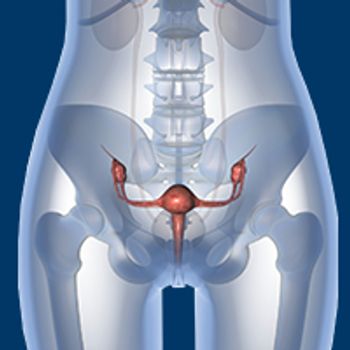
The European Commission has approved olaparib tablets (Lynparza) as a maintenance therapy for patients with platinum-sensitive relapsed high-grade, epithelial ovarian, fallopian tube or primary peritoneal cancer.
Lyndsay Willmott, MD, discusses the use of PARP inhibitors in patients with ovarian cancer and details the mechanisms of resistance that have been identified so far.
Advertisement
Advertisement
Trending on OncLive
1
Dr Cercek on the FDA Approval of Dostarlimab for dMMR/MSI-H Locally Advanced Rectal Cancer
2
Vilamakitug Meets OS Threshold in Phase 1/2 Refractory mCRC Trial
3
Weigh Benefit Against Burden: Defining Lurbinectedin’s Role in a Shifting Small Cell Lung Cancer Landscape
4
Dr Warren on the Goal of the 4WARD Trial Evaluating Mavorixafor in Chronic Neutropenia
5