

Ovarian Cancer
Latest News
Advertisement
Latest Videos




























































Advertisement
More News
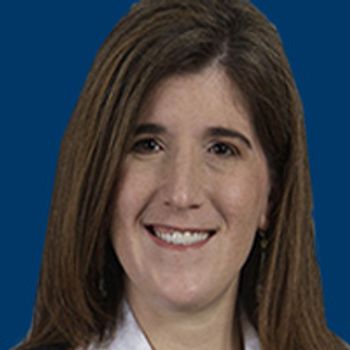
Kathleen Moore, MD, discusses combination strategies with immunotherapy for patients with ovarian cancer.

Ahmed N. Al-Niaimi, MD, assistant professor of obstetrics and gynecology, University of Wisconsin School of Medicine and Public Health, discusses the future role for cytoreductive surgery for the treatment of patients with ovarian cancer.

Erin K. Crane, MD, MPH, gynecologic oncologist, Levine Cancer Institute, Carolinas HealthCare System, discusses the impact of PARP inhibitors for patients with ovarian cancer.
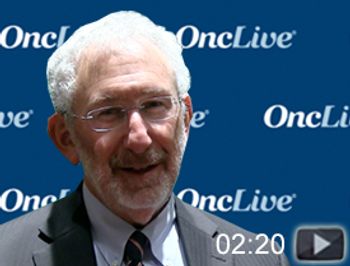
Maurie Markman, MD, president of Medicine and Science, Cancer Treatment Centers of America, editor-in-chief, OncologyLive, discusses overall survival as an endpoint in ovarian cancer clinical trials.
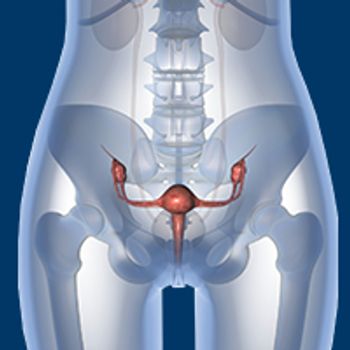
Prexasertib (LY2606368) induced a 29% response rate with acceptable tolerability in women with measurable, recurrent high-grade serous or high-grade endometrioid ovarian carcinoma.
Emerging data have confirmed that ovarian cancer is a much more heterogeneous disease than previously recognized.
The FDA’s recent approvals of novel anti-PARP agents as maintenance therapy for patients with previously treated advanced ovarian cancer highlight an issue that has received inadequate attention in the peer-reviewed oncology literature.
Mansoor Raza Mirza, MD, discusses the initial findings and next steps for the promising niraparib plus bevacizumab combination in ovarian cancer, as well as overall advances with PARP inhibitors in the field.
Adding hyperthermic intraperitoneal chemotherapy to interval cytoreductive surgery improved relapse-free survival and overall survival for women with newly diagnosed stage III epithelial ovarian cancer.
Maurie Markman, MD, discusses the need to change the paradigm of clinical trials and FDA approvals in ovarian cancer.
Cristiana Sessa, MD, head of Phase I-II Unit and Pharmacology, vice head of Medical Oncology and Head of Clinical Research, Oncology Institute of Southern Switzerland, discusses the management of BRCA1/2 mutations in patients with ovarian cancer.
Jalid Sehouli, MD, professor, director of the Clinic Campus Virchow and Campus Benjamin Franklin Charité Center Gynecology, Charité – Universitatsmedizin Berlin, discusses the unmet needs for patients with ovarian cancer.
Women with ER-positive advanced high-grade serous ovarian cancer assigned to maintenance therapy with letrozole were more likely to be recurrence-free at 24 months.
Jonathan Ledermann, MD, professor of medical oncology, UCL Cancer Institute, London, United Kingdom, discusses patient selection in the treatment of patients with ovarian cancer.
Robert L. Coleman, MD, discusses targeting tumor vasculature and angiogenesis in ovarian cancer.


Advertisement
Advertisement
Trending on OncLive
1
Dr Cercek on the FDA Approval of Dostarlimab for dMMR/MSI-H Locally Advanced Rectal Cancer
2
Vilamakitug Meets OS Threshold in Phase 1/2 Refractory mCRC Trial
3
Weigh Benefit Against Burden: Defining Lurbinectedin’s Role in a Shifting Small Cell Lung Cancer Landscape
4
Dr Warren on the Goal of the 4WARD Trial Evaluating Mavorixafor in Chronic Neutropenia
5