





Ovarian Cancer
Latest News
Advertisement
Latest Videos




























































Advertisement
More News
Ophira Ginsburg, MD, discusses hereditary ovarian cancer, the occasional reluctance in testing, multigene panels, and the understanding of variants of uncertain significance.

Dmitriy Zamarin, MD, PhD, discusses immunotherapy for patients with ovarian cancer.

Bhavana Pothuri, MD, discusses the available PARP inhibitors and ongoing trials further investigating these agents in ovarian cancer.

Ophira M. Ginsburg, MSc, MD, FRCPC, director of the High-Risk Cancer Program, Perlmutter Cancer Center at NYU Langone Medical Center, discusses the importance of genetic testing in ovarian cancer families.
Peter R. Dottino, MD, professor of obstetrics, gynecology and reproductive science, Mount Sinai Hospital, discusses molecular techniques used to determine ovarian cancer following treatment with chemotherapy.

Douglas A. Levine, MD, shared his insight on how the ovarian cancer landscape has developed a more personalized treatment approach.
The combination of bevacizumab plus niraparib demonstrated clinical activity in women with relapsed, platinum-sensitive epithelial ovarian cancer and had a manageable toxicity profile.
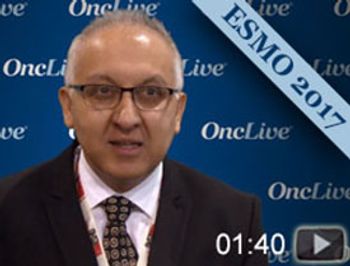
Mansoor Raza Mirza, MD, chief oncologist in the Department of Oncology in Rigshospitalet, Copenhagen University Hospital, Denmark, and medical director of the Nordic Society of Gynecologic Oncology-Clinical Trial Unit, discusses phase I results of a trial exploring the combination of niraparib (Zejula) and bevacizumab (Avastin) in patients with platinum-sensitive epithelial ovarian cancer.
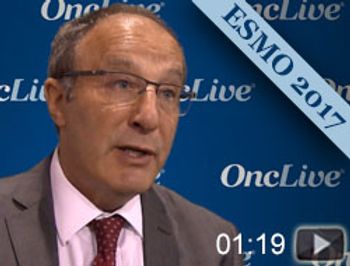
Jonathan Ledermann, MD, professor of medical oncology, UCL Cancer Institute, London, United Kingdom, discusses the phase III results of the ARIEL3 trial in ovarian cancer during the 2017 ESMO Congress.
Maintenance treatment with the PARP inhibitor rucaparib improved median progression-free survival by 11.2 months compared with placebo for patients with BRCA-mutant platinum-sensitive ovarian cancer.

Emma Barber, MD, UNC Department of Obstetrics and Gynecology, UNC School of Medicine, UNC Lineberger Comprehensive Cancer Center, discusses the importance of the SCORPION trial in ovarian cancer.

Katherine Nathanson, MD, discusses how the genetics of BRCA1/2-associated tumors impacts tumor development in breast and ovarian cancer and response to treatment.

Andreas du Bois, MD, PhD, a professor of gynecologic oncology at Kliniken Essen Mitte, discusses the potential impact of cytoreductive surgery in ovarian cancer.

Lyndsay J. Willmott, MD, a gynecologic oncologist with Arizona Oncology, discusses the FDA approval of olaparib (Lynparza) in the maintenance setting for relapsed patients with platinum-sensitive ovarian cancer.

The FDA has approved olaparib tablets as a maintenance therapy for patients with recurrent epithelial ovarian, fallopian tube, or primary peritoneal cancer, who are in a complete or partial response to platinum-based chemotherapy.
PARP inhibitors are the most commonly used targeted therapy for patients with recurrent ovarian cancer, and the indications for the use of these drugs have broadened in recent months.

Charles A. (Trey) Leath, III, MD, associate professor, UAB School of Medicine, UAB Comprehensive Cancer Center, discusses surgical cytoreduction in ovarian cancer.
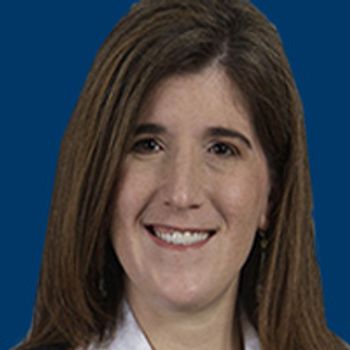
Kathleen Moore, MD, discusses the potential of mirvetuximab soravtansine in patients with epithelial ovarian cancer.
Douglas Levine, MD, provides his insight on some of the recent data with PARP inhibitors in ovarian cancer, as well as his predictions for the field in the next several years.

Julia A. Elvin, MD, PhD, discusses genomic research in ovarian cancer and how it could potentially impact treatment decisions for patients.

Andreas du Bois, MD, PhD, a professor of gynecologic oncology at Kliniken Essen Mitte, discusses his study of secondary cytoreductive surgery in ovarian cancer.
The FDA granted a priority review in March to a new drug application for maintenance olaparib, and is scheduled to make its final decision on the PARP inhibitor before the end of the year.

Since the approval of LYNPARZA, over 3,000 US women with germline BRCA-mutated advanced ovarian cancer have been treated with this important medicine.
Advertisement
Advertisement
Trending on OncLive
1
Dr Cercek on the FDA Approval of Dostarlimab for dMMR/MSI-H Locally Advanced Rectal Cancer
2
Vilamakitug Meets OS Threshold in Phase 1/2 Refractory mCRC Trial
3
Weigh Benefit Against Burden: Defining Lurbinectedin’s Role in a Shifting Small Cell Lung Cancer Landscape
4
Dr Warren on the Goal of the 4WARD Trial Evaluating Mavorixafor in Chronic Neutropenia
5