


Ovarian Cancer
Latest News
Advertisement
Latest Videos
































































Advertisement
More News
Rebecca Kristeleit, BSc, PhD, consultant medical oncologist, University College-London Cancer Institute, discusses the safety profile of rucaparib in the treatment of patients with ovarian cancer.
Maurie Markman, MD, president of Medicine and Science, Cancer Treatment Centers of America, editor-in-chief, OncologyLive, discusses the development of immune targeting in ovarian cancer.

Rebecca Kristeleit, BSc, PhD, consultant medical oncologist, University College-London Cancer Institute, discusses the efficacy of rucaparib in the treatment of patients with ovarian cancer.
Franco M. Muggia, MD, professor, Department of Medicine, NYU Langone Medical Center, discusses the current challenges oncologists are facing in the treatment landscape of ovarian cancer.

Maurie Markman, MD, president, Medicine and Science, Cancer Treatment Centers of America, editor-in-chief, OncologyLive, discusses the search for actionable biomarkers in the treatment of patients with ovarian cancer.

The FDA has granted a priority review to a new drug application for the PARP 1/2 inhibitor niraparib for use as a maintenance therapy in patients with recurrent epithelial ovarian, fallopian tube, or primary peritoneal cancer who have responded to platinum-based chemotherapy.

Michael Birrer, MD, PhD, director of Medical Gynecologic Oncology at Massachusetts General Hospital, discusses the FDA approval of rucaparib for as a treatment for patients with BRCA-positive advanced ovarian cancer who have received at least 2 prior lines of chemotherapy.

The FDA has approved rucaparib (Rubraca) as a treatment for patients with BRCA-positive advanced ovarian cancer who have received at least 2 prior lines of chemotherapy, according to Clovis, the manufacturer of the PARP inhibitor
Although randomized phase III clinical trials often lead to groundbreaking drug approvals and offer novel therapeutic regimens, Maurie Markman, MD, insists that the search for validated, actionable biomarkers is more important than initiation of new studies.

Bevacizumab has been granted FDA approval for platinum-sensitive ovarian cancer, based on findings from phase III trails: GOG-0213 and OCEANS.

Ovarian cancer remains a silent and deadly tumor type with 5-year survival rates that lag far behind those of other gynecologic malignancies. Yet optimism is in the air these days as researchers focus on developing new therapies in 2 key areas: antiangiogenic agents and PARP inhibitors.
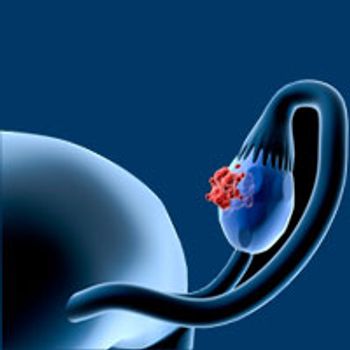
A multipronged attack on the tumor vasculature network is at the heart of a recently launched clinical trial aimed at developing new therapeutic options for women with advanced, recurrent, platinum-resistant ovarian cancer.
Mansoor Raza Mirza, MD, chief oncologist at Rigshospitalet, Copenhagen, Denmark, discusses niraparib in patients with platinum-sensitive recurrent ovarian cancer

Significant progress is being made in the treatment of gynecologic malignancies, especially in ovarian cancer, according to Douglas A. Levine, MD.

Jasgit Sachdev, MD, clinical associate professor at Translational Genomics Research Institute, discusses the goals she would like to see achieved regarding the treatment of ovarian cancer.
Franco M. Muggia, MD, professor, Department of Medicine, NYU Langone Medical Center, discusses combination treatments currently being tested for the treatment of patients with ovarian cancer.
Susan Lutgendorf, PhD, professor and Starch Faculty Fellow, Psychological and Brain Sciences, College of Liberal Arts and Sciences, University of Iowa, discusses the impact of lack of support on patients with ovarian cancer. Lutgendorf spoke on this during an interview at the SITC 31st Annual Meeting and Associated Programs.
PARP inhibition is quickly becoming a major element of the overall ovarian cancer treatment landscape, as several of these agents are continuing to advance through clinical development.

As a treatment of patients with advanced ovarian cancer, evidence has shown that neoadjuvant chemotherapy has reduced mortality and improved quality of life. However, oncologists are still challenged at how to deploy this treatment approach in clinical practice.

Maurie Markman, MD, president, Medicine and Science, Cancer Treatment Centers of America, editor-in-chief, OncologyLive, discusses the current status of immune targeting as potential treatment for patients with ovarian cancer.
A new drug application to the FDA has been completed for niraparib as a maintenance treatment for women with recurrent platinum-sensitive ovarian, fallopian tube, or primary peritoneal cancer.

Single-agent olaparib significantly improved progression-free survival compared with placebo in the maintenance setting for patients with advanced BRCA-positive ovarian cancer.

Results from an expansion cohort of a preliminary clinical trial have shown encouraging activity for a novel antibody-drug conjugate in patients with heavily pretreated advanced ovarian cancer.
The PARP1/2 inhibitor niraparib significantly improved progression-free survival in patients with platinum-sensitive recurrent ovarian cancer.

An interim analysis of an ongoing study showed potential for reducing time and improving acceptance of testing and counseling for patients with ovarian cancer.
Advertisement
Advertisement
Trending on OncLive
1
Dr Cercek on the FDA Approval of Dostarlimab for dMMR/MSI-H Locally Advanced Rectal Cancer
2
Vilamakitug Meets OS Threshold in Phase 1/2 Refractory mCRC Trial
3
Weigh Benefit Against Burden: Defining Lurbinectedin’s Role in a Shifting Small Cell Lung Cancer Landscape
4
Dr Warren on the Goal of the 4WARD Trial Evaluating Mavorixafor in Chronic Neutropenia
5