




Ovarian Cancer
Latest News
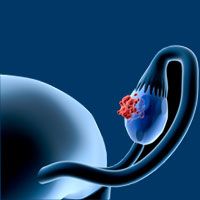

Low Response Rates Halt First Trial of Abiraterone in Ovarian Cancer
By Onclive Team
Advertisement
Latest Videos



































































Advertisement
More News

A fourth of patients with heavily pretreated advanced ovarian cancer achieved objective responses with novel antibody-drug conjugate targeting protein tyrosine kinase 7.

Maintenance therapy with niraparib reduced the risk of progression or death by 73% compared with placebo for patients with germline BRCA-positive platinum-sensitive, recurrent ovarian cancer.

The majority of heavily pretreated patients with high-grade ovarian cancer and germline or somatic BRCA mutations showed a durable response to rucaparib.

Donald A. Bergstrom, MD, PhD, chief medical officer, Mersana Therapeutics, discusses recent data on the new immunoconjugate, XMT-1536.

Maurie Markman, MD, president, Medicine and Science, Cancer Treatment Centers of America, editor-in-chief, OncologyLive, discusses the most important factors of bilateral salpingo-oophorectomy (BSO) to convey to patients with ovarian cancer.
Patricia LoRusso, DO, professor of Medicine (Medical Oncology), associate director, Innovative Medicine, Yale Cancer Center, discusses the role of PARP inhibitors in triple negative breast cancer.


Several variables are important to consider when undergoing preventive surgery for ovarian cancer, including familial history and age.

The FDA has granted a fast track designation to niraparib, allowing the initiation of a rolling submission of data for potential approval for the PARP inhibitor as a treatment for women with recurrent platinum-sensitive ovarian, fallopian tube, or primary peritoneal cancer.

Maurie Markman, MD, president, Medicine and Science, Cancer Treatment Centers of America, editor-in-chief, OncologyLive, discusses when patients with ovarian cancer should undergo a bilateral salpingo-oophorectomy (BSO).

Neoadjuvant chemotherapy is likely the optimal treatment choice for some women with newly diagnosed advanced ovarian cancer, while other patients should receive primary cytoreductive surgery.


Charlie Gourley, PhD, MBChB, chair and honorary consultant in Medical Oncology at Edinburgh Cancer Research Centre in the United Kingdom, discusses a study comparing the use of olaparib (Lynparza) after chemotherapy with placebo after chemotherapy in patients with platinum-sensitive ovarian cancer.
The FDA has granted a priority review to a new drug application for rucaparib as a treatment for patients with BRCA-positive advanced ovarian cancer who have received at least 2 prior lines of chemotherapy.
Results of a phase I trial demonstrate that the combination of niraparib and bevacizumab (Avastin) can be safely administered to patients with platinum-sensitive relapsed ovarian cancer.

Christina M. Annunziata, MD, PhD, has been instrumental in the genomic profiling of ovarian cancers and in elucidating the molecular pathways that are central to this disease.
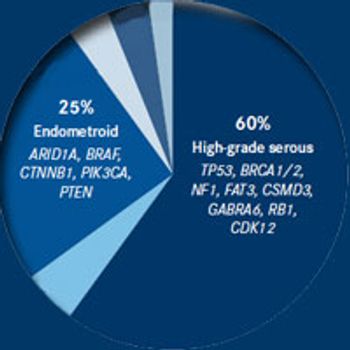
Genome sequencing studies have uncovered an array of distinct genomic drivers underlying various ovarian cancer subtypes. If researchers can capitalize on these discoveries, it may offer a path to more individualized and effective treatment options.

Although chemotherapy has changed dramatically since it was introduced, platinum-containing combinations remain standard in ovarian cancer. Often, the established regimen can be modified for patients who quite justifiably may fear the toxicities of platinum agents.

Results of an early phase trial show that, for heavily pretreated patients with platinum-resistant ovarian cancer, a first-in-class cancer "stemness" inhibitor that targets the STAT3 pathway was found to demonstrate antitumor activity—and was also found to be well tolerated when combined with paclitaxel.

Leslie M. Randall, MD, associate professor of Gynecology/ Oncology, University of California Irvine, discusses evidence supporting the use of BRCA testing for patients with ovarian cancer.
While BRCA status continues to be a predictive indicator of response to rucaparib for patients with ovarian cancer, loss of genomic heterozygosity was shown to also be an effective biomarker for predicting outcomes.

Neoadjuvant chemotherapy is the optimal first-line treatment for some women with newly diagnosed, advanced ovarian cancer.
Robert Coleman, MD a professor in the Department of Gynecologic Oncology and Reproductive Medicine, University of Texas MD Anderson Cancer Center, discusses the importance of BRCA testing for patients diagnosed with ovarian cancer.

Charlie Gourley, PhD, MBChB, discusses the potential use of olaparib (Lynparza) as a maintenance therapy for patients with ovarian cancer.
Advertisement
Advertisement
Trending on OncLive
1
Dr Cercek on the FDA Approval of Dostarlimab for dMMR/MSI-H Locally Advanced Rectal Cancer
2
Vilamakitug Meets OS Threshold in Phase 1/2 Refractory mCRC Trial
3
Weigh Benefit Against Burden: Defining Lurbinectedin’s Role in a Shifting Small Cell Lung Cancer Landscape
4
Dr Warren on the Goal of the 4WARD Trial Evaluating Mavorixafor in Chronic Neutropenia
5