





Prostate Cancer
Latest News

Advertisement
Latest Videos
































































Advertisement
More News

David Morris, MD, FACS, discusses the increasing the use of active surveillance in patients with low-risk prostate cancer and the goals of avoiding adverse effects associated with possible therapies.

Daniel Spratt, MD, discusses research findings that have delineated the optimal sequencing of radiation therapy and hormone therapy for patients with prostate cancer.

Daniel Spratt, MD, discusses the expanded role of radiation therapy for the treatment of patients with prostate cancer, delves into the optimal approach for using radiation in tandem with hormonal therapy for these patients, and highlights ongoing research focused on minimizing adverse effects associated with radiotherapy.

The FDA has granted fast track designation to the dual-acting androgen receptor inhibitor ONCT-534 for the treatment of patients with relapsed/refractory, metastatic castration-resistant prostate cancer that is resistant to approved androgen receptor pathway inhibitors.

Health Canada has approved relugolix for the treatment of men with advanced prostate cancer.

Treatment with lutetium Lu 177 vipivotide tetraxetran improved radiographic progression-free survival compared with abiraterone acetate or enzalutamide in patients with metastatic castration-resistant prostate cancer who were taxane naïve and experienced disease progression on a prior second-generation androgen receptor pathway inhibitor.

The addition of niraparib to abiraterone acetate and prednisone led to a benefit in overall survival vs treatment with AAP alone in patients with BRCA1/2-mutated metastatic castration-resistant prostate cancer.

Pembrolizumab plus enzalutamide provided no radiographic progression-free survival or overall survival improvements vs enzalutamide alone in patients with metastatic castration-resistant prostate cancer.
Treatment with the combination of lutetium Lu 177 vipivotide tetraxetan and enzalutamide led to an improvement in prostate-specific antigen progression-free survival vs enzalutamide alone in patients with metastatic castration-resistant prostate cancer.

The 2023 ESMO Congress, which is taking place in Madrid, Spain, and will continue to be accessible online via a virtual platform, is gearing up to kick off, and the oncology community is ready to learn more about the latest data across malignancies.

Kevin Kayvan Zarrabi, MD, MS, FACP, discusses the emergence of triplet therapy of ADT, AR-targeted therapy, and cytotoxic chemotherapy for patients with mHSPC; highlights key trials that have explored and supported the use of these triplets; and expands on the unanswered questions that remain regarding patient selection and chemotherapy eligibility.

Vivek K. Narayan, MD, MS, spotlights 3 case studies of patients with metastatic prostate cancer, delving into the influence of their unique mutational status on treatment decisions, scenarios in which to utilize PARP inhibitor monotherapy vs combination regimens, and key trials that support the use of each approach.

Daniel S. Childs, MD, and colleagues spotlight future innovations in the management of metastatic hormone-sensitive prostate cancer, treatment sequencing for metastatic urothelial carcinoma, and key data with PARP inhibitor combinations in metastatic castration-resistant prostate cancer.

Joshua Hurwitz discusses findings from a study investigating the safety of adding multifocal MRI-directed simultaneous integrated boost to stereotactic body radiation therapy in patients with prostate cancer.

Treatment with the combination of the investigational oral innate immune activator BXCL701 and pembrolizumab led to a median overall survival of 13.6 months in patients with small cell neuroendocrine carcinoma metastatic castration-resistant prostate cancer.
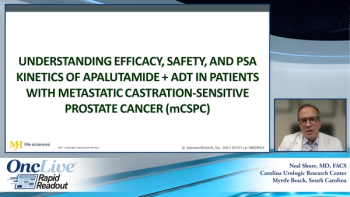
Sponsored Content: Neal Shore, MD, FACS reviews new data on the TITAN trial of apalutamide in patients with mCSPC.

Kevin Kayvan Zarrabi, MD, MS, FACP, discusses remaining questions regarding treatment consisting of triplet therapy in patients with metastatic castration-sensitive prostate cancer.

Clara Hwang, MD, discusses adverse effects associated with FDA-approved agents for patients with nonmetastatic prostate cancer.
Clara Hwang, MD, discusses unmet needs in patients with nonmetastatic prostate cancer who then progress on novel agents and develop metastatic disease.

The European Medicines Agency has validated its Type II variation for enzalutamide as an option in patients with nonmetastatic hormone-sensitive prostate cancer at high risk of biochemical recurrence who are not suitable for salvage radiotherapy.

Joshi Alumkal, MD, discusses treatment options for patients with metastatic castrate-resistant prostate cancer harboring homologous recombination deficient alterations, including PARP inhibitors.
Clara Hwang, MD, discusses risk stratification methods used to assess the risk of metastatic disease in patients with nonmetastatic prostate cancer.

Clara Hwang, MD, highlights agents that the FDA has approved for use in patients with nonmetastatic castration-resistant prostate cancer, such as apalutamide, enzalutamide, and darolutamide.

Alexandra Sokolova, MD, discusses the importance of genetic testing in patients with prostate cancer, which patients may benefit most from genetic testing, and how cascade testing can identify additional people who are at risk for developing cancer.
Closing out their final module, expert panelists consider the role of CAR T-cell therapy in metastatic castration-resistant prostate cancer and look toward future evolutions in the broader treatment landscape.
Advertisement
Advertisement
Trending on OncLive
1
Savolitinib Plus Osimertinib NDA Submitted to FDA for MET-Driven, EGFR-Mutated NSCLC After EGFR TKI
2
FDA Grants Priority Review to Elinzanetant for Endocrine Therapy–Associated Vasomotor Symptoms in HR+ Breast Cancer
3
Calculating the Real Cost of False Positive Findings in Cancer Screening
4
China's NMPA Approves Pirtobrutinib Across CLL
5