






Prostate Cancer
Latest News
Advertisement
Latest Videos






























































Advertisement
More News

Benjamin V. Stone, MD, discusses clinical implications derived from a retrospective study on the effect of limited English proficiency on prostate-specific antigen screening rates in American men with prostate cancer, as well as the need to improve equitable access to PSA screening across academic and community centers.

Scott Tagawa, MD, MS, FACP, discusses the evolution of PARP inhibitor use in metastatic castration-resistant prostate cancer and available PARP inhibitors for molecularly-selected patients in this space.

The FDA has approved flotufolastat F 18 injection (Posluma) for positron emission tomography of prostate-specific membrane antigen–positive lesions in men with prostate cancer with suspected metastasis who are eligible for initial definitive therapy or with suspected recurrence based on elevated serum prostate-specific antigen level.

David R. Wise, MD, PhD, discusses changes in the optimal use of intensified treatment regimens in patients with metastatic hormone-sensitive prostate cancer.

Before sharing clinical pearls for the treatment of prostate cancer, key opinion leaders reflect on the potential use of immune checkpoint inhibitors in mCRPC.
Expert panelists consider the real-world application of PARP inhibitor data in patients with metastatic castration-resistant prostate cancer.

Benjamin V. Stone, MD, discusses the association between language barriers and prostate-specific antigen screening rates in American men.

Fred Saad, MD, FRCS, expands on the relationship between PSA responses and survival outcomes in the ARASENS trial, explained the use of 0.2 ng/mL as a standard cut off for undetectable PSA within this exploratory analysis, and discussed how this study elucidates future directions for research with triplet regimens in mHSPC.
Alexander Putnam Cole, MD, discusses the rationale for investigating the magnitude of racial and ethnic disparities in prostate cancer–specific survival in patients undergoing surgery vs radiotherapy.

Benjamin H. Lowentritt, MD, FACS, highlights key findings from the retrospective study of second-generation ARSI use in patients with metastatic castration-sensitive prostate cancer treated in clinic and discusses several directions for future analyses of real-world outcomes in prostate cancer.
Comprehensive insight on the evolving role of PARP inhibitors in metastatic castration-resistant prostate cancer and clinical trials in this setting.
Expert oncologists briefly review the current treatment paradigm of metastatic castration-resistant prostate cancer (mCRPC).

Alexander Putnam Cole, MD, discusses the importance of investigating racial and ethnic disparities in prostate cancer outcomes, key data from a comparison of cancer-specific survival according to race and treatment modality, and how these results could better inform efforts to improve access to, and quality of, patient care in this disease.
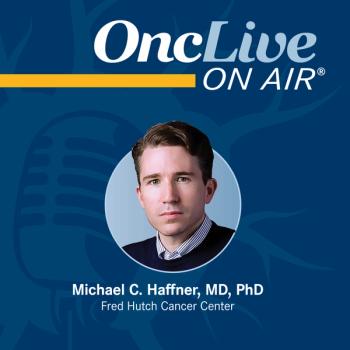
Dr Haffner explains distinguishing features between basal cell and adenocarcinoma of the prostate, findings from a genomics study of basal cell prostate carcinoma, and the challenges that arise when diagnosing and treating patients with this rare disease.

An increased focus on long-term and genomic analyses on established treatments in prostate cancer have revealed new opportunities for patients across disease states.

Neal Shore, MD, FACS, discusses the rationale for the phase 3 EMBARK trial investigating enzalutamide plus leuprolide in patients with nonmetastatic hormone-sensitive prostate cancer with high-risk biochemical recurrence.

John Michael "JM" Bryant, MD, expands on the results of the interim analysis of the single-center, single-arm phase 2 trial for patients with grade group 5 prostate cancer treated with the combination of nivolumab and standard of care.
Closing out their segment on metastatic hormone-sensitive prostate cancer, panelists review other treatment modalities being investigated in clinical trials.
Expert insight on methods to educate patients on available treatment options in the setting of metastatic hormone-sensitive prostate cancer.

Mara Koelker, MD, discusses the rationale of evaluating racial differences in QOL for patients with prostate cancer and ways to address these short-term disparities in a real-world setting.

Drs Manning and Armstrong discuss the impact of lesion size and symptomatic status of bone metastases on radiotherapy selection in mCRPC, highlighting ongoing trials and emerging data.
Matthew Manning, MD, and Andrew Armstrong, MD, discuss the remaining unmet needs in mCRPC, clinical trials and novel agents to look out for, and share practical advice for other clinicians treating patients with the disease.
Alexander Putnam Cole, MD, discusses findings from a study investigating the effect of type of definitive treatment on race-based differences in prostate cancer–specific mortality in patients with prostate cancer.

Bertrand F. Tombal, MD, PhD, explains how data on the clinically relevant drug-drug interactions and TRAEs with darolutamide, docetaxel and ADT support previously reported efficacy data from the ARASENS trial, and presents lingering questions and caveats from this trial that should be addressed through continued research.

Paul Sieber, MD, discusses the importance of assessing risk factors for cardiovascular events in patients with prostate cancer who are initiating androgen deprivation therapy.
Advertisement
Advertisement
Trending on OncLive
1
Savolitinib Plus Osimertinib NDA Submitted to FDA for MET-Driven, EGFR-Mutated NSCLC After EGFR TKI
2
FDA Grants Priority Review to Elinzanetant for Endocrine Therapy–Associated Vasomotor Symptoms in HR+ Breast Cancer
3
Calculating the Real Cost of False Positive Findings in Cancer Screening
4
China's NMPA Approves Pirtobrutinib Across CLL
5