






Prostate Cancer
Latest News
Advertisement
Latest Videos
































































Advertisement
More News

Atish D. Choudhury, MD, PhD, discussed the significance of these trials within the metastatic castration-resistant prostate cancer treatment landscape, highlighted investigative PARP inhibitor combinations, and emphasized the need for further research in this area to determine which patients are most likely to benefit from certain therapies based on their molecular profiles.

Basal cell carcinoma of the prostate is a rare variant of prostate cancer so uncommon that few physicians will ever treat the disease in their careers. Only 100 or so patients have been identified in the literature compared with more than 1 million diagnoses every year for adenocarcinoma.

Amar U. Kishan, MD, discusses interim results from the phase 3 MIRAGE trial of magnetic resonance imaging–guided stereotactic body radiotherapy in prostate cancer.
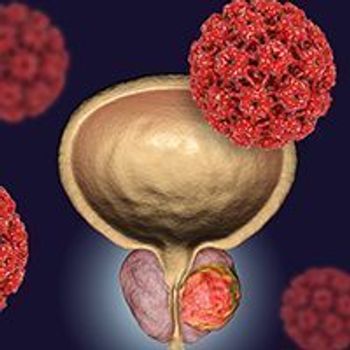
Merck is discontinuing the phase 3 KEYNOTE-991 trial evaluating pembrolizumab plus enzalutamide and androgen deprivation therapy vs placebo plus enzalutamide/ADT in patients with metastatic hormone-sensitive prostate cancer due to futility.

Alicia Morgans, MD, MPH, discussed the evolving role of androgen deprivation therapy in metastatic hormone-sensitive prostate cancer, investigational immunotherapy combinations in urothelial cancer, and how antibody-drug conjugates provide a unique means of delivering toxic agents directly to tumors.

Ryan Fecteau, MD, PhD, discusses the navigation of salvage treatment options for patients experiencing isolated prostate cancer recurrence.

Alicia Morgans, MD, MPH, discusses current androgen deprivation therapy combinations and the investigation of radiopharmaceutical combinations for metastatic hormone-sensitive prostate cancer.

MRI-Guided Radiotherapy Significantly Reduces Genitourinary, Gastrointestinal AEs in Prostate Cancer
Article
Patients who received MRI-guided stereotactic body radiotherapy for prostate cancer experienced fewer moderate acute physician-scored genitourinary and gastrointestinal adverse effects compared with those who received computed tomography–guided stereotactic body radiotherapy.

Tanya Dorff, MD, discusses the exploration of triplet combination therapies in patients with metastatic hormone-sensitive prostate cancer.

ADXS-504, an investigational off-the-shelf neoantigen therapy, has been reported to be well tolerated and safe in patients with biochemically recurrent early prostate cancer.

The combination of BXCL701 and pembrolizumab produced encouraging responses in patients with small cell neuroendocrine carcinoma metastatic castration-resistant prostate cancer, according to topline data from a phase 2 trial.

Tanya Dorff, MD, discusses the investigation of PARP inhibitors in metastatic castration-resistant prostate cancer.

Closing out their review of the metastatic CRPC treatment paradigm, Tanya Dorff, MD, and Elisabeth Heath, MD, FACP, look toward future evolutions in care.

Abiraterone acetate granules for oral suspension demonstrated therapeutic equivalence and comparable safety to the original formulation of abiraterone acetate in patients with metastatic castration-resistant prostate cancer and metastatic castration-sensitive prostate cancer.
Tanya Dorff, MD, and Elisabeth Heath, MD, FACP, share perspective on the challenges inherent in delivering novel therapy to patients diagnosed with metastatic CRPC.
Comprehensive insight on factors that may influence the selection of cabazitaxel or radiotherapy for patients with metastatic castration-resistant prostate cancer.

An unshakeable belief in the power of the immune system and a deep-seated desire to make the world a better place have guided Eric J. Small, MD, throughout his career.
A brief review of factors that may influence an academic or community physician’s choice to utilize cabazitaxel in the setting of metastatic castration-resistant prostate cancer.
Switching their focus to combination therapy in metastatic CRPC, expert oncologists review trial results from a study analyzing cabazitaxel/carboplatin therapy.

The European Commission has approved the combination of olaparib plus abiraterone acetate and prednisone or prednisolone for the treatment of adult patients with metastatic castration-resistant prostate cancer in whom chemotherapy is not clinically indicated.

Omar Mian, MD, PhD, discusses the ongoing investigation into the synchronous up-front setting of metastatic prostate cancer.
Tanya Dorff, MD, and Elisabeth Heath, MD, FACP, review data from the CARD trial and discuss the nuanced selection and sequencing of treatment in metastatic CRPC.
Expert perspectives on the PROSELICA trial, which helped inform optimal dosing strategies with cabazitaxel in metastatic castration-resistant prostate cancer.
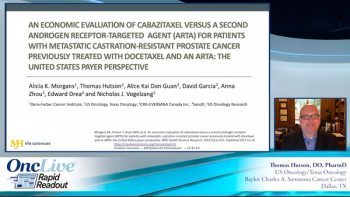
Dr Thomas Hutson reviews recently published data on patient outcomes and estimated healthcare costs associated with use of third-line cabazitaxel versus a second ARTA in patients with metastatic castration-resistant prostate cancer (CRPC).

The FDA has told AstraZeneca and MSD that the agency will extend the Prescription Drug User Fee Act date by 3 months to provide further time for a full review of the supplementary new drug application for olaparib plus abiraterone and prednisone or prednisolone for patients with mCRPC.
Advertisement
Advertisement
Trending on OncLive
1
Savolitinib Plus Osimertinib NDA Submitted to FDA for MET-Driven, EGFR-Mutated NSCLC After EGFR TKI
2
FDA Grants Priority Review to Elinzanetant for Endocrine Therapy–Associated Vasomotor Symptoms in HR+ Breast Cancer
3
Calculating the Real Cost of False Positive Findings in Cancer Screening
4
Cilta-Cel Shows Long-Term Treatment-Free Remissions in Lenalidomide-Refractory Myeloma
5