





Prostate Cancer
Latest News
Advertisement
Latest Videos

































































Advertisement
More News

A brief discussion on the role of quality of life in selecting best therapy for patients with non-metastatic castration-resistant prostate cancer.
Key opinion leaders reflect on the real-world use and data behind AR inhibitors in non-metastatic castration-resistant prostate cancer.

Bertrand Tombal, MD, PhD, discusses the pharmacokinetics of darolutamide plus docetaxel in metastatic hormone-sensitive prostate cancer.
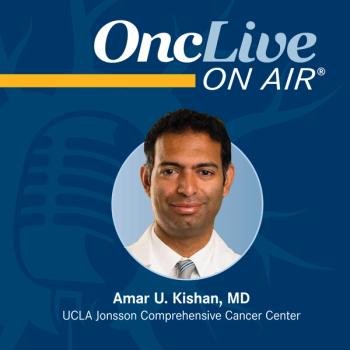
Dr Kishan discusses the use of MRI-guided SBRT in prostate cancer to reduce acute genitourinary and gastrointestinal toxicity; findings from the MIRAGE study; and how MRI-guided SBRT allows for tighter planning margins, thereby reducing both physician-reported and patient-reported bowel and bladder toxicities.

Neeraj Agarwal, MD, discusses preclinical data that supported the launch of the TALAPRO-2 trial and key efficacy and safety data on the use of talazoparib plus enzalutamide in patients with metastatic castration-resistant prostate cancer irrespective of homologous recombination repair mutational status.
Shared insight on the SPARTAN, PROSPER, and ARAMIS studies with androgen receptor (AR) inhibitors in non-metastatic castration-resistant prostate cancer.
Expert oncologists provide a focused review on goals of therapy for patients with non-metastatic castration-resistant prostate cancer (nmCRPC).

Alexandra Sokolova, MD,discusses the evaluation of rucaparib vs physician’s choice standard of care therapy in patients with BRCA-positive metastatic castration-resistant prostate cancer.

The safety and efficacy of the immune checkpoint inhibitor atezolizumab plus the VEGF TKI tivozanib is being investigated in patients with unresectable or metastatic castrate-resistant prostate cancer, as well as those with several other immunologically cold tumors as part of the phase 1b/2 IMMCO-1 trial.

Robert Dreicer, MD, discusses the use of triplet therapy in the first-line management of de novo metastatic prostate cancer.
Before centering discussion on subsets of prostate cancer, panelists consider general challenges and unmet needs within the treatment landscape.
Key opinion leaders provide a broad perspective on recent shifts in the treatment landscape for prostate cancer.

Enzalutamide plus leuprolide demonstrated a statistically significant and clinically meaningful improvement in metastasis-free survival compared with placebo plus leuprolide in patients with nonmetastatic castration-sensitive prostate cancer with a high-risk of biochemical recurrence.

Evan Y. Yu, MD, discusses new data and continuing conversations regarding the use of PARP inhibitors and targeted radioligand therapies in prostate cancer.

Michael A. Carducci, MD, discusses the significance of two ongoing clinical trials in prostate cancer: the phase 3 CAPItello-280 trial (NCT05348577) and phase 3 INDICATE study (EA8191; NCT04423211).

The FDA has approved a supplementary new drug application for Illuccix for use in the selection of patients with metastatic prostate cancer for whom lutetium Lu 177 vipivotide tetraxetan is indicated.

Michael S. Cookson, MD, MMHC, discusses how understanding the relationship between key predictive factors and disease progression can help better inform the overall management of prostate cancer.

Bellicum Pharmaceuticals has discontinued 2 phase 1/2 trials evaluating the safety and preliminary efficacy of the GoCAR T-cell products BPX-601 and BPX-603 in combination with rimiducid in heavily pretreated patients with advanced solid tumors following an assessment of the risk/benefit profile of the combination of BPX-601 and rimiducid.

Enzalutamide plus androgen deprivation therapy produced a statistically significant improvement in time to prostate-specific antigen progression compared with ADT and placebo in men with metastatic hormone-sensitive prostate cancer, meeting the primary end point of the phase 3 China ARCHES study.

Precision medicine and personalized medicine are 2 concepts that have pushed their way to the forefront of oncology practice.

Andrei H. Iagaru, MD, discusses key points from his presentation on the use of novel vs conventional imaging to manage metastatic hormone-sensitive prostate cancer.

Patients with metastatic castration-resistant prostate cancer have traditionally been burdened by a poor outlook; however, emerging therapeutic targets and novel agents directed at them are poised to affect change in this population.

Jeremie Calais, MD, MSc, discusses the role of prostate-specific membrane antigen-PET imaging in metastatic-castrate resistant prostate cancer, and touches on the importance of integrating PSMA-PET imaging into community settings for clinical practice.

Tanya Dorff, MD, discusses key data supporting the use of intensified triplet regimens in metastatic hormone-sensitive prostate cancer, and remaining questions regarding the role of chemotherapy agents in these combinations.

Matthew Rettig, MD, discusses the evolution of triplet therapy within the landscape of metastatic hormone-sensitive prostate cancer, as well as the importance of considering key prognostic factors when utilizing this approach.
Advertisement
Advertisement
Trending on OncLive
1
Savolitinib Plus Osimertinib NDA Submitted to FDA for MET-Driven, EGFR-Mutated NSCLC After EGFR TKI
2
FDA Grants Priority Review to Elinzanetant for Endocrine Therapy–Associated Vasomotor Symptoms in HR+ Breast Cancer
3
Calculating the Real Cost of False Positive Findings in Cancer Screening
4
China's NMPA Approves Pirtobrutinib Across CLL
5