
Revisit the most intriguing GI cancer data from the 2025 ESMO Congress.

Your AI-Trained Oncology Knowledge Connection!
Revisit the most intriguing GI cancer data from the 2025 ESMO Congress.
Saruparib plus an androgen receptor pathway inhibitor was safe and active in metastatic prostate cancer.
Adjuvant therapy was associated with ctDNA clearance and improved DFS in patients with resectable stage I to IV CRC.
First-line cadonilimab plus chemotherapy demonstrated long-term efficacy benefits vs chemotherapy alone in patients with advanced gastric or GEJ adenocarcinoma.
Zabilugene almadenorepvec plus SOC therapy was active in patients with treatment-naive metasatic PDAC.
Zanzalintinib plus atezolizumab demonstrate potential chemotherapy-free option in previously treated metastatic CRC.
Nivolumab plus ipilimumab improved PFS and response rates vs nivolumab alone in MSI-H/dMMR mCRC, with no new safety concerns.
Bemarituzumab/mFOLFOX6 produced an OS advantage over placebo/mFOLFOX6 in FGFR2b-overexpressing gastric/GEJ cancer; this was attenuated at longer follow-up.
Telisotuzumab adizutecan displayed early activity in locally advanced/metastatic PDAC.
The SKYSCRAPER-14 trial did not show a PFS benefit with tiragolumab plus atezolizumab and bevacizumab in untreated HCC, missing its coprimary end point.
212Pb-DOTAMTATE produced responses with a manageable safety profile in patients with SSTR-positive, PRRT-exposed, unresectable or metastatic GEP-NETs.
Sirexatamab plus bevacizumab shows promise in improving survival for patients with DKK1-high metastatic colorectal cancer.
Tislelizumab plus induction chemotherapy and concurrent chemoradiation demonstrated efficacy worthy of further study in locally advanced ESCC.
177-Lu-edotretide significantly improved survival outcomes vs everolimus for the treatment of patients with grade 1/2 GEP-NETs.
regorafenib/nivolumab may encourage a search for more non-chemotherapy combinations for gastric cancer.
The addition of durvalumab to FLOT prolonged overall survival vs FLOT alone in resectable gastric/gastroesophageal junction adenocarcinoma.
First-line treatment with lenvatinib, pembrolizumab, and chemotherapy did not improve OS vs chemoimmunotherapy in patients with advanced ESCC.
See poll results highlighting the top gastrointestinal oncology abstracts and subtypes to watch at the 2025 ESMO Congress.
Ahead of the 2025 ESMO Congress, GI cancer experts share the gastric cancer and CRC research they’re most looking forward to seeing at the meeting.
Vote on the top abstracts and topics to watch in gynecologic and gastrointestinal oncology during the 2025 ESMO Congress.
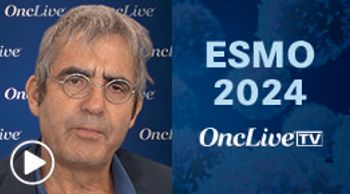
Thierry Andre, MD, discusses subgroup and safety analyses of the phase 3 CheckMate 8HW trial of frontline nivolumab plus ipilimumab in MSI-H/dMMR mCRC.

In the NO-CUT trial, 97% of patients with pMMR locally advanced rectal cancer sustained distant relapse-free survival with nonoperative management.

Tremelimumab plus durvalumab sustained an overall survival improvement in unresectable hepatocellular carcinoma.
Ramucirumab plus trifluridine/tipiracil failed to improve overall survival vs TAS-102 alone in patients with heavily pretreated metastatic colorectal cancer.
Encorafenib, cetuximab, and FOLFIRI demonstrate promising antitumor activity in patients with BRAF V600E-mutant metastatic colorectal cancer.

Lenvatinib, pembrolizumab, and TACE improved progression-free survival in patients with intermediate-stage hepatocellular carcinoma.

The addition of retifanlimab to carboplatin and paclitaxel prolonged PFS for patients with chemotherapy-naive recurrent or metastatic SCAC.
Pembrolizumab plus trastuzumab and chemotherapy reduced the risk of death by 20% in patients with advanced, unresectable, or metastatic HER2+ gastric or GEJ cancer.
Zanidatamab plus chemotherapy with or without bevacizumab showed efficacy and safety in previously untreated HER2-positive metastatic colorectal cancer.
First-line combinations with trastuzumab deruxtecan showed initial efficacy in HER2-positive esophageal, gastric, and gastroesophageal junction cancers.