

Darolutamide plus ADT improved rPFS in Black patients with metastatic hormone-sensitive prostate cancer treated in ARANOTE.
Darolutamide plus ADT improved rPFS in Black patients with metastatic hormone-sensitive prostate cancer treated in ARANOTE.
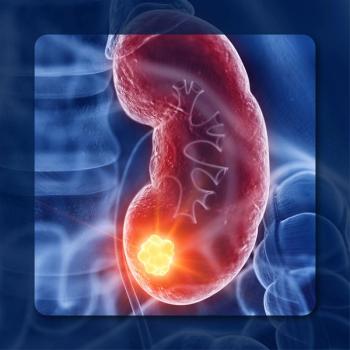
A retrospective analysis showed higher response rate for cabozantinib/nivolumab vs. lenvatinib/pembrolizumab in advanced RCC.
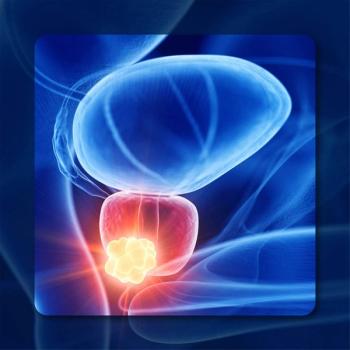
The majority of patients with prostate cancer treated with an enzalutamide or leuprolide acetate regimen recovered their testosterone levels.

Quoc-Dien Trinh, MD, MBA, discusses outcomes for darolutamide plus ADT in Black patients with metastatic hormone-sensitive prostate cancer.
Alireza Ghoreifi, MD, discusses the feasibility of consolidative surgery for advanced urothelial cancer receiving pembrolizumab/enfortumab vedotin.
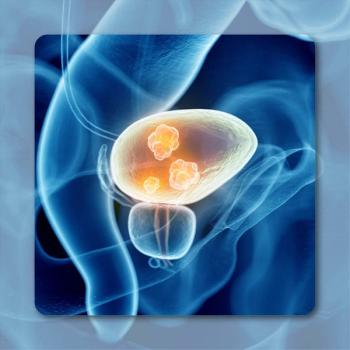
Interim data from a phase 2 study support the potential of TARA-002 as an intravesical immunotherapy in high-risk NMIBC.
Neoadjuvant mitomycin C improved 18-month recurrence-free survival and demonstrated favorable safety in non–muscle-invasive bladder cancer.

Joseph Jacob, MD, MCR, discusses how emerging data for TAR-200 could represent a shift in the treatment paradigm for patients with high-risk non–muscle-invasive bladder cancer.
Colin P.N. Dinney, MD, discusses urinary genomic disease burden as a potential biomarker for response to cretostimogene grenadenorepvec in bladder cancer.
The addition of disitamab vedotin to BCG demonstrated high CR rates in HER2-expressing, high-risk NMIBC.
Nogapendekin alfa inbakicept demonstrated sustained CR rates in patients with high-risk BCG-unresponsive NMIBC.
UGN-102 elicits robust responses with acceptable tolerability in recurrent low-grade intermediate-risk non–muscle-invasive bladder cancer.

No complete or partial pathologic responses were achieved with neoadjuvant niraparib in patients with DDR-deficient prostate cancer following surgery.
Enfortumab vedotin plus pembrolizumab followed by surgery led to high CR rates in advanced urothelial cancer.
TAR-200 showed promising results in treating patients with BCG-unresponsive, high-risk NMIBC, achieving an 82.4% complete response rate.
Cretostimogene grenadenorepvec generated complete responses in patients with high-risk BCG-unresponsive NMIBC and CIS with or without Ta/T1 tumors.
TAR-200 produced durable disease-free survival in BCG-unresponsive, papillary-only, high-risk non–muscle-invasive bladder cancer.

Sasanlimab plus BCG significantly improved EFS vs BCG alone in high-risk non–muscle-invasive bladder cancer.
Twelve-month RFS was associated with MRD status in patients with BCG-unresponsive, NMIBC who received treatment with cretostimogene grenadenorepvec.
Continued evaluation of UGN-301 in patients with recurrent NMIBC is warranted.
Experts highlight the top presentations to watch for at the 2025 AUA Annual Meeting.

No significant difference in time to treatment was found between White and Black patients with bladder cancer, but there remained a difference in treatment outcomes.

Angela Jia, MD, PhD, discusses the current standing of metastasis-directed radiotherapy in prostate cancer and identifies some lingering questions surrounding the modality.

Robert Wang, MD, discusses the presently limited utility of using molecular imagining with quantitative thresholds in distinguishing RCC from oncocytic renal masses.

TAR-210 was safe and showed promising clinical activity in patients with FGFR-altered high- and intermediate-risk non–muscle-invasive bladder cancer.
Alexander Kutikov, MD, FACS, discusses treatment options for patients with urothelial cancer requiring cystectomy.

Roger Li, MD, discusses the rationale of the phase 3 MoonRISe-1 trial (NCT06319820).

Nadofaragene firadenovec led to durable antitumor activity in BCG-unresponsive NMIBC either with CIS or papillary disease, according to 5-year data from the phase 3 Study CS-003.

UGN-102 with/without TURBT displayed meaningful and similar DFS and DOR rates in newly diagnosed and recurrent low-grade intermediate-risk NMIBC.

Katherine Wang, MD, discusses the role of active surveillance for patients with renal masses and the ongoing MUSIC-KIDNEY project in Michigan.