

Joshua J. Meeks, MD, PhD, discusses effectively implementing recent therapeutic advances across the disease continuum of bladder cancer.
Joshua J. Meeks, MD, PhD, discusses effectively implementing recent therapeutic advances across the disease continuum of bladder cancer.
18F-DCFPyL PSMA-PET imaging plus multi-parametric MRI improved the detection of clinically significant prostate cancer in low- and high-risk men on active surveillance.

Enzalutamide alone and with leuprolide led to greater rates of undetectable PSA levels vs leuprolide alone in castration-sensitive prostate cancer.
Apalutamide and ADT elicited a 100% biochemical recurrence-free survival rate at 24 months in high-risk localized prostate cancer following radical prostatectomy.
Outcome improvements with lutetium Lu 177 vipivotide tetraxetan vs ARPI change favored prior treatment with abiraterone vs enzalutamide in mCRPC.
18F-PSMA-1007 PET/CT generated superior locoregional staging results vs multiparametric MRI in patients with prostate cancer.

Concurrent radical cystectomy and extended lymph node dissection did not show benefit vs standard lymph node dissection in muscle invasive urothelial cancer.

TAR-200 displayed a high complete response rate in Bacillus Calmette–Guérin-unresponsive high-risk non–muscle-invasive bladder cancer.

High-intensity focused ultrasound produced noninferior salvage treatment-free survival vs radical prostatectomy in localized prostate cancer.

Mark D. Tyson, II, MD, MPH, discusses findings from the phase 3 BOND-003 trial in BCG-unresponsive non–muscle-invasive bladder cancer with CIS.
Cretostimogene grenadenorepvec elicited durable responses in high-risk BCG-unresponsive non–muscle-invasive bladder cancer with carcinoma in situ.

Sohail Dhanji, MD, discusses the effect of preoperative hypertension on survival outcomes in patients undergoing nephroureterectomy for upper tract urothelial carcinoma, and the importance of hypertension control in this population.

Eric A. Singer, MD, discusses the use of systemic pembrolizumab monotherapy in patients with Bacillus Calmette-Guérin–unresponsive, high-risk non–muscle invasive bladder cancer.

Findings from the phase 3 ZIRCON trial showed that imaging with 89Zr-DFO-girentuximab could improve the identification and risk stratification of patients with renal tumors.

Apalutamide plus androgen deprivation therapy with or without abiraterone acetate and prednisone improved prostate-specific antigen progression-free survival in patients with biochemically relapsed prostate cancer, according to long-term follow-up data from the phase 3 PRESTO trial.
Sia Daneshmand MD, discusses preliminary results from the phase 2 SunRISe-1 trial (NCT04640623) in patients with non–muscle invasive bladder cancer unresponsive to Bacillus Calmette-Guérin.
Fred Saad, MD, FRCS, discusses prostate-specific antigen (PSA) response and time to PSA progression with the combination of abiraterone acetate and olaparib in patients with metastatic castration-resistant prostate cancer.

Treatment with pembrolizumab monotherapy resulted in stable long-term disease-free survival rates in patients with Bacillus Calmette-Guérin–unresponsive, high-risk non–muscle-invasive bladder cancer.

Treatment with TAR-200 produced complete responses and was well tolerated in patients with Bacillus Calmette-Guérin–unresponsive, high-risk non–muscle-invasive bladder cancer, according to preliminary data from the phase 2b SunRISe-1 trial.

Nivolumab following radical surgery continued to display a benefit in disease-free survival in patients with muscle-invasive urothelial carcinoma and muscle-invasive bladder cancer.
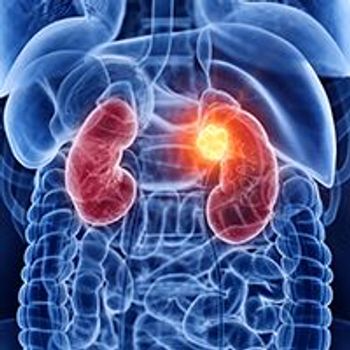
Treatment with sintilimab in combination with axitinib resulted in tumor shrinkage with tolerable adverse effects in patients with advanced fumarate hydratase–deficient renal cell carcinoma.

Specific comorbidities were linked with complications following partial nephrectomy, compared with radical nephrectomy, in patients with T1b to T2 renal cell carcinoma.
Hypertension was found to be an independent risk factor for worse survival outcomes in patients with upper tract urothelial cancer undergoing radical nephroureterectomy.

A high body mass index was linked with improved overall survival in patients with renal cell carcinoma undergoing radical nephrectomy.

Benjamin H. Lowentritt, MD, FACS, discusses prostate-specific antigen response and time to castration resistance in patients with metastatic castration-sensitive prostate cancer started on apalutamide, enzalutamide, or abiraterone acetate.

Roger Li, MD, discusses phase 2 data with the combination of CG0070 and pembrolizumab in patients with non–muscle invasive bladder cancer unresponsive to Bacillus Calmette-Guérin.
Treatment with the androgen receptor inhibitor enzalutamide plus leuprolide led to a significant reduction in the risk of metastasis or death compared with placebo plus leuprolide in patients with nonmetastatic hormone-sensitive prostate cancer with high-risk biochemical recurrence.
Patients with metastatic castration-sensitive prostate cancer treated with the androgen receptor–signaling inhibitor apalutamide achieved prostate-specific antigen responses that trended higher and rates of progression to castration resistance that trended lower than those receiving enzalutamide or abiraterone acetate/
A post-hoc analysis of the phase 3 ARASENS trial demonstrated that the addition of darolutamide to androgen deprivation therapy and docetaxel produced deep and durable prostate-specific antigen responses in patients with metastatic hormone-sensitive prostate cancer.
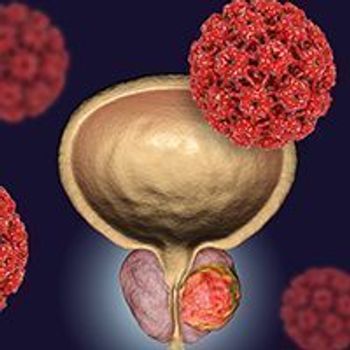
A subgroup analysis of the phase 3 ARASENS trial showed that darolutamide plus androgen deprivation therapy elicited an overall survival benefit in North American patients with metastatic hormone-sensitive prostate cancer.