

Aaron Gerds, MD, discusses updated efficacy and safety results for pelabresib and ruxolitinib in JAK inhibitor–naive myelofibrosis.
Aaron Gerds, MD, discusses updated efficacy and safety results for pelabresib and ruxolitinib in JAK inhibitor–naive myelofibrosis.
Treatment with asciminib led to a superior 48-week major molecular response rate vs investigator-selected TKIs in patients with Ph-positive chronic phase chronic myeloid leukemia.

Lorlatinib extended PFS and improved time to intracranial progression vs crizotinib in patients with ALK-positive non–small cell lung cancer.

Sumanta Kumar Pal, MD, FASCO, discusses key biomarker analyses in renal cell carcinoma that will be presented at the 2024 ASCO Annual Meeting.

Most women who attempted to conceive following treatment for stage I to III breast cancer were able to become pregnant at least once.
Patients under the age of 40 who received HPV vaccines were associated with lower rates of HPV-related cancer vs unvaccinated patients.

An artificial intelligence-based navigation tool may be used to call patients who previously missed their colonoscopy appointment with the goal that they will reschedule and attend the new appointment.

Treatment with CEE alone was associated with increased ovarian cancer incidence and mortality rates in postmenopausal women who had undergone hysterectomy.

Stephen V. Liu, MD, discusses studies being presented at the 2024 ASCO Annual Meeting that may provide valuable insights into the management of NSCLC.

S. Vincent Rajkumar, MD, discusses highly anticipated abstracts in multiple myeloma that will be presented at the 2024 ASCO Annual Meeting.

Barbara Pistilli, MD, discusses the mechanism of action of novel ADCs, the ways in which ADC targets in breast cancer can change over time, and how future research may pave the way for individualized treatment with this class of agents.

Alex Herrera, MD, discussed key data from the SWOG S1826 trial and other important research in hematologic malignancies presented at the 2023 ASCO Annual Meeting.

Erika P. Hamilton, MD, discusses the efficacy and safety of adjuvant abemaciclib plus endocrine therapy in patients with hormone receptor–positive, HER2-negative, high-risk early breast cancer according to age.

Acalabrutinib and zanubrutinib demonstrated similar investigator-assessed progression-free survival in patients with relapsed/refractory chronic lymphocytic leukemia.

Brian I. Rini, MD, FASCO, discusses long-term survival outcomes in patients with advanced clear cell renal cell carcinoma who received frontline pembrolizumab and axitinib in the phase 3 KEYNOTE-426 trial.

Sara M. Tolaney, MD, MPH, discusses key data from a final overall survival analysis of the phase 3 TROPiCS-02 trial in hormone receptor–positive, HER2-negative breast cancer.
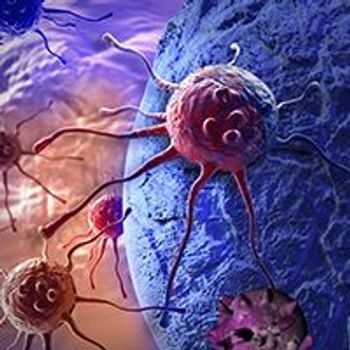
The first-in-class EGFR x HER3 bispecific antibody-drug conjugate BL-B01D1 generated antitumor activity and safety in patients with advanced solid tumors, particularly EGFR-mutated and wild-type non–small cell lung cancer and nasopharyngeal carcinoma.
Sotorasib provided consistent benefit over docetaxel in the majority of key prespecified molecularly defined subsets of patients with pretreated KRAS G12C–mutated non–small cell lung cancer enrolled to the phase 3 CodeBreaK 200 trial.

The combination of dabrafenib and trametinib plus navitoclax generated responses and met the co-primary end point for complete response rate vs historical controls in patients with BRAF V600–mutant metastatic melanoma.

Treatment with the combination of epcoritamab, rituximab, and lenalidomide led to responses and durable remissions in patients with relapsed/refractory follicular lymphoma.
The addition of tumor treating fields to standard-of-care immunotherapy or chemotherapy regimens elicited an improvement in overall survival vs SOC therapies alone in patients with metastatic non-small cell lung cancer following progression on or after platinum-based chemotherapy, according to data from the phase 3 LUNAR trial.

Treatment with lisocabtagene maraleucel elicited encouraging responses regardless of prior progression on BTK inhibition or absence of clinical benefit with venetoclax in patients with relapsed/refractory chronic lymphocytic leukemia/small lymphocytic lymphoma, meeting the primary end point of the phase 1/2 TRANSCEND CLL 004 trial.

The combination of mRNA-4157 and pembrolizumab reduced the risk of developing distant metastasis or death by approximately 65% compared with pembrolizumab alone as adjuvant therapy in patients with resected melanoma at high risk of recurrence, according to findings from the phase 2 KEYNOTE-942 trial.
Combination treatment consisting of datopotamab deruxtecan and pembrolizumab with or without platinum-based chemotherapy generated responses as first- or second-line treatment for patients with advanced or metastatic non–small cell lung cancer.

The novel irreversible EGFR exon 20 insertion inhibitor sunvozertinib demonstrated significant clinical activity and similar safety to prior reports in Chinese patients with non–small cell lung cancer harboring EGFR exon 20 insertion mutations who progressed on prior platinum-based chemotherapy, according to results from the phase 2 WO-KONH6 study.

The addition of pembrolizumab to pemetrexed and platinum-based chemotherapy resulted in a numerical, but not statistically significant, improvement in progression-free survival or overall survival vs chemotherapy plus placebo in patients with TKI-resistant, EGFR-mutated, metastatic nonsquamous non–small cell lung cancer.

Katherine B. Peters, MD, PhD, discusses findings from the phase 3 INDIGO trial of vorasidenib in patients with recurrent or residual grade 2 glioma harboring an IDH1 or IDH2 mutation and how these results support the addition of vorasidenib to the treatment armamentarium.

Treatment with avutometinib plus defactinib elicited high responses among patients with recurrent low grade serous ovarian cancer compared with avutometinib monotherapy, supporting the use of the combination in this patient population regardless of KRAS status, according to data from the RAMP 201 trial.

Prithviraj Bose, MD, discusses key data on the ability of pacritinib to reduce splenomegaly and disease symptoms in patients with myelofibrosis across the cytopenic spectrum.

Thierry Andre, MD, discusses negative overall survival results and updated safety data from the phase 3 SOLSTICE trial in metastatic colorectal cancer.