

The use of talazoparib plus enzalutamide was manageable with dose modifications or standard supportive care treatment in patients with metastatic castration-resistant prostate cancer.
The use of talazoparib plus enzalutamide was manageable with dose modifications or standard supportive care treatment in patients with metastatic castration-resistant prostate cancer.
Patients with nonmetastatic castration-resistant prostate cancer who received darolutamide were observed to have a longer time to treatment discontinuation and progression to metastatic castration-resistant disease than those who received enzalutamide or apalutamide.

The addition of pembrolizumab to neoadjuvant platinum-based chemotherapy followed by resection and adjuvant pembrolizumab alone resulted in a significant improvement in event-free survival and pathological response for patients with early-stage non–small cell lung cancer.

Zanidatamab generated responses in patients with HER2-amplified, locally advanced, unresectable or metastatic biliary tract cancer who were previously treated with gemcitabine.

Liposomal irinotecan plus 5-fluorouracil/leucovorin and oxaliplatin generated statistically significant and clinically meaningful overall survival and progression-free survival benefits compared with gemcitabine plus nab-paclitaxel in treatment-naïve patients with metastatic pancreatic ductal adenocarcinoma.

Patients with unresectable hepatocellular carcinoma experienced manageable and low-grade immune-related adverse events with single tremelimumab regular interval durvalumab.

The addition of durvalumab to standard upfront therapy with chemotherapy and bevacizumab followed by maintenance bevacizumab, durvalumab, and olaparib led to a statistically significant improvement in progression-free survival compared with chemotherapy and bevacizumab alone in patients with newly diagnosed, advanced ovarian cancer without a BRCA1/2 mutation.

A clinically meaningful absolute risk reduction in invasive disease-free survival and distant relapse-free survival with abemaciclib plus endocrine therapy was maintained in patients with hormone receptor–positive, HER2-negative, high-risk early breast cancer regardless of age.

Brexucabtagene autoleucel elicited high rates of complete remission with minimal residual disease negativity in real-world patients with relapsed or refractory B-cell acute lymphoblastic leukemia who received the CAR T-cell product as post-approval, standard-of-care treatment, according to data from a retrospective study.

Guillermo Garcia-Manero, MD, discusses key efficacy and safety findings from the phase 3 COMMANDS trial (NCT03682536) of luspatercept-aamt (Reblozyl) vs epoetin alfa in patients with lower-risk myelodysplastic syndrome.

Amer Zeidan, MBBS, discusses topline efficacy findings from the IMerge trial of imetelstat in patients with transfusion-dependent lower-risk myelodysplastic syndrome.

Obecabtagene autoleucel was associated with a 76% complete response (CR)/CR with incomplete count recovery rate in adult patients with relapsed/refractory B-cell acute lymphoblastic leukemia.
Treatment with the first-in-class direct and competitive telomerase inhibitor imetelstat resulted in statistically significant and clinically meaningful efficacy in patients with heavily transfusion dependent, non-del(5q) lower-risk myelodysplastic syndrome that is relapsed or refractory to erythropoiesis stimulating agents, according to findings from the phase 3 IMerge trial.

Simple hysterectomy was found to be noninferior to radical hysterectomy and pelvic node dissection in patients with low-risk, early-stage cervical cancer, according to results of the Canadian Cancer Trials Group CX.5/SHAPE trial.
Treatment with ribociclib plus endocrine therapy led to a statistically and clinically meaningful improvement in invasive disease-free survival among patients with hormone receptor–positive/HER2-negative early breast cancer compared with endocrine therapy alone, meeting the primary end point of the phase 3 NATALEE trial.

Experts in the field share the abstracts they found to be the most practice changing at this year’s ASCO Annual meeting.

Study findings demonstrated that states that expanded Medicaid had improved survival rates in patients with pancreatic and gastric cancers, with greater improvements in Black patients for some analyses.
The implementation of health systems strengthening models appeared to be effective in reducing disparities in leukemia survival among patients in low- and middle-income countries.

A telephone and web-based weight loss intervention was successful in helping patients with breast cancer who were overweight or obese lose weight—which can ultimately lead to improved outcomes.
Luspatercept-aamt led to a higher rate of sustained transfusion independence compared with erythropoiesis stimulating agents in patients with ESA-naïve, lower-risk myelodysplastic syndrome.
Pembrolizumab plus chemotherapy with or without bevacizumab led to a substantial improvement in overall survival vs placebo plus chemotherapy with or without bevacizumab in patients with persistent, recurrent, or metastatic cervical cancer, according to the final OS analysis of the KEYNOTE-826 trial.

Minimally invasive distal pancreatectomy was found to be a safe and effective alternative to that of open distal pancreatectomy in patients with resectable pancreatic cancer, confirmed by a noninferior radical resection rate, lymph node yield, and comparable survival data.
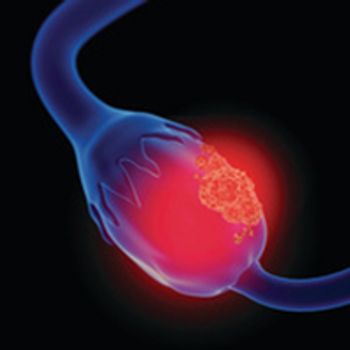
The combination of abemaciclib and fulvestrant led to encouraging responses when used as neoadjuvant therapy which translated to high complete gross resection rates in patients with advanced, low-grade serous ovarian, fallopian tube, and peritoneal carcinoma.

Apalutamide plus androgen deprivation therapy and radiotherapy was evaluated in patients with high- and very high–risk localized or locally advanced prostate cancer, with RT schedules that are reflective of recommended practice guidelines.

Sotorasib demonstrated clinically meaningful activity and acceptable tolerability in heavily pretreated patients with KRAS G12C–mutated advanced pancreatic cancer, according to date from the single-arm, phase 1/2 CodeBreak 100 trial.

Adding toripalimab to chemotherapy in the frontline setting demonstrated improved progression-free survival vs placebo plus chemotherapy in patients with advanced non–small cell lung cancer without EGFR or ALK mutations, regardless of PD-L1 status.

Zanubrutinib continued to demonstrate a higher complete response or very good partial response rate and less off-target activity compared with ibrutinib in patients with MYD88-mutated Waldenström macroglobulinemia.
Tislelizumab plus chemotherapy continued to improve progression-free survival over chemotherapy alone when used in the frontline treatment of patients with recurrent or metastatic nasopharyngeal carcinoma, according to updated data from the RATIONALE-309 trial.

Treatment with darolutamide, androgen deprivation therapy, and docetaxel that elicited a PSA response was linked to improved overall survival in patients with metastatic hormone-sensitive prostate cancer.

Tucatinib plus first-line standard-of-care maintenance therapy with trastuzumab and pertuzumab is being investigated for its ability to improve progression-free survival and maintain health-related quality of life in patients with HER2-positive metastatic breast cancer.