
The frontline combination of atezolizumab, obinutuzumab, and bendamustine, achieved a complete response in 75% of patients with follicular lymphoma, according to findings from a phase Ib/II trial.
The frontline combination of atezolizumab, obinutuzumab, and bendamustine, achieved a complete response in 75% of patients with follicular lymphoma, according to findings from a phase Ib/II trial.
Brentuximab vedotin (Adcetris) plus nivolumab (Opdivo) appeared active and well tolerated for the treatment of patients with relapsed/refractory Hodgkin lymphoma.
Despite a faster time to complete remission, the addition of rituximab (Rituxan) to ibrutinib (Imbruvica) did not improve PFS or overall survival OS compared with ibrutinib alone in patients with CLL.

Acalabrutinib demonstrated an objective response rate of 81% with a complete response rate of 40% for patients with refractory mantle cell lymphoma.
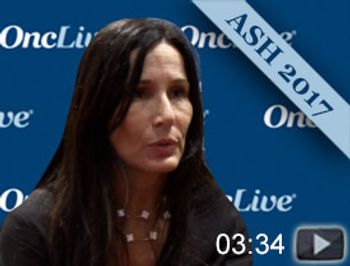
Cristina Gasparetto, MD, associate professor, head of the myeloma program, Duke University Medical Center, discusses a phase 1b study to assess the combination of selinexor and daratumumab (Darzalex) in patients with relapsed/refractory multiple myeloma previously exposed to proteasome inhibitors and immunomodulatory drugs during the 2017 ASH Annual Meeting. Selinexor is an interesting new drug that inhibits Exportin 1 (XPO1), which reactivates some of the tumor suppressor proteins. In the phase 1b portion of the study, investigators aimed to identify the optimal dose of selinexor in combination with daratumumab. Gasparetto says the study included a small number of patients, but demonstrated very encouraging data.
A novel approach demonstrated durable responses in the treatment of patients with smoldering multiple myeloma, according to results from a single-arm, phase II trial.
Anas Younes, MD, Chief of Lymphoma Service, Memorial Sloan Kettering Cancer Center, discusses the interim analysis of a study exploring the safety and efficacy of atezolizumab (Tecentriq) in combination with obinutuzumab (Gazya) and bendamustine in patients with previously untreated follicular lymphoma.
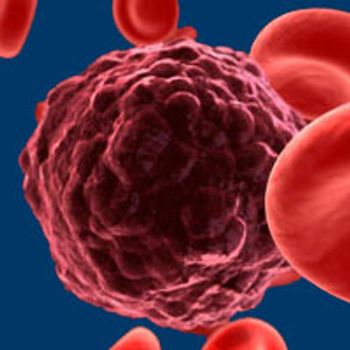
Cemiplimab as a monotherapy and in combination with the monoclonal antibody REGN1979 demonstrated clinical activity in patients with B-cell non-Hodgkin lymphoma and Hodgkin lymphoma.

Axi-cel (axicabtagene ciloleucel; Yescarta) maintained a complete remission rate of 40% with a median follow-up of 15.4 months for patients with refractory, aggressive non-Hodgkin lymphoma.
The CAR T-cell therapy tisagenlecleucel (Kymriah) achieved an overall response rate of 53.1% in adult patients with relapsed/refractory diffuse large B-cell lymphoma.
Treatment with the BCMA-directed CAR T-cell therapy bb2121 induced complete remissions for 56% of patients with relapsed/refractory multiple myeloma.
The phase III ECHELON-1 study in Hodgkin lymphoma compared the use of A+AVD with standard chemotherapy of doxorubicin, bleomycin, vinblastine, and dacarbazine.
Treatment using BLU-285 (Avapritinib) induced clinically significant activity in patients with an advanced or aggressive form of systemic mastocytosis, according to data from an ongoing phase I trial.
The combination of ibrutinib (Imbruvica) and venetoclax (Venclexta) elicited a complete response (CR) or CR with incomplete hematologic recovery rate of 47% for patients with relapsed/refractory chronic lymphocytic leukemia.

The anti-CCR4 monoclonal antibody mogamulizumab reduced the risk of progression or death by 47% compared with vorinostat (Zolinza) in previously treated patients with cutaneous T-cell lymphoma.
Kerry Rogers, MD, Assistant Professor, Internal Medicine, Division of Hematology, The Ohio State University Comprehensive Cancer Center, discusses a phase II trial of early intervention with ibrutinib (Imbruvica) in patients with asymptomatic, high-risk chronic lymphocytic leukemia (CLL) during the 2017 ASH Annual Meeting.
Matthew S. Davids, MD, Associate Director, Dana-Farber Cancer Institute Center for Chronic Lymphocytic Leukemia, discusses a study that explored optimizing checkpoint blockade as a treatment for relapsed hematologic malignancies after allogenic hematopoietic cell transplantation.

The investigational BTK inhibitor zanubrutinib (BGB-3111) demonstrated promising clinical activity in patients with non-Hodgkin lymphoma.
Lenalidomide (Revlimid) plus rituximab (Rituxan) is a feasible combination that is also safe and active, as initial and maintenance therapy for patients with mantle cell lymphoma.

Treatment using oral rivaroxaban (Xarelto) reduced venous thromboembolism (VTE) recurrence among patients with cancer, according to results from the select-d trial.
Key opinion leaders share their insight on the pivotal and highly anticipated abstracts across hematologic malignancies, including lymphoma, leukemia, and multiple myeloma, ahead of 2017 ASH Annual Meeting and exactly how these findings could be implemented in and affect clinical practice.
Preet M. Chaudhary, MD, PhD, chief of the Jane Anne Nohl Division of Hematology and Center for the Study of Blood Diseases, Department of Medicine, professor of Medicine, Ronald H. Bloom Family Chair in Lymphoma Research, and program director of the USC Norris Blood and Marrow Transplant Program, co-Leader of the Molecular Genetics Program, University of Southern California, discusses challenges that oncologists continue to face when treating patients with CAR T-cell therapy.
Saad Z. Usmani, MD, discusses the latest developments with daratumumab in the treatment of patients with multiple myeloma, many of which were presented at the recent 2016 ASH Annual Meeting.
Lenalidomide as a maintenance treatment for patients with newly diagnosed symptomatic multiple myeloma demonstrated encouraging phase III findings in the Myeloma X1 trial, which were presented at the 2016 ASH Annual Meeting.
Andre Goy, MD, MS, chairman and director, chief of Lymphoma, and director of Clinical and Translational Cancer Research at John Theurer Cancer Center, discusses the role of minimal residual disease in the treatment of patients with mantle cell lymphoma.
Kevin R. Kelly, MD, PhD, associate professor of Medicine, Keck School of Medicine, discusses a study examining racial disparities in patients with multiple myeloma.
Andre Goy, MD, MS, chairman and director, chief of Lymphoma, and director of Clinical and Translational Cancer Research at John Theurer Cancer Center, discusses combination therapies currently being explored in the treatment of patients with mantle cell lymphoma.
The use of stem cell transplantation has changed over the last few years, with the emergence of novel therapies and treatment strategies. But even with the FDA approvals of new agents for multiple myeloma and select lymphomas, transplant remains to be a curative and reliable strategy.
Mrinal Patnaik, MBBS, hematologist, Mayo Clinic, discusses the encouraging results seen in a phase II trial evaluating the activity of SL-401 in patients with advanced, high risk myeloproliferative neoplasms, including chronic myelomonocytic leukemia.
Changes are underway in the field of hematologic malignancies, as the World Health Organization is publishing a revised classification of tumors of hematopoietic and lymphoid tissues—slated to be released in early 2017.