

Jeffrey Matous, MD, discusses outcomes from the phase 1b MonumenTAL-2 trial with the combination of talquetamab and pomalidomide in patients with relapsed/refractory multiple myeloma.
Jeffrey Matous, MD, discusses outcomes from the phase 1b MonumenTAL-2 trial with the combination of talquetamab and pomalidomide in patients with relapsed/refractory multiple myeloma.

Jonathon B. Cohen, MD, MS, discusses safety and efficacy outcomes with pirtobrutinib in previously treated patients with relapsed/refractory mantle cell lymphoma, as observed in the phase 1/2 BRUIN study.

The novel BTK degrader BGB-16673 was well tolerated; produced meaningful and rapid clinical responses; and demonstrated on-target effects in patients with relapsed/refractory B-cell malignancies.

Revumenib demonstrated clinically meaningful activity, including high response and minimal residual disease negativity rates, in heavily pretreated patients with KMT2A-rearranged acute leukemia.

Induction therapy with subcutaneous daratumumab followed by autologous stem cell transplant, daratumumab, bortezomib, lenalidomide, and dexamethasone consolidation and daratumumab/lenalidomide maintenance prolonged progression-free survival in patients with newly diagnosed, transplant-eligible multiple myeloma.

Treatment with the oral BTK inhibitor ibrutinib in combination with venetoclax led to a statistically significant improvement in progression-free survival vs ibrutinib plus placebo in patients with relapsed/refractory MCL.

Utilization of a financial navigation program is feasible for reducing cost burden and improving quality of life in patients with multiple myeloma who are more likely to experience financial toxicity and have difficulty accessing appropriate resources and support services.

Anitocabtagene autoleucel showcased early efficacy with acceptable toxicity in patients with relapsed and/or refractory multiple myeloma—even in those with high-risk features.

Dose modifications of talquetamab improved on-target adverse effects while maintaining responses for patients with relapsed/refractory multiple myeloma.

NX-2127 showcased early efficacy in the form of responses with an acceptable toxicity profile in patients with relapsed or refractory B-cell malignancies, according to data from the ongoing phase 1 NX-2127-001 trial.

The high-precision cellular product Orca-Q demonstrated early signals of clinical activity as well as an acceptable safety profile for patients undergoing haploidentical stem cell transplantation without posttransplant cyclophosphamide.
David J. Andorsky, MD, discusses recently observed patterns of care with BTK inhibitors in patients with chronic lymphocytic leukemia or small lymphocytic lymphoma in the community setting in the United States, and how social determinants of health may have affected these outcomes.
Raajit K. Rampal, MD, PhD, discusses findings from the phase 3 MANIFEST-2 trial investigating pelabresib in combination with ruxolitinib for JAK inhibitor–naive patients with myelofibrosis.

The combination comprised of zanubrutinib, obinutuzumab, and venetoclax elicited high response rates and 2-year progression-free survival rates that compared favorably with historical outcomes achieved with chemoimmunotherapy in high-risk patients with previously untreated mantle cell lymphoma harboring TP53 mutations.
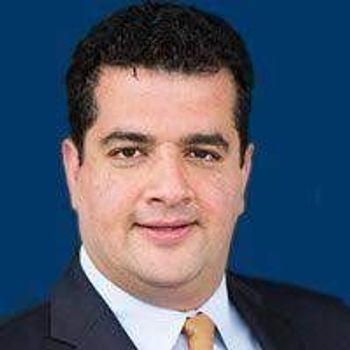
Patients with B-cell malignancies who were intolerant to treatment with acalabrutinib experienced clinically meaningful benefits when treated with zanubrutinib, suggesting zanubrutinib may be a viable treatment option for this population.

Pelabresib plus ruxolitinib demonstrated a 35% or greater reduction in spleen volume and trended toward reducing mean absolute total symptom score (TSS) as well as improving TSS reduction by 50% at 24 weeks in patients with JAK inhibitor–naive myelofibrosis.

Patients with relapsed/refractory follicular lymphoma experienced durable responses when treated with tisagenlecleucel (Kymriah) in the phase 2 ELARA study (NCT03568461), according to data presented at the 2023 ASH Annual Meeting.

Treatment with ruxolitinib led to prolonged failure-free survival and improved disease control vs best available treatment in patients with either steroid-refractory or -dependent chronic graft-vs-host disease.
The phase 1a/1b NX-1607-101 trial will evaluate NX-1607, a CBL-B inhibitor, in patients with advanced malignancies, including diffuse large B-cell lymphoma.

Treatment with single-agent pirtobrutinib showed encouraging efficacy with a tolerable safety profile in a cohort of heavily pretreated patients with relapsed/refractory follicular lymphoma.

Oral iptacopan (Fabhalta) monotherapy induced durable responses and hemolysis control in patients with paroxysmal nocturnal hemoglobinuria and persistent anemia who had previously received anti-C5 treatment.

Brentuximab vedotin plus nivolumab, doxorubicin, and dacarbazine was found to have efficacy and acceptable safety and tolerability when used as a frontline treatment in patients with previously untreated advanced, classical Hodgkin lymphoma.

Acalabrutinib, as monotherapy or in combination with obinutuzumab, continued to improve progression-free survival vs obinutuzumab and chemotherapy in patients with treatment-naive chronic lymphocytic leukemia, regardless of genomic marker status.

The combination of Isa-KRd significantly increased the rates of minimal residual disease negativity at cutoffs post-consolidation vs KRd in patients with newly diagnosed multiple myeloma.

Axatilimab induced rapid and durable responses with an acceptable toxicity profile at all doses analyzed with highest efficacy observed at the 0.3-mg/kg dose in patients with recurrent or refractory chronic graft-vs-host disease.

Susan Bal, MD, discusses updated safety and efficacy data from a phase 1 study evaluating the GPRC5D-targeted autologous CAR T-cell therapy BMS-986393 in relapsed/refractory multiple myeloma, including in patients with prior BCMA-directed therapy.
Paolo Ghia, MD, PhD, full professor, discusses a biomarker subgroup analysis of the phase 3 SEQUOIA trial investigating zanubrutinib vs bendamustine plus rituximab in patients with treatment-naive chronic lymphocytic leukemia or small lymphocytic lymphoma without 17p deletions.

Oral decitabine/cedazuridine and parenteral hypomethylating agents were associated with similar levels of comorbidities and disease burden in patients with myelodysplastic syndrome.

Odronextamab produced durable responses and a generally manageable safety profile in patients with relapsed/refractory diffuse large B-cell lymphoma.

Ibrutinib plus venetoclax, given at a duration determined by minimal residual disease, improved progression-free survival and overall survival vs fludarabine, cyclophosphamide, and rituximab in patients with treatment-naive chronic lymphocytic leukemia.