
Orca-T led to lower rates of EBV and CMV reactivation vs CD34 engraftment in patients with select hematologic malignancies.
Orca-T led to lower rates of EBV and CMV reactivation vs CD34 engraftment in patients with select hematologic malignancies.
Higher CR rates were achieved with the tandem CAR T-cell infusion plus ASCT vs the infusion alone in patients with relapsed/refractory B-cell lymphoma.
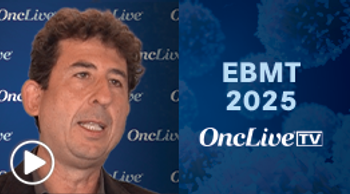
Juan Carlos Hernández-Boluda, MD, PhD, discusses an EBMT machine learning–based model for identifying and stratifying transplant risk in myelofibrosis.

Improved PFS was associated with at least a 25% reduction in tumor burden before treatment with cilta-cel in patients with relapsed/refractory multiple myeloma.
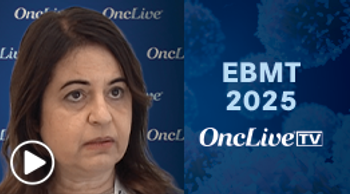
Esther Natalie Oliva, MD, discusses the rationale for the phase 3 QuANTUM-Wild trial in newly diagnosed FLT3-ITD–negative AML.

Steven Devine, MD; Everett Meyer, MD, PhD; and Sophie Paczesny, MD, PhD, discuss their most highly anticipated presentations from the 2025 EBMT Meeting.
Belumosudil elicited sustained responses and generated no new safety signals in patients with chronic graft-vs-host disease.
Itacitinib prophylaxis showed signals for reducing CRS and ICANS following treatment with axicabtagene ciloleucel in patients with B-cell lymphoma.

Simulation-based education can improve health care professionals’ understanding and confidence regarding the treatment of patients with CAR T-cell therapy.

Orca-T demonstrated positive impacts on relapse-free survival and overall survival vs PTCy-based HSCT in acute leukemias and myelodysplastic syndrome.

The regulatory T cell enriched donor cell agent Orca-T was safe and displayed activity in the reduced intensity conditioning setting for patients with advanced hematologic malignancies.
The overall response rate achieved with ruxolitinib at day 28 proved to be higher than what was achieved with best available therapy in patients with steroid-refractory acute graft-vs-host disease, irrespective of organ involvement.
Pharmacodynamic and pharmacokinetic modeling of the investigational MASP-2 inhibitor narsoplimab supported a weight-based dosing method for patients with hematopoietic stem cell transplant–associated thrombotic microangiopathy.

Ciltacabtagene autoleucel has a manageable safety profile at its recommended phase 2 dose, and yielded early, deep, and durable responses in heavily pretreated patients with relapsed/refractory multiple myeloma.
Navneet Majhail, MD, MS, discusses the importance of utilizing social media in oncology.
Corey S. Cutler, MD, MPH, FRCPC, discusses the toxicity profile of belumosudil in patients with chronic graft-versus-host disease.

The real-world utilization of axicabtagene ciloleucel demonstrated favorable outcomes and less frequent toxicity events compared with those reported in the pivotal ZUMA-1 trial and other real-world studies.
Corey S. Cutler, MD, MPH, FRCPC, discusses the efficacy results of the ongoing phase 2 ROCKstar trial in patients with chronic graft-versus-host disease.
Sergio A. Giralt, MD, discusses the potential utility of omidubicel in hematologic malignancies.
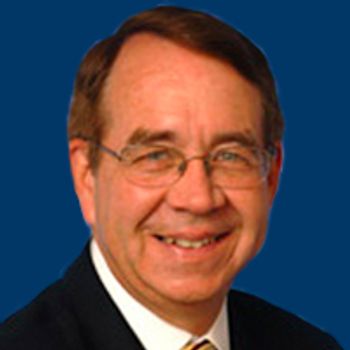
Lisocabtagene maraleucel was successfully administered in patients with relapsed/refractory aggressive large B-cell lymphoma who were at nonuniversity medical centers in both the outpatient and inpatient settings through the use of standard operating procedures and multidisciplinary teams
Ruxolitinib has demonstrated sustained efficacy with a lower probability of progression or additional systemic therapeutics in patients with steroid-refractory acute graft-versus-host disease.

Axicabtagene ciloleucel elicited a high objective response rate of 85%, with a complete response rate of 74% when used as a first-line therapy in patients with high-risk large B-cell lymphoma.
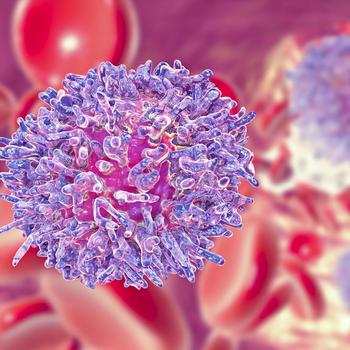
A risk-adapted CD19 CAR T-cell therapy dosing approach allowed pediatric patients with relapsed/refractory acute lymphocytic leukemia to maintain a high rate of remission, while reducing the risk of severe toxicities among those with a high initial disease burden
Nicolaus Kröger, MD, discusses the long-term results of a phase 2 study in multiple myeloma.
Sergio A. Giralt, MD, discusses the results of a phase 3 trial comparing omidubicel with standard umbilical cord blood transplant in hematologic malignancies.

Brexucabtagene autoleucel displayed significant and durable responses and a reduction in adverse effects in patients with relapsed/refractory mantle cell lymphoma.