
Marina Chiara Garassino, MD, medical consultant in the Medical Oncology Division, Fondazione IRCCS Istituto Nazionale dei Tumori, Milan, Italy, discusses the PACIFIC study for patients with non–small cell lung cancer (NSCLC).
Marina Chiara Garassino, MD, medical consultant in the Medical Oncology Division, Fondazione IRCCS Istituto Nazionale dei Tumori, Milan, Italy, discusses the PACIFIC study for patients with non–small cell lung cancer (NSCLC).
Benjamin Besse, MD, Institut Gustave Roussy, Villejuif, Paris Sud University, discusses the combination of dabrafenib (Tafinlar) and trametinib (Mekinist) for patients with non
Joshua Bauml, MD, assistant professor, Perelman School of Medicine, University of Pennsylvania, discusses the FLAURA trial in patients with EGFR-mutant non–small cell lung cancer.

Although anti-PD-1/PD-L1 immunotherapy has greatly improved the treatment of patients with non–small cell lung cancer and is generally well-tolerated, the therapy backfires in a newly defined subset of patients who experience accelerated tumor growth indicative of hyperprogressive disease.
Nearly half of patients with resectable stage IIIB/C BRAF V600-mutant melanoma achieved pathologic complete response with neoadjuvant combination therapy consisting of dabrafenib (Tafinlar) and trametinib (Mekinist).
H. Jack West, MD, thoracic oncologist, Swedish Cancer Institute of Swedish Medical Center, discusses the significance of the PACIFIC trial in patients with non
Pembrolizumab (Keytruda) reduced the risk of death compared with standard of care therapy in patients with relapsed/metastatic head and neck squamous cell carcinoma, but the difference fell just shy of statistical significance.
Sumanta K. Pal, MD, medical oncologist, assistant clinical professor, Department of Medical Oncology and Therapeutics Research, City of Hope, discusses both the CheckMate-214 and CABOSUN trials for patients with renal cell carcinoma (RCC).

Adjuvant therapy with vemurafenib for high-risk melanoma led to mixed results, as patients with stage IIIC or later did not benefit, but those with earlier stage disease did.

Reinhard Dummer, MD, of University Hospital Zurich, discusses the results of the phase III COMBI-AD study presented at the 2017 ESMO Congress in patients with stage III BRAF-mutant melanoma.

Suresh S. Ramalingam, MD, deputy director, Winship Cancer Institute of Emory University, discusses the phase III results of the FLAURA trial, which explored osimertinib (Tagrisso) in the frontline setting for patients with EGFR-mutant non-small cell lung cancer (NSCLC).
The combination of bevacizumab plus niraparib demonstrated clinical activity in women with relapsed, platinum-sensitive epithelial ovarian cancer and had a manageable toxicity profile.
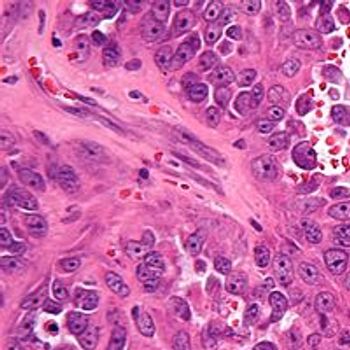
Although second-line treatment with combined pazopanib and gemcitabine demonstrated disease control in the majority of patients with metastatic or relapsed uterine or soft tissue leiomyosarcomas, the phase II UNICANCER SARCOME 11 study did not meet statistical endpoints and is considered a negative trial.

Treating primary tumors by administering targeted therapy with sunitinib (Sutent) prior to cytoreductive nephrectomy did not improve the progression-free rate at 28 weeks over a sequence of immediate CN followed by sunitinib in patients with synchronous metastatic renal cell carcinoma.

Nivolumab (Opdivo) may represent a new standard option for adjuvant therapy for patients with resected stage IIIB/C and IV melanoma, whether or not they have a BRAF mutation. In a comparison with current standard high-dose ipilimumab (Yervoy), nivolumab demonstrated a significant improvement in relapse-free survival.
The combination of nivolumab (Opdivo) and ipilimumab (Yervoy) was superior to sunitinib (Sutent) monotherapy as first-line treatment of advanced or metastatic renal cell carcinoma.

Omid Hamid, MD, director of the melanoma center at the Angeles Clinic & Research Institute in Los Angeles, discusses the phase III results of the ECHO-202/KEYNOTE-037 trial, which explored the IDO inhibitor epacadostat plus pembrolizumab (Keytruda) in patients with advanced melanoma.
Ramucirumab (Cyramza) plus docetaxel improved progression-free survival over docetaxel alone in patients with advanced or metastatic urothelial cancer who have progressed on platinum-based chemotherapy.

Jeffrey S. Weber, MD, PhD, deputy director and co-director of the Melanoma Program at the Laura and Isaac Perlmutter Cancer Center at NYU Langone Medical Center, discusses the CheckMate-238 trial for patients with melanoma.
Solange Peters, MD, PhD, head of the Thoracic Malignancies Program in the Department of Oncology at the University of Lausanne in Switzerland, discusses the FLAURA trial for patients with EGFR-mutated non
Patients with untreated advanced renal cell carcinoma lived significantly longer without disease progression when they received the multikinase inhibitor cabozantinib (Cabometyx) as initial therapy versus sunitinib (Sutent).

Lenvatinib (Lenvima) combined with pembrolizumab (Keytruda) demonstrated promising antitumor activity in patients with metastatic clear cell renal cell carcinoma.

Atezolizumab with bevacizumab provided improved progression-free survival over sunitinib in patients with untreated metastatic renal cell carcinoma.

Frontline treatment with the combination of dabrafenib and trametinib showed promising clinical efficacy for patients with BRAF-mutant metastatic non–small cell lung cancer.

Adjuvant treatment with dabrafenib and trametinib reduced the risk of relapse or death by 53% compared with placebo for patients with stage III BRAF-mutant melanoma.

Mature results from the phase III KEYNOTE-045 study presented at the 2017 ESMO Congress demonstrated that overall survival with pembrolizumab (Keytruda) continued to improve compared to chemotherapy in patients with recurrent, advanced urothelial carcinoma.
Mansoor Raza Mirza, MD, chief oncologist in the Department of Oncology in Rigshospitalet, Copenhagen University Hospital, Denmark, and medical director of the Nordic Society of Gynecologic Oncology-Clinical Trial Unit, discusses phase I results of a trial exploring the combination of niraparib (Zejula) and bevacizumab (Avastin) in patients with platinum-sensitive epithelial ovarian cancer.
Toni K. Choueiri, MD, clinical director, Lank Center for Genitourinary Oncology, director, Kidney Cancer Center, senior physician, Dana-Farber Cancer Institute, discusses the significance of the phase II CABOSUN trial, which explored cabozantinib (Cabometyx) as a frontline therapy for patients with renal cell carcinoma (RCC).
Expanding surveillance after surgery for early-stage non–small cell lung cancer from chest x-ray to follow-up with PET-CT scan did not improve overall survival.

A majority of patients with advanced melanoma responded to the combination of pembrolizumab and the investigational IDO1 inhibitor epacadostat.