
Philip J. Buffington, MD, Chief Medical Officer, The Urology Group, discussed the use of fusion MRI in prostate cancer with OncLive during the LUGPA Annual Meeting.
Philip J. Buffington, MD, Chief Medical Officer, The Urology Group, discussed the use of fusion MRI in prostate cancer with OncLive during the LUGPA Annual Meeting.
With immunotherapy agents showing significant promise in bladder cancer, the potential for these agents in the neoadjuvant setting is wide open.

Whatever the result of the US presidential election, the era ahead will continue to be one of unprecedented change in healthcare, according to Robert Laszewski.
Following a long drought in the development of bladder cancer treatments, the field is now poised to benefit from a series of rapid advances ushered in by highly effective immunotherapies.
A window of opportunity exists in which some patients with non–muscle-invasive bladder cancer could benefit from trying novel second-line therapies prior to surgery.
When it comes to the burgeoning arena of biomarkers in bladder cancer, the value proposition is compelling, although the utility and costs need to be better defined, according to Badrinath Konety, MD, MBA.
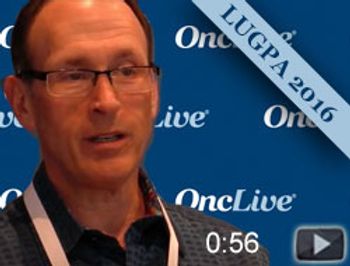
Dr. Geoffrey Sklar, Chief Medical Officer, Chesapeake Urology Associates, spoke with OncLive about some of the exciting advancements in bladder cancer during the LUGPA Annual Meeting.
The life expectancy of patients with metastatic castrate-resistant prostate cancer has doubled in recent years thanks to a multitude of new therapies, and there are still many more advancements to come.
Richard Harris, MD, of UroPartners, says there are many exciting advancements currently happening in the field of prostate cancer. Harris shared his insights during an interview with OncLive at the 2016 LUGPA Annual Meeting.
Gary Kirsh, MD, President of The Urology Group and the Large Urology Group Practice Association (LUGPA), discusses this exciting phase in prostate cancer care. Kirsh shared his insights during an interview with OncLive at the 2016 LUGPA Annual Meeting.
Alec S. Koo, MD, FACS, managing partner, Skyline Urology, board of directors, Large Urology Group Practice Association, discusses degarelix (Firmagon) for the treatment of patients with prostate cancer.
Alec S. Koo, MD, FACS, managing partner, Skyline Urology, board of directors, Large Urology Group Practice Association (LUGPA), discusses targeted focal therapy for localized prostate cancer.
Gary Kirsh, MD, president of The Urology Group and the Large Urology Group Practice Association (LUGPA), discusses the future of treatment for prostate cancer.
Philip J. Buffington, MD, chief medical officer at The Urology Group, discusses administering degarelix (Firmagon) and determining which patients to treat with the hormonal therapy.buffington-thumb.jpg
With the emergence of the novel treatments abiraterone acetate (Zytiga) and enzalutamide (Xtandi), urology groups are beginning to offer in-office dispensing to their metastatic castration-resistant prostate cancer patients.
The keynote address at the 2015 LUGPA Annual Meeting urged physicians to band together and create an offensive strategy when it comes to the nation's healthcare system.
Deepak A. Kapoor, MD, chairman and CEO of Integrated Medical Professionals and Large Urology Group Practice Association's (LUGPA's) chairman of health policy, discusses LUGPA's legislative advocacy efforts.
Hormone therapies for prostate cancer aimed at reducing serum androgens are trained on the wrong target: the testes and the adrenal glands. Rather, they should attack the prostate cancer cells themselves.
Raoul S. Concepcion, MD, FACS, director of Advanced Therapeutics at Urology Associates, PC, discusses healthcare's movement away from fee-for-service reimbursements.
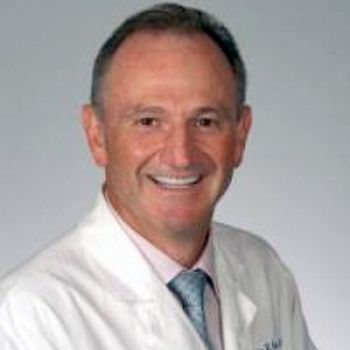
Thomas E. Keane, MD, ChB, discussed combination approaches in treatment-resistant mCRPC at the 2015 LUGPA Annual Meeting.

E. David Crawford, MD, discussed issues with FDA standards for ADT agents and current treatment approaches to androgen deprivation in prostate cancer at the 2015 LUGPA Annual Meeting.
Evan R. Goldfischer, MD, MBA, FACS, director of the Research Department at Premier Medical Group of the Hudson Valley, discusses the benefits of integrated medical groups.

Independent urology practices are at a crossroads as they face substantial Medicare payment change, shifts in physician employment and autonomy, and cutting edge developments in clinical care.

After many years of treating patients with advanced prostate cancer the same way, a host of new drug approvals has not only changed the way urologists manage prostate cancer but their understanding of the disease as well.

Michael Rotkowitz, MD, says that one of the main challenges and a leading goal of immunotherapy research is measuring response to justify the administration.

The 2012 LUGPA Annual Meeting is expected to gather more than 100 urology groups to discuss administrative, technological, regulatory, and medical challenges facing practices.
Stephen J. Freedland, MD, from Duke University School of Medicine, discusses the complications faced when treating men with early-stage prostate cancer.