
The majority of patients with newly diagnosed chronic lymphocytic leukemia have better outcomes with BTK inhibitors compared with standard chemoimmunotherapy, making them the logical choice for frontline therapy.
The majority of patients with newly diagnosed chronic lymphocytic leukemia have better outcomes with BTK inhibitors compared with standard chemoimmunotherapy, making them the logical choice for frontline therapy.
Zanubrutinib demonstrated clinical activity and tolerability in previously treated patients with B-cell malignancies who were intolerant to therapy with ibrutinib and/or acalabrutinib, according to results of the phase 2 BGB-3111-215 trial.
As more CAR T-cell therapies are approved for the treatment of patients with hematologic malignancies, adopting management strategies for cytokine release syndrome and immune effector cell–associated neurotoxicity syndrome using newly standardized grading criteria is an important component of utilizing these products in practice.
Acalabrutinib, alone or in combination with obinutuzumab, demonstrated superior efficacy and an acceptable safety profile in patients with treatment-naïve chronic lymphocytic leukemia.
The combination of loncastuximab tesirine-lpyl and ibrutinib displayed encouraging antitumor activity with a manageable safety profile in patients with relapsed/refractory diffuse large B-cell lymphoma and mantle cell lymphoma.
Alison J. Moskowitz, MD, discusses recent developments made in the Hodgkin lymphoma paradigm, shared advice for optimal stratification, and spotlighted potential emerging prognostic markers that might further help to guide treatment decisions.
CAR T-cell therapy has proven to be an effective treatment option in non-Hodgkin lymphoma subtypes, such as diffuse large B-cell lymphoma, and mantle cell lymphoma.
Brad S. Kahl, MD, discusses the emergence of antibody-drug conjugates in lymphoma.
Julie M. Vose, MD, MBA, discusses future research efforts with CAR T-cell therapy in lymphoma.
Alison J. Moskowitz, MD, discusses the challenges of intensifying treatment in Hodgkin lymphoma.
Stephen M. Ansell, MD, PhD, discusses incorporating immunotherapies beyond CAR T-cell therapy in non-Hodgkin lymphoma.
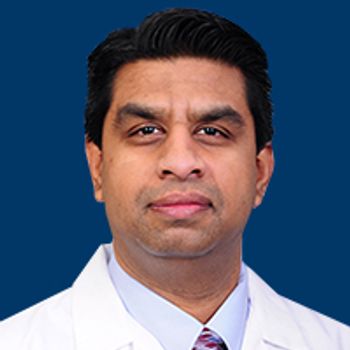
Radhakrishnan Ramchandren, MD, discusses the treatment landscape in Hodgkin and T-cell lymphoma and the results of the North American subgroup analysis of the ECHELON-1 trial.
Radhakrishnan Ramchandren MD, associate professor, Wayne State University School of Medicine, Barbara Ann Karmanos Cancer Institute, discusses the North American results of the ECHELON-1 study in Hodgkin lymphoma.
Sagar Lonial, MD, professor and chair, Department of Hematology & Medical Oncology, Emory University School of Medicine, chief medical officer, Winship Cancer Institute of Emory University, discusses emerging agents in relapsed/refractory multiple myeloma.
Sonali M. Smith, MD, Elwood V. Jensen Professor in Medicine, director, Lymphoma Program, University of Chicago Medicine, discusses brentuximab vedotin (Adcetris) in cutaneous T-cell lymphoma.
Steven M. Ansell, MD, PhD, discusses the efficacy of PD-L1 blockade in Hodgkin lymphoma, patient treatment that has encouraged him to look for deeper solutions, alternative drug combinations that appear to be making headway, and potential avenues of discovery for the future.
Sagar Lonial, MD, discusses optimal sequencing techniques for patients with relapsed/refractory myeloma.
United States’ versus European perspectives on bleomycin in chemotherapy combinations for advanced Hodgkin lymphoma, along with the value of interim positron emission tomography, were discussed at the 2018 Pan Pacific Lymphoma Conference.
Mark J. Roschewski, MD, staff clinician, associate research clinician, clinical director, Malignancies Branch of the Center for Cancer Research, National Cancer Institute, discusses dose-adjusted infused etoposide, doxorubicin, and cyclophosphamide with vincristine, prednisone, and rituximab (Rituxan; DA-EPOCH-R) in adult patients with Burkitt lymphoma.
Brad Kahl, MD, professor in the Department of Medicine, Washington University School of Medicine in St. Louis, Siteman Cancer Center, discusses the antibody drug conjugate polatuzumab vedotin in lymphoma.
A retrospective study of patients with Hodgkin lymphoma found high rates of sequelae including pulmonary events and cardiovascular disease following frontline treatment with chemotherapy including bleomycin.
Steven M. Horwitz, MD, discusses the best strategy for the treatment of CD30-positive peripheral T-cell lymphomas.
Sarah Holstein, MD, PhD, discusses new approaches to induction therapy for patients with myeloma.
David G. Maloney, MD, PhD, professor of medicine, Division of Oncology, University of Washington, Clinical Research Division, Fred Hutchinson Cancer Research Center, discusses updates with CAR T-cell therapy in non-Hodgkin lymphoma.
Julie M. Vose, MD, MBA, professor, internal medicine, chief, Division of Oncology & Hematology, University of Nebraska Medical Center, discusses the importance of genomic analysis in patients with non-Hodgkin lymphoma.

Combinations of novel drugs in lymphomas have the potential to overcome resistance to therapy but come with sometimes unexpected adverse events that demand careful monitoring.
With promising data of brentuximab vedotin and inotuzumab ozogamicin leading the way, antibody-drug conjugates are beginning to make a greater impact on the lymphoma treatment landscape.
An effective lymphodepletion strategy is critical to success with chimeric antigen receptor T-cell therapy, but also the choice of patients and even the cells used for CAR T cell manufacturing should be made with care.