
Robert Cameron, MD, PhD, discusses a study examining the impact of PD-L1 expression on outcomes with osimertinib in EGFR-mutated NSCLC.

Your AI-Trained Oncology Knowledge Connection!
Robert Cameron, MD, PhD, discusses a study examining the impact of PD-L1 expression on outcomes with osimertinib in EGFR-mutated NSCLC.
Mitchell Parma, MD, discusses an analysis of survival benefit with immunotherapy in patients with NSCLC brain metastases.
Kelsey Pan, MD, MPH, highlights the utilization of tarlatamab in real-world patients with SCLC ineligible for the phase 2 DeLLphi-301 trial.
Expert investigators in GI cancers share their perspectives on the most significant updates in the space shared during the 2025 ASCO Annual Meeting.
Lydia Scarfò, MD, discusses long-term data with BGB-16673 in patients with relapsed/refractory chronic lymphocytic leukemia and small lymphocytic lymphoma.
Meletios A. Dimopoulos, MD, discusses efficacy and safety findings with elranatamab plus daratumumab and lenalidomide in newly diagnosed multiple myeloma.
David Curtis, MBBS, PhD, FRACP, FRCPA, discusses the use of post-transplant cyclophosphamide GVHD prophylaxis in matched donor peripheral blood SCT.
Matthew Ku, MBBS, FRACP, RACP, FRCPA/RCPA, PhD, discusses safety and efficacy findings with JNJ-90014496 in relapsed/refractory large B-cell lymphoma.
Amir Fathi, MD, discusses findings with ziftomenib in patients with relapsed/refractory, NPM1-mutant acute myeloid leukemia as demonstrated in KOMET-001.
Johannes Schetelig, MD, discusses outcomes with haploidentical related vs mismatched unrelated donor transplantation in high-risk AML, ALL, and MDS.
Saurabh Dahiya, MD, FACP, discusses safety and efficacy data from a study of the CAR T-cell therapy KITE-363 in relapsed/refractory B-cell lymphoma.
Tetiana Skrypets, MD, PhD, discusses next steps for researching the clinical features and treatment outcomes of older patients with PTCL.
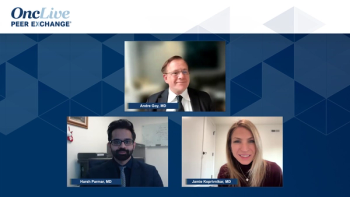
Panelists discuss how chimeric antigen receptor (CAR) T-cell therapy, bispecifics, and minimal residual disease (MRD) monitoring are reshaping lymphoma treatment strategies, with emerging data showing promising outcomes for various lymphoma subtypes and ongoing trials exploring optimal sequencing of these therapies.
Panelists discuss how insights from ASH 2024 are shaping the treatment and management of multiple myeloma (MM) with amyloidosis, emphasizing early diagnosis, novel therapies, and personalized treatment strategies to improve patient outcomes.
Panelists discuss how insights from ASH 2024 highlight the need for personalized treatment strategies, improved trial designs, and greater inclusion of diverse patient populations in future clinical trials for relapsed/refractory multiple myeloma (R/R MM).
Dana E. Rathkopf, MD, discusses the efficacy of niraparib plus abiraterone acetate and prednisone in patients with mCSPC and HRR gene alterations.
Gino Kim In, MD, shares findings from a subgroup analysis of RP1 efficacy in injected and non-injected melanoma lesions after PD-1 inhibitor progression.
Sara M. Tolaney, MD, MPH, shares interim efficacy results from the DESTINY-Breast09 study of first-line T-DXd plus pertuzumab in HER2-positive breast cancer.
Linda R. Duska, MD, MPH, on incorporating immunotherapy into definitive therapy for high-risk, locally advanced cervical cancer.
Erika Hamilton, MD, discusses data for vepdegestrant vs fulvestrant in ER-positive, HER2-negative advanced breast cancer.
Sarah Sammons, MD, discusses early efficacy data with RLY-2608 plus fulvestrant in PIK3CA-mutant, hormone receptor–positive, HER2-negative breast cancer.
Andrew Kuykendall, MD, discusses responses with rusfertide for patients with phlebotomy-dependent polycythemia vera.
Sara Char, MD, on the association between the empirical dietary inflammatory pattern and survival outcomes in stage III colon cancer.
David Spigel, MD, discusses evaluating the utility of adjuvant chemotherapy in patients with stage IA to IIA NSCLC identified as high risk by a 14-gene molecular assay.
Thomas Powles, MD, MBBS, MRCP, shares data from an EFS subgroup analysis from the phase 3 CREST study in BCG-naive, high-risk NMIBC.
Vincent Picozzi, MD, discusses the addition of TFields to gemcitabine and nab-paclitaxel in locally advanced pancreatic ductal adenocarcinoma.
Raffaele Califano, MD, discusses molecularly stratified outcomes amivantamab with chemotherapy vs chemotherapy alone in patients with advanced EGFR-mutant NSCLC.
Jad Chahoud, MD, MPH, MHA, shares early-phase data with zanzalintinib plus nivolumab with or without relatlimab-rmbw in previously untreated ccRCC.
John H. Strickler, MD, discusses the preliminary efficacy of sotorasib in combination with multiple agents across tumor types harboring KRAS G12C mutations.
Panelists discuss how health care professionals can prepare for emerging trends in treating relapsed/refractory multiple myeloma (R/R MM) by staying informed on innovative therapies and adapting to evolving patient care strategies.