
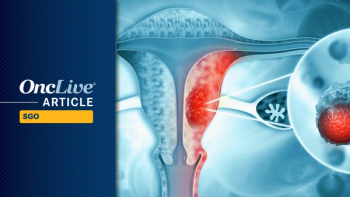
Trastuzumab pamirtecan achieved ~50% ORR in pretreated HER2-expressing endometrial cancer, earning FDA breakthrough designation per phase 1/2 trial data.
Trastuzumab pamirtecan achieved ~50% ORR in pretreated HER2-expressing endometrial cancer, earning FDA breakthrough designation per phase 1/2 trial data.

With 1 year of additional follow-up, avutometinib plus defactinib showed durable efficacy with no new safety concerns in LGSOC.

Results from NRG-GY019 establish chemotherapy followed by letrozole as the definitive SOC for newly diagnosed stage II-IV low-grade serous ovarian carcinoma
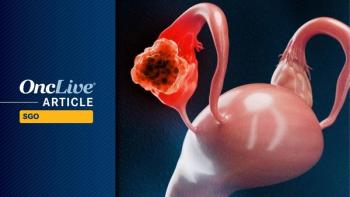
Abemaciclib plus letrozole was safe and active in advanced/recurrent endometrioid endometrial carcinoma.
Relacorilant plus nab-paclitaxel cuts death risk by 35% and extends survival to 16 months in platinum-resistant ovarian cancer, per final ROSELLA trial data.

Zosia Piotrowska, MD, MHS, discusses potential new TKIs, continued challenges, and ongoing frontline trials in EGFR exon 20 insertion–positive NSCLC
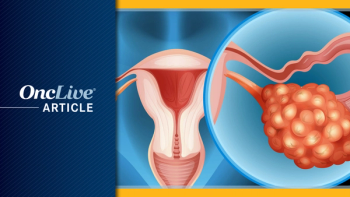
Read below to hear from Drs Markman and Slomovitz on the sessions and abstracts they’re looking forward to at this year’s SGO Annual Meeting on Women’s Cancer.

Use of ruxolitinib before, during, and after allogeneic stem cell transplant was associated with low rates of GVHD in myelofibrosis.
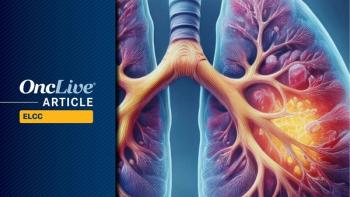
Cemiplimab plus chemotherapy produced variable outcomes by genomic profile in patients with nonsquamous NSCLC.

Erda-iDRS was safe and produced early efficacy signals in FGFR-altered NMIBC.
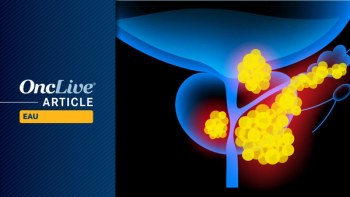
Enolen was safe and feasible for the treatment of patients with early-stage prostate cancer.
Jae Park, MD, discusses the importance and utility of MRD testing in the current acute lymphoblastic leukemia management field.

Gotistobart improved response rates and overall survival vs docetaxel in pretreated squamous NSCLC in stage 1 of the PRESERVE-003 trial.
Nicolas Girard, MD, PhD, discusses updated data from the phase 2 PALOMA-2 trial (NCT05498428) that were presented at the 2026 European Lung Cancer Congress.

Sac-TMT offered significant survival benefits vs docetaxel in pretreated EGFR-mutated NSCLC.
Fred R. Hirsch, MD, PhD, discusses research validating an AI-assisted PD-L1 scoring algorithm against original Blueprint study data in lung cancer.
Zongertinib showed strong systemic and intracranial responses in HER2-mutant NSCLC with a manageable safety profile in Beamion LUNG-1.
Calderasib showed strong efficacy, with ORRs up to 72% in combination with pembrolizumab in patients with KRAS G12C–mutant metastatic NSCLC.

The ETOP ADEPPT trial met its primary end point with a 31% 12-week ORR with adagrasib in patients at least 70 years old with an ECOG PS of 0 or 1.
Nodal clearance and pleural effusion after osimertinib induction were also identified as predictors of benefit with LCT in EGFR-mutated NSCLC.

Oncology experts ask and answer multidisciplinary questions based on presentations from the 43rd Annual Miami Breast Cancer Conference.
Jeffrey Zhong, MD, and Akshit Chitkara, MD, discuss 2 retrospective studies presented during the OncLive National Fellows Forum: Genitourinary Cancer.
Setidegrasib yielded antitumor activity with a tolerable safety profile in KRAS G12D-mutated NSCLC.
Frontline iza-bren in combination with serplulimab was associated with a tolerable and manageable safety profile and elicited responses in ES-SCLC.
Osimertinib plus chemotherapy prolonged PFS vs osimertinib alone in patients with advanced NSCLC harboring concurrent EGFR and TP53 mutations.
Glofitamab combined with CAR T-cell therapy is associated with improved outcomes in relapsed/refractory B-cell lymphoma.
Obe-cel is associated with durable survival outcomes in relapsed/refractory B-ALL, regardless of BOR of CR or CRi.
Rapcabtagene autoleucel exhibited promising response and safety data in relapsed or refractory B-cell acute lymphoblastic leukemia.
Updated data from TRANSCEND FL showed durable efficacy outcomes with liso-cel in relapsed/refractory follicular lymphoma.
Ulka Vaishampayan, MD, FASCO, discusses different novel therapies in development for renal cell carcinoma.