

Frontline maintenance therapy with the combination of olaparib and bevacizumab improved median progression-free survival versus bevacizumab and placebo for patients with newly diagnosed, advanced ovarian cancer.

Your AI-Trained Oncology Knowledge Connection!
Frontline maintenance therapy with the combination of olaparib and bevacizumab improved median progression-free survival versus bevacizumab and placebo for patients with newly diagnosed, advanced ovarian cancer.
The first-line combination of nivolumab and ipilimumab led to a clinically meaningful improvement in overall survival versus chemotherapy in patients with advanced non–small cell lung cancer, regardless of PD-L1 expression.

Frontline maintenance therapy with the PARP inhibitor niraparib improved median progression-free survival by 5.6 months compared with placebo for patients with newly diagnosed, advanced ovarian cancer who responded to platinum-based chemotherapy.

Frontline treatment with osimertinib improved median overall survival by 6.8 months compared with erlotinib or gefitinib for patients with metastatic, EGFR-mutant non–small cell lung cancer.
The frontline combination of veliparib, carboplatin, and paclitaxel followed by maintenance veliparib monotherapy led to a 32% reduction in the risk of progression or death compared with placebo plus chemotherapy with placebo maintenance for patients with high-grade serous ovarian cancer.

Adding the investigational glutaminase inhibitor telaglenastat to everolimus extends progression-free survival compared with everolimus alone in patients with heavily pretreated advanced renal cell carcinoma.

The combination of cediranib and olaparib improved progression-free survival in patients with platinum-resistant ovarian cancer, although the difference from chemotherapy did not achieve statistical significance.
Laura Quan Man Chow, MD, FRCPC, discusses the use of ceritinib (Zykadia) in patients with ALK-positive non–small cell lung cancer that has metastasized to the brain.
Arndt Vogel, MD, PhD, professor of gastrointestinal oncology, Hannover Medical School, discusses the results of the open-label, single-arm phase II FIGHT-202 trial in cholangiocarcinoma.

Patients with unresectable hepatocellular carcinoma obtained clinically meaningful responses and statistically significant improvement in progression-free survival with the combination of atezolizumab and bevacizumab.
Atezolizumab (Tecentriq) monotherapy improved overall survival compared with platinum-based chemotherapy as a first-line treatment of certain patients with wild-type non–small cell lung cancer.

More than one-third of patients with previously treated locally advanced or metastatic cholangiocarcinoma with an FGFR2 rearrangement or fusion had durable objective responses to treatment with pemigatinib.

The next-generation androgen receptor apalutamide, in combination with androgen deprivation therapy, demonstrated a 25% reduction in the risk of death compared with placebo/ADT in patients with nonmetastatic castration-resistant prostate cancer in the phase III SPARTAN trial.
Sundar Jagannath, MD, discusses the use and toxicity profile of selinexor in multiple myeloma treatment.
Ajai Chari, MD, discusses the use of selinexor in multiple myeloma treatment.

The all-oral triplet regimen of 60 mg of weekly selinexor plus lenalidomide and dexamethasone appears to be highly active and well-tolerated in patients with relapsed, refractory multiple myeloma, particularly in patients who did not receive prior lenalidomide, according to results of the multi-arm STOMP study that were presented during the 17th International Myeloma Workshop.
Paul G. Richardson, MD, clinical program leader and director of clinical research, Jerome Lipper Multiple Myeloma Center, and institute physician, Dana-Farber Cancer Institute, discusses interim results of the phase II HORIZON trial in relapsed/refractory multiple myeloma.
Maria-Victoria Mateos, MD, PhD, associate professor of medicine, and director of the Myeloma unit at the University Hospital of Salamanca in Spain, discusses the impact of performance status on the outcomes of patients with multiple myeloma in the phase III ARROW trial.
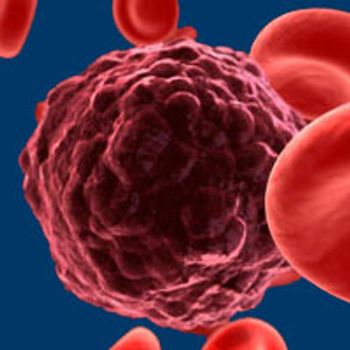
AMG 701, a half-life–extended anti-BCMA bispecific T-cell engager, showed promising in vitro antimyeloma activity and characteristics suitable for once-weekly dosing in patients with multiple myeloma, according to findings presented at the 17th International Myeloma Workshop.

Shaji Kumar, MD, discusses the addition of the BCL-2 inhibitor venetoclax to the combination of bortezomib and dexamethasone significantly improved progression-free survival, overall response rate, very good partial response, and minimal residual disease negativity rates in the phase III BELLINI trial in relapsed/refractory patients with multiple myeloma.
Melflufen and dexamethasone demonstrated encouraging activity in patients with relapsed/refractory multiple myeloma with and without extramedullary disease, with response rates higher than those observed in prior studies of other agents.
Jorge J. Castillo, MD, clinical director, Bing Center for Waldenström Macroglobulinemia, physician, associate professor of medicine, Harvard Medical School, Dana-Farber Cancer Institute, discusses the results of a multicenter, prospective, phase II study of venetoclax in patients with previously treated Waldenstrom macroglobulinemia.
Saad Z. Usmani, MD, FACP, chief of Plasma Cell Disorder, director of Clinical Research in Hematologic Malignancies, Levine Cancer Institute, Atrium Health, discusses how the target BCMA is impacting the multiple myeloma treatment landscape.

The addition of daratumumab to bortezomib, lenalidomide, and dexamethasone for transplant-eligible patients with newly diagnosed multiple myeloma improved the depth of response without affecting stem cell mobilization or hematopoietic reconstitution.

The novel agent iberdomide (formerly CC-220) was safe and showed antitumor activity when combined with dexamethasone in patients with heavily pretreated, relapsed/refractory multiple myeloma, according to findings from a phase Ib/IIa study presented at the 17th International Myeloma Workshop.

The rise of oral targeted therapies and novel combinations is transforming the paradigm for the frontline treatment of patients with chronic lymphocytic leukemia regardless of age, and ongoing phase III trials are likely to generate more modifications.

Adding the CD38-directed monoclonal antibody isatuximab in combination with pomalidomide and dexamethasone improved progression-free survival in both standard-risk patients with relapsed/refractory multiple myeloma and those with high-risk cytogenetics.
Laura C. Michaelis, MD, discusses the currently approved JAK inhibitors and the future landscape for myelofibrosis, as well as treatment considerations for graft-versus-host disease.

Early results from a prospective postmarketing assessment showed that tisagenlecleucel induced responses similar to those seen in pivotal trials for children and adolescents with B-cell acute lymphoblastic leukemia and adults with diffuse large B-cell lymphoma.
Basem William, MD, MRCP, FACP, discusses the preliminary results of the phase II trial of brentuximab vedotin and lenalidomide in relapsed/refractory cutaneous and peripheral T-cell lymphomas.