
Anti-CD22 chimeric antigen receptor (CAR) T-cell therapy induced an 80% complete remission rate among children and young adults with relapsed/refractory B-cell acute lymphoblastic leukemia, many of whom had prior anti-CD19 CAR T-cell therapy.

Your AI-Trained Oncology Knowledge Connection!
Anti-CD22 chimeric antigen receptor (CAR) T-cell therapy induced an 80% complete remission rate among children and young adults with relapsed/refractory B-cell acute lymphoblastic leukemia, many of whom had prior anti-CD19 CAR T-cell therapy.

The next-generation BTK inhibitor acalabrutinib produced an objective response rate of 38.1% as a monotherapy for patents with Richter transformation.

Treatment with the combination of nivolumab and ibrutinib showed encouraging activity and safety in a small phase II study of patients with chronic lymphocytic leukemia and Richter transformation.
Manmeet Ahluwalia, MD, FACP, Miller Family Endowed Chair in Neuro-Oncology and Head of Operations, Burkhardt Brain Tumor NeuroOncology Center, discuses a new classification system for brain metastases.

Antonio Iavarone, MD, professor of Pathology and Cell Biology and Neurology, Columbia University, Institute for Cancer Genetics, discusses the role of the ID2 protein in patients with malignant brain tumors.
Researchers are hoping that a proposed phase II study exploring use of the Optune system in patients with recurrent grade III malignant glioma will expand the indications for the tumor treating fields (TTFields) device beyond its current FDA-approved use in recurrent grade IV glioblastoma.
Treatment with nivolumab and radiotherapy with or without concurrent temozolomide was well tolerated and showed promising signs of efficacy for patients with newly-diagnosed glioblastoma multiforme.
The PD-L1 inhibitor durvalumab generated durable responses in bevacizumab-naïve patients with recurrent glioblastoma multiforme.

Treatment with AG-120 at an established dose of 500 mg induced a stable disease rate of 83% and a minor response rate of 9% for patients with non-enhancing IDH1-mutated glioma.

Daniel O'Connell, MD, University of California at Los Angeles, discusses a phase II trial testing the benefits of tumor treating fields with Optune for bevacizumab-naive patients with grade III malignant glioma.


Updated data from the phase III EF-14 study showed that adding Optune to temozolomide improved overall survival by 4.8 months compared with temozolomide alone in patients with newly diagnosed glioblastoma multiforme.
Pembrolizumab had a 6-month progression-free survival rate of 44% and a manageable safety profile for patients with recurrent PD-L1-positive glioblastoma multiforme.

Findings from the phase II trials KEYNOTE-028 of pembrolizumab and MEDI4736 (durvalumab) point to a role for checkpoint inhibitors in the treatment of glioblastoma multiforme, based on encouraging efficacy signals and safety data with the two agents.

Combination therapy with ibudilast and temozolomide for glioblastoma multiforme increased apoptosis and prolonged survival by significantly reducing macrophage inhibitory factor and receptor CD74 expression.

A phase I trial of the antibody drug conjugate ABT-414 has shown promising results for the treatment of patients with EGFR-amplified, recurrent glioblastoma.

Martin J. van den Bent, MD, ‎Head Neuro-Oncology Unit at Erasmus MC Cancer Center, discusses what the next trials will be for ABT-414, anti-EGFR antibody-drug conjugate under exploration for patients with brain cancer.
Arie Perry, MD, chief of Neuropathology, University of California, San Francisco, discusses the potential implications of the new World Health Organization central nervous system tumor classifications.
The gene for an anticancer drug was successfully transduced in high-grade gliomas, which resulted in an improvement in overall survival, according to data from a phase I trial of Toca 511.

Jordi Bruix, MD, head of the Barcelona Clinic Liver Cancer (BCLC) at University of Barcelona, discusses the efficacy, safety, and quality-of-life with regorafenib, a novel second-line agent that is currently being considered for approval by the FDA for second-line systemic therapy for patients with hepatocellular carcinoma (HCC) who progressed on sorafenib.
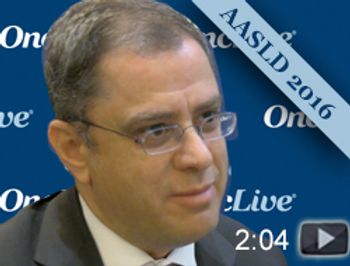
Ghassan K. Abou-Alfa, MD, medical oncologist at Memorial Sloan Kettering Cancer Center, discusses the impact of the phase III RESORCE trial, which demonstrated that regorafenib improved survival over placebo for patients with hepatocellular carcinoma (HCC) that progressed on sorafenib.
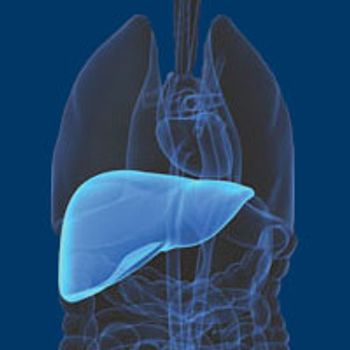
Researchers have uncovered an upper limit in tumor burden after which there is a lower probability of successfully downstaging patients with hepatocellular carcinoma for liver transplantation.

Georgina V. Long, BSc, PhD, MBBS, chair of Melanoma Medical Oncology and Translational Research at the Melanoma Institute of Australia (MIA) and Royal North Shore Hospital, University of Australia, discusses the patients with melanoma who respond best to the combination of dabrafenib plus trametinib.

Multidisciplinary tumor boards led to higher utilization of guideline-recommended curative therapies, which was associated with improved overall survival for patients with early-stage hepatocellular carcinoma.

Immunotherapy continues to revolutionize the field of non–small cell lung cancer, with researchers now focusing on the optimal use of immune agents in the frontline setting.
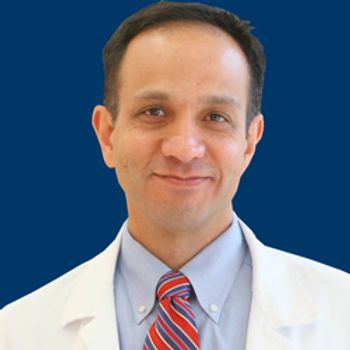
Hossein Borghaei, DO, discuss what lies ahead for immunotherapy in lung cancer, and what changes may be on the horizon for such agents as pembrolizumab (Keytruda), nivolumab (Opdivo), and ipilimumab (Yervoy) in the frontline setting.
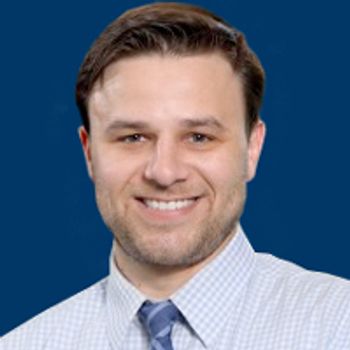
Standard of care for newly diagnosed non-small cell lung cancer is shifting to include PD-L1 expression to determine the appropriate treatment plan, says Matthew D. Hellmann, MD.

Aldo J. Montano-Loza, MD, MSc, PhD, associate professor of medicine, program director of hepatology, gastroenterology rotation supervisor, University of Alberta, discusses the link between high visceral adipose tissue and hepatocellular carcinoma risk in patients with cirrhosis.