

Patients with treatment naive DLBCL experienced high response rates when treated with zilovertamab vedotin plus R-CHP and a RP2D dose of the agent was selected.
Patients with treatment naive DLBCL experienced high response rates when treated with zilovertamab vedotin plus R-CHP and a RP2D dose of the agent was selected.

Treatment with navtemadlin lowered the levels of biomarkers of disease burden in patients with relapsed/refractory myelofibrosis.
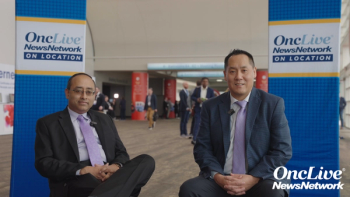
Prithviraj Bose, MD, of The University of Texas MD Anderson Cancer Center, and Javier Pinilla Ibarz, MD, PhD, of Moffitt Cancer Center, sit down with Chandler Park, MD, FACP, to discuss the latest in myeloproliferative neoplasms and chronic lymphocytic leukemia, respectively, from the 2024 ASH Annual Meeting.
David Samuel Dicapua Siegel, MD, discusses preliminary findings from the phase 1/2 CA057-003 trial of mezigdomide in relapsed/refractory multiple myeloma.

Laahn Foster, MD, shares data on daratumumab and lenalidomide vs lenalidomide alone as maintenance in newly diagnosed multiple myeloma after transplant.
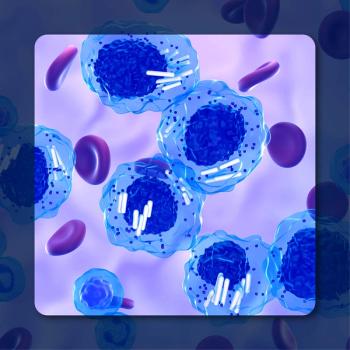
Acalabrutinib plus venetoclax, with or without obinutuzumab, improved PFS over SOC chemoimmunotherapy in patients with treatment-naive CLL.

Liso-cel demonstrated safety and efficacy outcomes that were comparable to those in the pivotal TRANSFORM and PILOT trials in patients with relapsed/refractory large B-cell lymphoma.

Subcutaneous daratumumab reduced the risk for disease progression or death vs active monitoring in intermediate- or high-risk smoldering multiple myeloma.

Social determinants of health have a more pronounced effect on mortality among patients with AML who did not receive transplant vs those who did.
Christine Mauz-Koerholz, MD, PhD, discusses updated results from the phase 2 KEYNOTE-667 trial, which were shared at the 2024 ASH Annual Meeting.

Brexucabtagene autoleucel demonstrated similar efficacy across age groups of patients with relapsed/refractory B-cell acute lymphoblastic leukemia
Treatment with asciminib results in superior efficacy and safety vs investigator-selected TKIs in CML according to updated 96-week data from ASC4FIRST.
Single-agent, subcutaneous epcoritamab generated deep responses in patients with relapsed/refractory chronic lymphocytic leukemia.

Olverembatinib showed potential in patients with chronic-phase chronic myeloid leukemia with prior exposure to first-line second-generation TKIs.
Data from a retrospective analysis showcase the real-world effectiveness of tafasitamab for relapsed/refractory DLBCL in the United States.
FS118, an investigational LAG-3/PD-L1 bispecific antibody, demonstrated an encouraging objective response rate in the relapsed/refractory DLBCL setting.
Marcella Ali Kaddoura, MD, discusses genomic determinants of clinical outcomes in myeloma with t(11;14)(CCND1;IGH) treated with venetoclax.
Ira Zackon, MD, discusses findings on the real-world utilization of bispecific antibodies in the treatment of relapsed/refractory multiple myeloma in the community oncology setting.
Wojciech Jurczak, MD, PhD, discusses the safety and efficacy of nemtabrutinib, a noncovalent reversible BTK inhibitor in relapsed or refractory follicular lymphoma.

Revumenib plus decitabine/cedazuridine and venetoclax produced responses in relapsed/refractory acute myeloid leukemia.

Daratumumab plus VRd improved MRD responses and progression-free survival in transplant-ineligible or -deferred newly diagnosed multiple myeloma.

Revumenib demonstrated meaningful responses in patients with relapsed or refractory KMT2Ar acute leukemia.

Findings showed the potential impact of smoking on disease progression and survival in patients with myelodysplastic syndrome.
Blinatumomab plus chemotherapy significantly improved 3-year DFS rates vs chemotherapy alone in pediatric patients with standard-risk pediatric B-ALL.
Treatment with bicistronic CD19/CD22 CAR T-cell therapy led to high 1-year EFS and OS rates among children with relapsed/refractory B-ALL.
Muhamed Baljevic, MD, FACP and Jorge Cortes, MD, discuss upcoming studies and emerging data being presented at the 2024 ASH Annual Meeting.

Perioperative vorasidenib or ivosidenib demonstrated sustained clinical benefit in patients with predominantly non-enhancing IDH1-mutant diffuse glioma.

Mirdametinib led to sustained, significant, and clinically meaningful improvements in HRQOL in adults and children with NF1-PN.

Priya U. Kumthekar, MD, discusses the use of a novel diagnostic platform to detect CSF tumor cells in patients with leptomeningeal disease.
David Schiff, MD, discusses PFS and OS data for radiation with or without temozolomide in patients with grade II glioma.