
Treatment with asciminib led to a superior 48-week major molecular response rate vs investigator-selected TKIs in patients with Ph-positive chronic phase chronic myeloid leukemia.
Treatment with asciminib led to a superior 48-week major molecular response rate vs investigator-selected TKIs in patients with Ph-positive chronic phase chronic myeloid leukemia.

Lorlatinib extended PFS and improved time to intracranial progression vs crizotinib in patients with ALK-positive non–small cell lung cancer.

Frontline rivoceranib plus camrelizumab continued to show a significant improvement in OS vs sorafenib in advanced unresectable hepatocellular carcinoma.

Sumanta Kumar Pal, MD, FASCO, discusses key biomarker analyses in renal cell carcinoma that will be presented at the 2024 ASCO Annual Meeting.

Most women who attempted to conceive following treatment for stage I to III breast cancer were able to become pregnant at least once.
Patients under the age of 40 who received HPV vaccines were associated with lower rates of HPV-related cancer vs unvaccinated patients.

An artificial intelligence-based navigation tool may be used to call patients who previously missed their colonoscopy appointment with the goal that they will reschedule and attend the new appointment.

Treatment with CEE alone was associated with increased ovarian cancer incidence and mortality rates in postmenopausal women who had undergone hysterectomy.

Eliezer Van Allen, MD, discusses immuno-oncology in relation to precision cancer medicine.

Rebecca Porter, MD, PhD, discusses mirvetuximab soravtansine plus pembrolizumab in serous endometrial cancer and future directions for ADCs in the space.

Stephen V. Liu, MD, discusses studies being presented at the 2024 ASCO Annual Meeting that may provide valuable insights into the management of NSCLC.

S. Vincent Rajkumar, MD, discusses highly anticipated abstracts in multiple myeloma that will be presented at the 2024 ASCO Annual Meeting.

Dose reductions of ribociclib plus an NSAI did not decrease the regimen’s efficacy in patients with HR-positive, HER2-negative early breast cancer.
PF-07220060 plus endocrine therapy was tolerable and generated robust response rates in HR-positive, HER2-negative metastatic breast cancer.

Adding denosumab to neoadjuvant nab-paclitaxel did not improve 5-year invasive disease-free survival rates in patients with early-stage breast cancer.

Capivasertib plus fulvestrant improved time to second progression in patients with pretreated HR-positive, HER2-negative advanced breast cancer.

Trastuzumab deruxtecan demonstrated superior long-term survival and response rates vs treatment of physician’s choice in HER2-positive breast cancer.

Datopotamab deruxtecan was associated with lower rates of high-grade TRAEs vs chemotherapy in the phase 3 TROPION-Breast01 trial.

Vepdegestrant plus palbociclib maintained clinical efficacy and safety in patients with pretreated, advanced ER-positive, HER2-negative breast cancer.

Atezolizumab plus chemotherapy did not improve OS vs chemotherapy alone in select patients with early relapsing triple-negative breast cancer.

Olaparib, durvalumab, and fulvestrant produced a 66.7% 24-week PFS rate in patients with endocrine-resistant, ER-positive, HER2-negative breast cancer.

First-line atezolizumab plus sacituzumab govitecan led to responses in PD-L1–positive locally advanced or metastatic triple-negative breast cancer.

No significant difference in time to treatment was found between White and Black patients with bladder cancer, but there remained a difference in treatment outcomes.

Angela Jia, MD, PhD, discusses the current standing of metastasis-directed radiotherapy in prostate cancer and identifies some lingering questions surrounding the modality.

Robert Wang, MD, discusses the presently limited utility of using molecular imagining with quantitative thresholds in distinguishing RCC from oncocytic renal masses.

Darolutamide uptake in metastatic hormone-sensitive prostate cancer has become routine both in doublet and triplet regimens in community urology practices.

TAR-210 was safe and showed promising clinical activity in patients with FGFR-altered high- and intermediate-risk non–muscle-invasive bladder cancer.
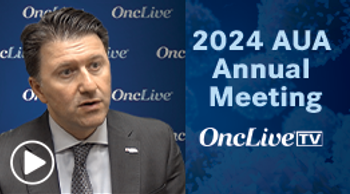
Alexander Kutikov, MD, FACS, discusses treatment options for patients with urothelial cancer requiring cystectomy.
Roger Li, MD, discusses the rationale of the phase 3 MoonRISe-1 trial (NCT06319820).

Nadofaragene firadenovec led to durable antitumor activity in BCG-unresponsive NMIBC either with CIS or papillary disease, according to 5-year data from the phase 3 Study CS-003.