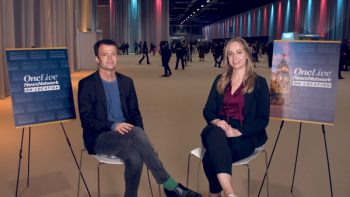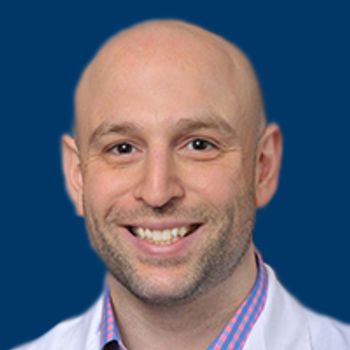
Andrew Ip, MD, delivers a keynote on the role for liquid biopsy and NGS in hematologic malignancies, including the barriers to implementing seamlessly into clinical practice.

Your AI-Trained Oncology Knowledge Connection!


Andrew Ip, MD, delivers a keynote on the role for liquid biopsy and NGS in hematologic malignancies, including the barriers to implementing seamlessly into clinical practice.

Jorge E. Cortes, MD, discusses important questions in acute lymphoblastic leukemia to address, such as improved understanding of the role of allogenic stem cell transplant and the use of tyrosine kinase inhibitor combinations.

Michael S. Leapman, MD, MHS, discusses key factors that influence patient experiences with biopsy-based genomic testing during active surveillance for prostate cancer, and how to best address them in clinical practice.

Petros Grivas, MD, PhD, discusses key baseline characteristics from the real-world PATRIOT II study of first-line avelumab maintenance therapy in metastatic urothelial cancer.

Tumor treating fields concomitant with gemcitabine and nab-paclitaxel is being compared with chemotherapy alone in the frontline treatment of patients with aggressive, locally advanced pancreatic cancer as part of the phase 3 PANOVA-3 trial.

Matthew Rettig, MD, discusses emerging treatment options for patients with stage IV metastatic prostate cancer and highlights key data from clinical trials in the space.

Andrei H. Iagaru, MD, discusses molecular imaging and the use of prostate-specific membrane antigen PET scans in prostate cancer and highlights other key presentations from the 2023 Prost8 Cancer Conference.

Tian Zhang, MD, MHS, discusses findings with single-agent PARP inhibitors within homologous recombination repair–deficient metastatic castration-resistant prostate cancer and describes how these advances pave the way for combining PARP inhibitors with hormonal therapies.

Phillip J. Koo, MD, highlights insights garnered from prostate cancer experts on topics such as radioligands and modern radiopharmaceuticals, which, along with artificial intelligence, have the potential to revolutionize the field.

Tian Zhang, MD, MHS, discusses the use of PARP inhibitor–based combinations in patients with metastatic castration-resistant prostate cancer.

Michael S. Cookson, MD, MMHC, explains how discrepancies in defining biochemical recurrence are sparking a conversation about creating more consistent definitions that could allow for more widely applicable standards of care in prostate cancer .

Nivolumab monotherapy, plus salvage nivolumab plus ipilimumab for progressive disease, resulted in high treatment-free survival rates in patients with previously untreated advanced clear cell renal cell carcinoma.

The baseline characteristics, treatment patterns, and responses to first-line platinum-based chemotherapy for patients with locally advanced or metastatic urothelial carcinoma receiving avelumab maintenance therapy were consistent with responses to usual therapy paradigms in the first-line induction setting.

The efficacy profile for avelumab in patients with locally advanced or metastatic urothelial carcinoma was consistent in a real-world setting with what had been reported in the phase 3 JAVELIN Bladder 100 trial.

Wrapping up their discussion, Loretta J. Nastoupil, MD, and Marc S. Hoffman, MD, look at the use of CAR T-cell therapy for patients with mantle cell lymphoma, a rare subtype of non-Hodgkin’s lymphoma.

High initial complete remission with or without platelet recovery, as well as an improvement in durable complete remission was achieved with the use of Iomab-B-based conditioning prior to allogeneic hematopoietic cell transplantation compared with conventional care in older patients with relapsed/refractory acute myeloid leukemia.

The addition of vedolizumab added to standard prophylaxis following unrelated allogeneic hematopoietic stem cell transplantation was superior to placebo at preventing lower gastrointestinal acute graft-vs-host disease.

Second infusion with tisagenlecleucel after prior tisagenlecleucel infusion produced short durations of minimal residual disease-negative responses in children and young adults with B-cell acute lymphoblastic leukemia.

The combination of nivolumab and cabozantinib produced prolonged progression-free survival and higher response rates compared with sunitinib alone as frontline therapy in patients with advanced renal cell carcinoma, regardless of International Metastatic RCC Database Consortium risk status.

Idecabtagene vicleucel demonstrated a statistically significant and clinically meaningful improvement in progression-free survival and objective response compared with standard of care approaches in patients with triple-class-exposed relapsed/refractory multiple myeloma.

Aristotelis Bamias, MD, discusses key efficacy data from a final analysis of the phase 3 IMvigor130 trial in metastatic urothelial carcinoma.

Laurence Albigès, MD, PhD, discusses the main objective and trial design of the phase 2 CaboPoint study in renal cell carcinoma, as well as key efficacy and safety data reported in an interim analysis of this study.

The combination of frontline cabozantinib, nivolumab, and ipilimumab led to a greater improvement in progression-free survival in patients with intermediate- vs poor-risk advanced renal cell carcinoma.

Patients with multiple myeloma who were treated with autologous stem cell transplantation were found to be utilizing chronic opioids at high rates, in turn leading to worse overall survival outcomes at 6 months of follow-up.

Treatment with cabozantinib elicited responses in patients with locally advanced or metastatic renal cell carcinoma with a clear-cell component who had progressed after first-line treatment with checkpoint inhibitor–based combination therapy.

Treatment with the cellular therapy Orca-T produced an improved graft-vs-host-disease and relapse-free survival rate in patients with high-risk myelodysplastic syndrome or acute leukemias.

First-line atezolizumab plus platinum-based chemotherapy and gemcitabine trended toward improved overall survival compared with placebo plus chemotherapy in patients with locally advanced or metastatic urothelial carcinoma.

At extended follow-up, nivolumab monotherapy showed improved disease-free survival, non-urothelial tract recurrence-free survival, and disease-specific survival vs placebo in patients with resected, high-risk muscle-invasive urothelial carcinoma.

Atezolizumab monotherapy failed to show an improvement in overall survival compared with placebo plus platinum-based chemotherapy and gemcitabine in patients with untreated locally advanced or metastatic urothelial cancer.

Pembrolizumab monotherapy led notable antitumor activity with manageable toxicity in patients with Bacillus Calmette-Guérin–unresponsive, papillary high-risk non–muscle-invasive bladder cancer