

Treatment with trastuzumab deruxtecan generated clinical responses in patients with HER2-low or HER2-positive advanced breast cancer with pathologically confirmed leptomeningeal carcinomatosis.
Treatment with trastuzumab deruxtecan generated clinical responses in patients with HER2-low or HER2-positive advanced breast cancer with pathologically confirmed leptomeningeal carcinomatosis.
Administration of fam-trastuzumab deruxtecan significantly prolonged time-to-next treatment in patients with HER2-positive or HER2-low metastatic breast cancer, including patients who experienced changes in HER2 status during the treatment course.

Precise stratification of hormone receptor–positive, HER2-negative breast cancer using BluePrint and MammaPrint assays revealed comparable 3-year recurrence-free survival rates between Black and White patients despite observed racial differences in the distribution of molecular subtypes.
Jason Jincong Freeman, discusses mortality differences across various racial groups in male patients with stage I, II, or III breast cancer.
Heather A. Parsons, MD, MPH, discusses the correlation between liquid biopsy and HER2 status in breast cancer, according to data from a novel epigenomic platform.

The addition of tucatinib to ado-trastuzumab emtansine (T-DM1) significantly improved progression-free survival vs placebo plus T-DM1 in patients with previously treated HER2-positive metastatic breast cancer, including those with brain metastases.

Pembrolizumab plus olaparib did not improve progression-free or overall survival vs pembrolizumab plus chemotherapy in patients with locally recurrent inoperable or metastatic triple-negative breast cancer who received induction pembrolizumab plus chemotherapy.
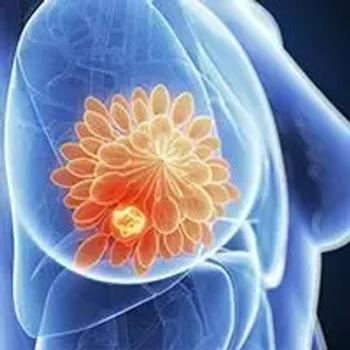
The phase 2 BBI-20231001 trial evaluating the Boltbody immune-stimulating antibody conjugate BDC-1001 with or without pertuzumab in patients with HER2-positive breast adenocarcinoma is open for enrollment in the United States, France, Italy, and Spain.

The addition of pembrolizumab to neoadjuvant chemotherapy followed by adjuvant pembrolizumab plus endocrine therapy improved pathologic complete responses in key subsets of patients with early-stage, high-risk, estrogen receptor–positive/HER2-negative breast cancer enrolled in the phase 3 KEYNOTE-756 trial.

Capivasertib plus fulvestrant did not negatively affect quality of life compared with placebo plus fulvestrant in patients with aromatase inhibitor–resistant, hormone receptor–positive, HER2-negative advanced breast cancer.

Utilizing an artificial intelligence–assisted workflow to detect sentinel lymph node metastases in patients with breast cancer was deemed safe according to current diagnostic standards and reduced the need for immunohistochemistry and its associated financial burden.

The combination of ribociclib and endocrine therapy led to an improvement in progression-free survival and overall survival vs placebo plus endocrine therapy in patients with hormone receptor-positive/HER2-negative advanced breast cancer across all age groups.

Shridar Ganesan, MD, PhD, discusses the current limitations and advantages of leveraging circulating-tumor DNA to detect minimal residual disease in patients with cancer, as well as how ctDNA assays may address mechanisms of resistance in clinical practice.

M. Hamza Habib, MD, JD, MBA, FACP, FAAHPM, FRCPI, MRCP, discusses the development of novel technology-based strategies to improve palliative cancer for patients with cancer.

Patrick Boland, MD, discusses the development of therapeutic strategies targeting KRAS G12C mutations in colorectal cancer.

Haejin In, MD, MPH, MBA, FACS, FSSO, discusses the increased incidence of gastric cancer in minority patient populations, highlighting the disparities that lead to these patient outcomes in the United States.
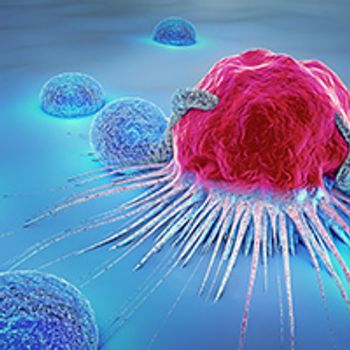
The HER2-directed CAR-macrophage therapy CT-0508 displayed a tolerable safety profile and signs of antitumor activity in patients with a variety of solid tumors.

Brett L. Ecker, MD, discusses the evaluation of the microbiome in pancreatic cancer, highlighting remaining questions and future steps for research.

Kevin Kalinsky, MD, MS, discusses key takeaways from the 2023 Bridging the Gaps in Breast Cancer meeting, highlighting questions that continue to persist in the treatment of breast cancer.

Reva K Basho, MD, discusses the use of antibody-drug conjugates across the spectrum of breast cancer subtypes at the 2023 Bridging the Gaps in Breast Cancer meeting.

Alison K. Conlin, MD, discusses the importance of targeting central nervous system metastases in the treatment of patients with breast cancer, highlighting ongoing treatment investigations for this population.

Terry P. Mamounas, MD, discusses surgical de-escalation strategies in the treatment of patients with HER2-positive breast cancer.

Aditya Bardia, MD, MPH, discusses the continued investigation of oral selective estrogen receptor degraders in patients with estrogen receptor-positive, HER2-negative metastatic breast cancer.

Hossein Borghaei, DO, MS, discusses the importance of determining the most suitable treatment for patients with non–small cell lung cancer through the use of biomarker testing.
Stephen V. Liu, MD, discusses the benefits of conducting biomarker testing for patients with advanced non–small cell lung cancer and highlights the importance of waiting for the results before selecting a targeted treatment.
Stephen V. Liu, MD, discusses strategies for treatment and disease management for patients with advanced non–small cell lung cancer who are awaiting biomarker test results.

Ongoing research evaluating combination therapies for the frontline treatment of patients with EGFR-mutated non–small cell lung cancer could help improve survival outcomes for this patient population.

Nicholas C. Rohs, MD, delves into the details of the case study a patient who had a lung cancer relapse detected following a referral to a dermatologist due to pityriasis rubra pilaris.

Richard Lazzaro, MD, FACS, discusses the advantages of standard low-dose computed tomography scans in lung cancer screening in high-risk individuals, as well as future opportunities to integrate biomarker-based assays into screening protocols to improve early detection.

Bruce Haffty, MD, MS, discusses the significance of technical and biological advancements in approaches to radiotherapy, and how they engendered the de-escalation of radiotherapy for select patients with breast cancer.