

Loretta J. Nastoupil, MD, discusses the safety and efficacy data from the phase 2 TRANSCEND FL trial evaluating lisocabtagene maraleucel in patients with relapsed/refractory follicular lymphoma.
Loretta J. Nastoupil, MD, discusses the safety and efficacy data from the phase 2 TRANSCEND FL trial evaluating lisocabtagene maraleucel in patients with relapsed/refractory follicular lymphoma.
Brad S. Kahl, MD, discusses the potential for BTK inhibitors to shift the frontline treatment setting in mantle cell lymphoma.
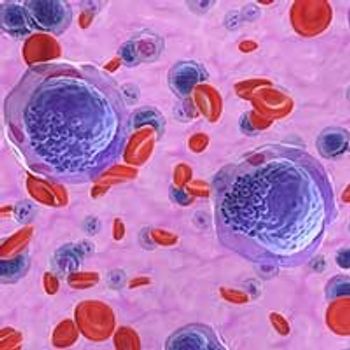
Loncastuximab tesirine-lpyl plus rituximab demonstrated promising antitumor activity and consistent safety signals in patients with relapsed/refractory diffuse large B-cell lymphoma.
The addition of quizartinib to induction and consolidation chemotherapy, followed by single-agent quizartinib for up to 36 cycles, improved survival outcomes vs placebo in patients with FLT3 ITD–mutated, newly diagnosed acute myeloid leukemia.
Without a plethora of randomized and historic data to compare treatments, selection and sequencing strategies for patients with relapsed/refractory multiple myeloma must balance a multitude of factors, including adverse effect profiles, disease resistance mechanisms, and more.

Developing an optimal treatment strategy for patients with accelerated- or blast-phase myeloproliferative neoplasms requires consideration of a patient's ability to tolerate intensive induction therapy, their eligibility for allogeneic stem cell transplant.
Minimal residual disease negativity sustained for 6 months or longer with ciltacabtagene autoleucel prolonged duration of response and progression-free survival compared with minimal residual disease negativity sustained for less than 6 months in patients with heavily pretreated relapsed/refractory multiple myeloma.

Investigating the addition of novel agents to cytotoxic chemotherapy may help prevent relapse in patients with T-cell acute lymphoblastic leukemia by bolstering the efficacy of these standard frontline therapies.
A retrospective analysis of the Surveillance, Epidemiology, and End Results database emphasized the potential impact of specific socio-racial factors, such as race, sex, and age, on survival outcomes in patients with primary myelofibrosis.

Yi Lin, MD, PhD, discusses the patient characteristic for those with relapsed/refractory multiple myeloma who experienced sustained minimal residual disease negativity following treatment with ciltacabtagene autoleucel during the phase 1/2 CARTITUDE-1 trial.

No difference in relapse-free survival or non–relapse mortality was seen with intensive vs non-intensive consolidation chemotherapy regimens prior to allogeneic hematopoietic stem cell transplantation in elderly patients over the age of 60 with acute myeloid leukemia in first complete remission.
Hagop M. Kantarjian, MD, discusses the predictive value of early landmark cytogenetic or molecular responses to ponatinib in heavily pretreated patients with chronic-phase chronic myeloid leukemia.
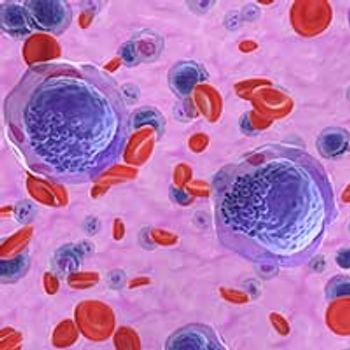
The implementation of treatment with later-generation BCR-ABL1 TKIs like ponatinib and chemotherapy-free combination regimens with blinatumomab plus a TKI have greatly pushed the treatment armamentarium of Philadelphia chromosome–positive acute lymphoblastic leukemia forward.

Current research suggests that circulating tumor DNA may have prognostic value when conducted at the conclusion of treatment in large B-cell lymphoma, indicating that minimal residual disease detection using ctDNA assessments such as PhaseEd-Seq could address imitations associated with the use of computed tomography or positron emission tomography/CT scans at this stage.
Early cytogenetic and molecular responses achieved with ponatinib was significantly linked with better long-term progression-free survival and overall survival in patients with highly resistant, pretreated chronic-phase chronic myeloid leukemia.

Findings from a systematic review of several observational studies reveal that increasing disparities in survival outcomes within hematologic malignancies can be primarily attributed to 5 social determinants of health: lack of access to health insurance, treatment at a non-academic facility, low income or education level, and unmarried status.
The phase 3 COMMANDS trial investigating the use of luspatercept in patients with myelodysplastic syndrome who had not received an erythropoiesis-stimulating agent and were red blood cell transfusion dependent achieved its primary end point of superiority over treatment with an erythropoiesis-stimulating agent.
The prediction of relapse following treatment with allogeneic stem cell transplant in patients with acute myeloid leukemia in first complete remission remains an unmet need due to limitations attributed to measurable residual disease detection methods.
The addition of the TKI ponatinib to reduced-intensity chemotherapy led to an increase in minimal residual disease-negative complete remission rate at the end of induction compared with imatinib among patients with Philadelphia chromosome-positive acute lymphoblastic leukemia.
Varying outcomes were observed among adolescent and young adult patients with Philadelphia chromosome-negative acute lymphoblastic leukemia who were treated with pediatric-inspired protocols vs adult chemotherapy regimens.

The safety profiles and the high response rates observed with bispecific antibodies in patients with B-cell lymphoma suggest that these agents possess the potential to revolutionize the management of these diseases, particularly follicular lymphoma.

Ravi Salgia, MD, PhD, discusses clinical gaps in the development of novel targets in lung cancer that were discussed at the 2023 Bridging the Gaps in Lung Cancer meeting, as well as potential strategies or steps to address these gaps in clinical practice.

Barbara Pistilli, MD, discusses the mechanism of action of novel ADCs, the ways in which ADC targets in breast cancer can change over time, and how future research may pave the way for individualized treatment with this class of agents.

Erminia Massarelli, MD, PhD, MS, discusses unmet needs in the treatment of patients with small cell lung cancer that were discussed at the 2023 Bridging the Gaps in Lung Cancer meeting, as well as how further research may help mitigate these needs.

The natural killer T-cell agonist IMM60 may overcome resistance to PD-1 inhibitors when combined with immunotherapy in patients with melanoma and non–small cell lung cancer.
Harry Gill, MD, discusses the importance of offering patients with APL an entirely oral treatment regimen, key efficacy findings from this trial, and the tolerability of this regimen.

Tony S.K. Mok, MD, BMSc, FRCPC, FASCO, provides perspective on the use of tumor treating fields in lung cancer, the use of anti–PD-L1 inhibitors approved in China, and the potential impact of the microbiome on response with immunotherapy.

Edward S. Kim, MD, MBA, discusses the importance of the Bridging the Gaps in Lung Cancer meeting, and expands on the importance of educating clinicians on how to best implement new developments within lung cancer to address these gaps in care.
Solange Peters, MD, PhD, discusses the successes and shortcomings of immunotherapy in patients with lung cancer; current challenges with defining resistance mechanisms to immunotherapy in this disease; and the potential applications of circulating tumor DNA monitoring in the early and metastatic disease settings.
Alex Herrera, MD, discussed key data from the SWOG S1826 trial and other important research in hematologic malignancies presented at the 2023 ASCO Annual Meeting.