

Tony S.K. Mok, MD, BMSc, FRCPC, FASCO, highlights novel partners and potential new approaches for immunotherapy-based regimens for the treatment of patients with non–small cell lung cancer.
Tony S.K. Mok, MD, BMSc, FRCPC, FASCO, highlights novel partners and potential new approaches for immunotherapy-based regimens for the treatment of patients with non–small cell lung cancer.

Antibody-drug conjugates represent one of the most exciting areas of ongoing development for the treatment of patients with non–small cell lung cancer and small cell lung cancer.

Lyudmila A. Bazhenova, MD, discusses potential combination strategies with KRAS G12C inhibitors in advanced non–small cell lung cancer.
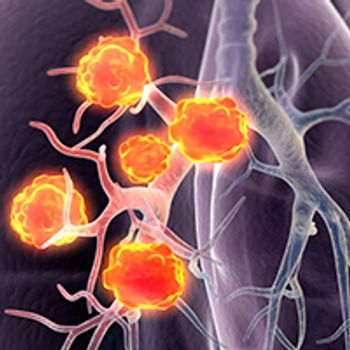
Deborah B. Doroshow, MD, PhD, discusses the efficacy and toxicity profiles of pralsetinib and selpercatinib and how they influence treatment selection for patients with RET fusion–positive non–small cell lung cancer, and provides insight on several areas of ongoing or potential research in lung cancer.
Hatim Husain, MD, discusses developments in ALK-positive non–small cell lung cancer.
Edgardo Santos, MD, FACP, FCCP, discusses testing and treatment in NRG1 fusion–positive non–small cell lung cancer.
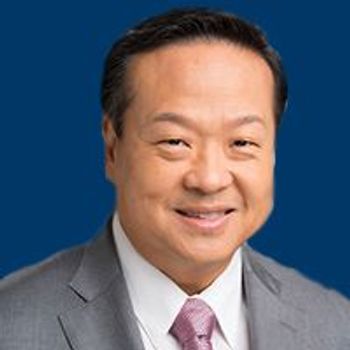
Edward S. Kim, MD, MBA, discusses necessary changes that would make cancer research more accessible to patients in community settings, multidisciplinary efforts that should take place at every step of the trial design and implementation process, and how future clinical trials should be intentional about the patient demographics.
Immunotherapy administered alone or in combination with chemotherapy has become the standard of care across advanced non–small cell lung cancer in several settings, with continued effort devoted to further enhancing and improving upon these treatments.

New agents in development including ABBV-011 and BL-B01D1 seek to turn the tides of relapsed extensive-stage small cell lung cancer; although chemoimmunotherapy has earned its right as the frontline standard of care, both classes of agents have yet to demonstrate benefit in second or later lines.
Solange Peters, MD, PhD, discusses current understandings of mechanisms of resistance to immunotherapy in non–small cell lung cancer.
Edward S. Kim, MD, MBA, discusses the importance of improving representation in clinical trials.

Positive event-free survival data from the phase 3 AEGEAN, NEOTORCH, and KEYNOTE-671 trials add further evidence to the benefit of perioperative immunotherapy in early-stage non–small cell lung cancer but have yet to show clear biomarkers of response beyond PD-L1.

Overall survival analysis from ADAURA bolsters the already impressive disease-free survival data for patients with EGFR-mutant non–small cell lung cancer.

Pasi A. Jänne, MD, PhD, details common EGFR mutations in NSCLC, the importance of testing for EGFR mutations in all patients, the clinical implications of overall survival data for adjuvant osimertinib from the ADAURA trial, and ongoing trials examining combination therapies to potentially improve upon the use of single-agent osimertinib.

Selinexor maintenance generated an improvement in progression-free survival compared with placebo in patients with TP53 wild-type advanced or recurrent endometrial cancer who responded to first-line chemotherapy.

As new data emerge in breast cancer, stepping back from the updates and shedding light on the standard practices as they exist in the clinic are crucial approaches to management of the disease.
The investigation of treatment regimens featuring antibody-drug conjugates or radiotherapeutics are part of the ongoing wave of research in renal cell carcinoma.

The combination of lenvatinib and pembrolizumab continued to show clinical activity in patients with metastatic renal cell carcinoma, including in subsets of patients who had received or were naïve to checkpoint inhibitors.

Higher levels of baseline TCR clonality in peripheral blood mononuclear cells (PBMCs) and baseline IgG1 fraction in PBMCs and tumor tissue were identified in an institutional cohort of samples from patient with metastatic renal cell carcinoma.

Olaparib monotherapy elicited responses with favorable tolerability in patients with renal cell carcinoma whose tumors harbored BAP1 or other DNA repair gene mutations, according to data from the interim analysis of the phase 2 ORCHID trial presented during the 2023 Kidney Cancer Research Summit.

Although the use of immunotherapy treatment approaches continues to become more prevalent in advanced renal cell carcinoma, high-level evidence showing benefit of sequential administration of these agents are limited.

Determining the appropriate front-line treatment pathway for patients with clear cell renal cell carcinoma may not always align with risk stratification features.

Chung-Han Lee, MD, PhD, discusses the final results of the phase 2 cohort of a phase 1/2 trial evaluating lenvatinib plus pembrolizumab in patients with pretreated metastatic clear cell renal cell carcinoma.

Yasser Mohamed Ali Ged, MBBS, discusses the phase 2 ORCHID trial (NCT03786796).
Toni K. Choueiri, MD, discusses ongoing trials in advanced renal cell carcinoma.

David F. McDermott, MD, discusses the randomized phase 2 LITESPARK-024 trial (NCT05468697).

Neoadjuvant immunotherapy–based combinations led to reductions in tumor size and pathologic necrosis at the time of cytoreductive nephrectomy in patients with metastatic renal cell carcinoma.
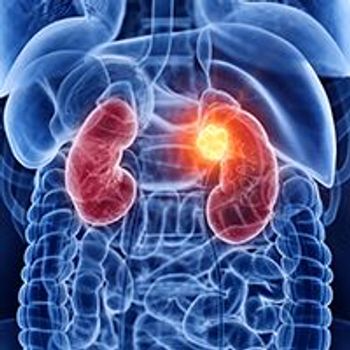
Adjuvant pembrolizumab prolonged disease-free survival and distant metastasis-free survival compared with placebo across The University of California Los Angeles Integrated Staging System–categorized subgroups of patients with clear cell renal cell carcinoma.

Lenvatinib plus pembrolizumab demonstrated improved overall response rates compared with sunitinib monotherapy in treatment-naïve patients with advanced renal cell carcinoma regardless of risk status or PD-L1 expression.

The tumor-immune evasion cell networks in clear cell renal cell carcinoma may be captured and classified using imaging mass cytometry, an orthogonal approach with the potential for increased cost-efffectiveness and accuracy compared with single-cell RNA sequencing.