
Lanreotide autogel/depot administered at 120 mg every 28 days may be an appropriate treatment for patients with advanced bronchopulmonary neuroendocrine tumors.
Lanreotide autogel/depot administered at 120 mg every 28 days may be an appropriate treatment for patients with advanced bronchopulmonary neuroendocrine tumors.
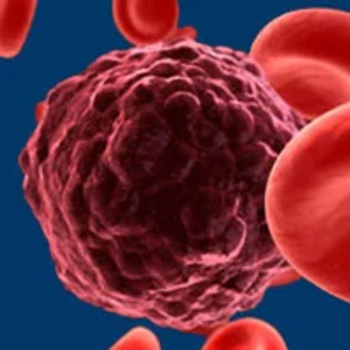
The FDA cleared an investigational new drug application for a phase 1b clinical trial examining DSP107, a first-in-class anti-CD47 fusion protein, in patients with acute myeloid leukemia and myelodysplastic syndrome.
Wasif M. Saif, MD, discusses the evolving role of PARP inhibitors and anticipated trends for research in pancreatic cancer.
John R. Zalcberg, MBBS, PhD, discusses the INVICTUS trial examining ripretinib in patients with heavily pretreated gastrointestinal stromal tumors, the impact of the agent on the paradigm, and ongoing efforts to provide additional options to this population.

The 9th Annual Giants of Cancer Care® awards ceremony was a featured event at the 39th Annual CFS®: Chemotherapy Foundation Symposium Innovative Cancer Therapy for Tomorrow®, hosted by Physicians’ Education Resource® LLC.
The combination of nivolumab and low-dose ipilimumab resulted in a deep and durable clinical benefit when used in the first-line treatment of patients with microsatellite instability–high and mismatch repair deficient metastatic colorectal cancer.
The small molecule drug conjugate PEN-221 was generally well tolerated and elicited significant clinical benefit in patients with pretreated gastrointestinal neuroendocrine tumors.

Following a national search, Roswell Park Comprehensive Cancer Center has promoted Emese Zsiros, MD, PhD, FACOG, to lead its Department of Gynecologic Oncology.
Several breakthroughs in recent years have rapidly shifted the treatment landscape for advanced HCC.

The FDA has granted an orphan drug designation to the HER2-targeted natural killer cell engager therapy, DF1001, as a potential therapeutic option for patients with esophageal cancer.
The FDA has greenlit an investigation new drug application to expand the ongoing phase 1/2 ABILITY trial, which is evaluating the beta-only IL-2 superagonist MDNA11 in patients with solid tumors, to clinical trial sites in the United States.
Alice Indini, MD, discusses the ongoing PULSAR trial examining pembrolizumab plus lenvatinib as a novel therapeutic option for patients with classic Kaposi sarcoma.

The FDA granted a fast track designation to the selective AXL inhibitor bemcentinib in combination with a PD-1/PD-L1 agent in the treatment of patients with STK11-altered advanced or metastatic non–small cell lung cancer without actionable mutations.
Sameek Roychowdhury, MD, PhD, discusses the efficacy and safety data reported with infigratinib in FGFR2-positive cholangiocarcinoma, nuances to treatment with the agent, and ongoing research efforts to further improve outcomes in this population.

Katherine Poruk, MD, a board-certified and fellowship-trained surgical oncologist and researcher, is the latest addition to the Cancer Treatment Centers of America®, Atlanta, physician team.
An increased understanding of the biology of non–small cell lung cancer has led to a significant increase in therapeutic options for patients.
Gastrointestinal cancer is increasingly viewed through a multidisciplinary lens, and the 2021 International Society of Gastrointestinal Oncology Annual Meeting produced intriguing developments in the armamentarium.
The use of androgen deprivation therapy and prolongation of adjuvant ADT to at least 18 months in conjunction with definitive radiotherapy provides clinically meaningful benefit for patients with localized prostate cancer, irrespective of radiation dose.
Although next-generation TKIs have helped to overcome resistance in EGFR-mutated non–small cell lung cancer, a more complete understanding of resistance mechanisms may lead to the ability to overcome resistance to the next generation of these drugs.
The era of direct inhibitors to treat KRAS G12C-mutated non-small cell lung cancer has arrived in the clinic.
Mark G. Kris, MD, discusses recent progress in non–small cell lung cancer and small cell lung cancer, efforts being made to address unmet needs in these paradigms, and ongoing research that is generating excitement.
The addition of nivolumab to chemotherapy resulted in a statistically significant and clinically meaningful improvement in event-free survival vs chemotherapy alone, when administered prior to surgery in patients with resectable stage IB to IIIA non–small cell lung cancer.
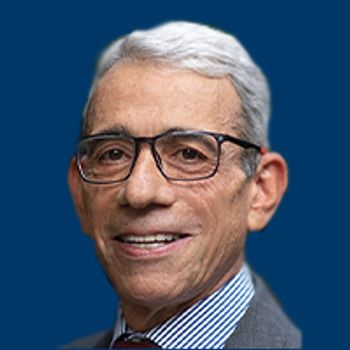
Eric P. Winer, MD, will be appointed next director of Yale Cancer Center and physician-in-chief of Smilow Cancer Hospital at Yale New Haven, effective February 1, 2022.
The addition of immune checkpoint inhibitors and targeted therapies has paved the way for advances in the adjuvant and met-astatic setting with recent data from clinical trials demonstrating significant improvements in overall survival for patients with advanced melanoma.

The treatment algorithm in metastatic colorectal cancer has gone from accounting only for the sidedness of the primary tumor, performance status, volume of disease, and potential resectability to also include the genetics of the tumor, particularly for patients in need of second-line therapy.
Chemoimmunotherapy is the new frontline standard of care for patients with small cell lung cancer, and other novel agents, such as, bispecific T-cell engagers are in the pipeline and gaining momentum for those who experience disease progression.
Nagashree Seetharamu, MD, MBBS, discusses the importance of early and frequent genomic testing in patients with lung cancer, as well as remaining challenges faced in clinical practice and efforts being made to overcome them.
Ripretinib did not significantly improve progression-free survival over sunitinib in patients with gastrointestinal stromal tumor who previously received imatinib, missing the primary end point of the phase 3 INTRIGUE trial.

CAR T-cell therapy and bispecific antibodies for T-cell redirection are 2 recent immune strategies developed in the treatment of multiple melanoma.

Unsurprisingly, the use of cannabis in patients with cancer appears to be increasing as more and more states are adopting cannabis legislation, both for medical and adult use.