

New research led by Yale Cancer Center reveals young women with breast cancer and a family history of the disease, but no high penetrance germline mutations, have an increased number of rare germline variants in cancer relevant genes

Your AI-Trained Oncology Knowledge Connection!
New research led by Yale Cancer Center reveals young women with breast cancer and a family history of the disease, but no high penetrance germline mutations, have an increased number of rare germline variants in cancer relevant genes

Adjuvant treatment with pembrolizumab led to a statistically significant and clinically meaningful improvement in disease-free survival vs placebo in patients with stage IB to IIIA non–small cell lung cancer following resection, regardless of PD-L1 expression, meeting 1 of the dual primary end points of the phase 3 KEYNOTE-091 trial.

It is difficult to know where exactly to begin this commentary regarding the FDA approval to permit commer-cial sales of the Alzheimer disease drug aducanumab-avwa.
Black men with localized prostate cancer who had been treated with definitive radiotherapy had a lower likelihood of experiencing biochemical recurrence, distant metastasis, and prostate cancer–specific mortality compared with White men despite having more aggressive disease.
David Spigel, MD, discussed the focus of each presentation, which centered on immunotherapy vs chemoimmunotherapy in the frontline metastatic setting, the surgical perspective of treatment in early-stage NSCLC, best practices for molecular testing, and EGFR- and KRAS-targeted therapies for patients with advanced disease.
One of the reverberating themes of 2021 that should carry into 2022 is the importance of molecular testing.

No dose-limiting toxicities have been reported in the first cohort of patients with relapsed clear cell sarcoma who received the combination of devimistat and hydroxychloroquine in the dose-escalation portion of the ongoing phase 1/2 APOLLO 613 trial.

CA-4948 monotherapy was found to have preliminary activity with acceptable safety and tolerability in patients with relapsed or refractory acute myeloid leukemia or high-risk myelodysplastic syndromes, according to updated data from an ongoing phase 1/2 trial.

Kim A. Reiss Binder, MD, discusses the rationale behind the first-in-human study of adenovirally transduced anti-HER2 CAR-Ms and where the research will be heading in the future.
The FolRα-targeted antibody-drug conjugate STRO-002 was found to elicit encouraging responses in heavily pretreated patients with advanced ovarian cancer.

Zangmeister Cancer Center, an American Oncology Network, LLC partner practice, is pleased to announce the opening of its new cancer center in Grove City, Ohio at 5500 N. Meadows Drive, Suite 230.
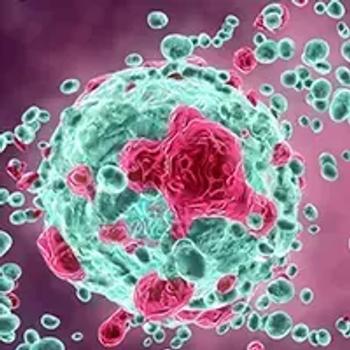
The combination of pembrolizumab and pepinemab showcased encouraging safety and tolerability when given as first-line treatment in patients with advanced, recurrent, or metastatic head and neck squamous cell carcinoma.

The immune checkpoint TIM-3 is shaping up to be a viable target for designing therapies for patients with non–small cell lung cancer and other malignancies.

Charu Aggarwal, MD, MPH, shares how to navigate the nuances of molecular testing in non–small cell lung cancer, key developments made in the treatment of those whose tumors harbor actionable mutations, and the role of PD-L1 expression in informing clinical decisions.

CLN-081 continued to produce encouraging, durable responses with favorable safety and tolerability in patients with non–small cell lung cancer whose tumors harbor EGFR exon 20 insertion mutations and who have progressed on or after prior therapy.
Melissa Geller, MD, MS, and colleagues discuss key clinical trials that have changed the landscapes of HER2-positive breast cancer and triple-negative breast cancer, the role of first- and second-line maintenance therapy in ovarian cancer, and key updates in cervical and endometrial cancers.
The FDA has accepted an investigational new drug application for the photoimmunotherapy treatment, RM-1995, for patients with advanced cutaneous squamous cell carcinoma or head and neck squamous cell carcinoma.

Molecular testing is an established and essential precursor to treatment for patients with non–small cell lung cancer based on the volume of actionable targets, such as EGFR and KRAS G12C mutations, as well as PD-L1 status.
Adjuvant chemotherapy with modified fluoropyrimidine, leucovorin, and oxaliplatin improved disease-free survival among patients with liver-only metastases from colorectal cancer who were treated with hepatectomy.

New grants from the U.S. Department of Defense and American Cancer Society will fund work by two Roswell Park Comprehensive Cancer Center teams focused on understanding and eliminating prostate cancer health disparities.

The idea to provide wearable devices to my patients first came to me 6 years ago at a charity spinning event.

The combination of tucatinib, trastuzumab, and capecitabine continued to produce an improvement in overall survival compared with trastuzumab/capecitabine alone in patients with HER2-positive metastatic breast cancer who had stable or active brain metastases.

Mirati Therapeutics and Verastem Oncology have entered a nonexclusive clinical collaboration to evaluate the combination of adagrasib plus VS-6766 for patients with non–small cell lung cancer harboring a KRAS G12C mutation who have progressed on a KRAS G12C inhibitor in a phase 1/2 trial.
Ian E. Krop, MD, PhD, discusses highlights from 2021 in HER2-positive breast cancer and expectations for future research in 2022.

The FDA granted a breakthrough therapy designation to telisotuzumab vedotin for use in patients with advanced or metastatic EGFR wild-type, nonsquamous non–small cell lung cancer who have high levels of c-Met overexpression and whose disease has progressed on, or after, platinum-based chemotherapy.

In patients with advanced uterine leiomyosarcoma whose tumors harbor a BRCA-like phenotype, the combination of olaparib with temozolomide could represent a new standard of care.
The long-acting antibody combination of tixagevimab co-packaged with cilgavimab has been granted emergency use authorization in the United States for the pre-exposure prophylaxis of COVID-19.

Sara M. Tolaney, MD, MPH, discusses the mechanism of action that makes bispecific antibodies an intriguing approach in managing HER2-positive breast cancer, efficacy data with zanidatamab that were presented during the 2021 SABCS, and her thoughts on sequencing strategies with bispecific antibodies among other agents in the paradigm.
Early efficacy data in a phase 1 trial of the agent now known as nivolumab were not enough to convince Julie Brahmer, MD, MSc, about the potential of the investigative agent.

Driven by the anticipated launches of 5 pipeline agents and the label expansions of currently marketed drugs, theHER2-postive breast cancer market is expected to experience low growth from 2020 to 2030.