

Out-of-pocket costs for patients with ovarian cancer who have been treated with PARP inhibitors are generally low, according to recent study results from a single institution.

Your AI-Trained Oncology Knowledge Connection!
Out-of-pocket costs for patients with ovarian cancer who have been treated with PARP inhibitors are generally low, according to recent study results from a single institution.
Investigation into a novel oncolytic adenovirus as a treatment option for patients with colorectal cancer and other cancers with liver metastasis is underway.
The US Oncology Network, the largest organization of its kind dedicated to advancing local cancer care and better patient outcomes, continues to expand its reach into local communities while broadening its surgical expertise with the addition of physicians from Texas Colon & Rectal Specialists, a large colorectal practice in North Texas, as a part of Texas Oncology, a practice in The Network.

A simplified geriatric assessment offers a validated objective tool to assess fitness status and should be considered the new Elderly Prognostic Index standard to predict overall survival in older patients with diffuse large B-cell lymphoma.
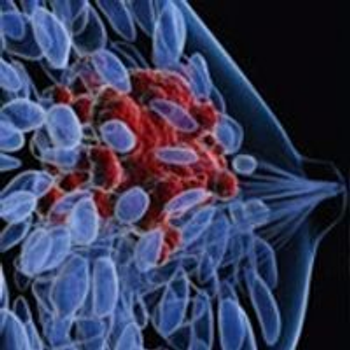
Although endocrine therapies have revolutionized the treatment of breast cancers driven by the estrogen receptor, the development of resistance remains a major challenge that limits long-term remission with currently available drugs.

The multitumor-associated antigen-specific T-cell product MT-401 is under investigation as a potential treatment option for patients with acute myeloid leukemia following allogeneic stem cell transplant in both the adjuvant and active disease settings.

Neal D. Shore, MD, FACS, discusses future research directions with darolutamide for the treatment of patients with prostate cancer.
The HER3-directed antibody-drug conjugate patritumab deruxtecan is under exploration in the treatment of patients with EGFR-mutated, metastatic or locally advanced non–small cell lung cancer who had previously received a TKI and platinum-based chemotherapy.
The European Medicines Agency’s Committee for Medicinal Products for Human Use has adopted a positive opinion recommending the approval of single-agent duvelisib for the treatment of adult patients with relapsed or refractory chronic lymphocytic leukemia following at least 2 prior therapies, and follicular lymphoma that is refractory to at least 2 prior systemic treatments.
The FDA has granted a breakthrough therapy designation to the FGFR inhibitor futibatinib for the treatment of patients with previously treated, locally advanced or metastatic cholangiocarcinoma that harbors FGFR2 gene rearrangements, including fusions.
Digital media, now more than ever, has become a primary platform for communication, and in 2020, the production of the OncLive® podcast, OncLive On Air™, was put into overdrive to bring practicing oncologists exclusive biweekly interviews, discussions, and insights from leading experts in cancer care.
A new drug application has been submitted to the FDA and the China National Medical Products Administration for the use of plinabulin plus granulocyte colony-stimulating factor for the prevention of chemotherapy-induced neutropenia.

CAR T-cell therapies are now incorporated into National Comprehensive Cancer Network guidelines as a recommended third-line strategy in this setting, with the most recent addition being lisocabtagene maraleucel.

The combination of navitoclax and ruxolitinib simultaneously inhibits 2 key mechanisms that promote myelofibrosis, resulting in an improvement in symptom control and positive changes in response biomarkers in patients with high-risk disease.

Mehrdad Abedi, MD, discusses the challenges of standard transplant, how Orca-T could overcome some of those limitations, and the potential future of transplant in hematologic malignancies.

Douglas B. Johnson, MD, discusses the risks and benefits associated with anti–PD-1 therapy in patients with stage III resected melanoma.

The FDA has approved isatuximab in combination with carfilzomib and dexamethasone for the treatment of adult patients with relapsed or refractory multiple myeloma who have previously received 1 to 3 lines of therapy.
HEPZATO KIT has demonstrated statistically significant benefit compared to best alternative care in patients with liver-dominant metastatic ocular melanoma, according to preliminary results from the phase 3 FOCUS trial.

A biologics license application has been submitted to the FDA for the approval of F-627 as a treatment option for patients with breast cancer who have chemotherapy-induced neutropenia.
The rolling submission of a new drug application has been completed and submitted to the FDA to support the approval of pacritinib as a treatment for patients with myelofibrosis and severe thrombocytopenia defined as having platelet counts less than 50 x 109/L.

The first-in-class N-terminal domain androgen receptor inhibitor EPI-7386 is being examined in combination with enzalutamide in patients with metastatic castration-resistant prostate cancer as part of a phase 1/2 trial.

A prospective, multicenter, observational USOPTIVAL study has been initiated in the United States to examine an investigational cell-free DNA blood test to detect advanced adenoma and colorectal cancer.

The European Commission has approved the combination of cabozantinib plus nivolumab for use as a frontline treatment in patients with advanced renal cell carcinoma.

The Canada Foundation for Innovation has awarded C$5,187,685 to the Canadian Cancer Trials Group at Queen’s University in Kingston, Ontario, Canada, to fund the infrastructure for a new research platform to coordinate the development of new cancer cell therapies.

Because the current standard-of-care modalities have significant limitations, there has been a great interest in pursuing immunotherapeutic strategies for glioblastoma.

From delayed diagnoses, to the emergence of telemedicine, to managing the increased emotional burden experienced by patients and healthcare professionals alike, the community has been forced to approach cancer care in ways they never had before in light of the COVID-19 pandemic.
The FDA has approved a revised label for daunorubicin/cytarabine (Vyxeos) to include the treatment of pediatric patients aged 1 year and older with newly diagnosed, therapy-related acute myeloid leukemia (AML) or AML with myelodysplasia-related changes.

Robert Wenham, MD, MS, FACOG, FACS, discusses future directions with antibody-drug conjugates in the treatment of patients with ovarian cancer.
The FDA has granted a fast track designation for annamycin as a treatment for patients with soft tissue sarcoma lung metastases.

Narjust Duma, MD, has been named as the new associate director of the Cancer Care Equity Program at the Dana-Farber Cancer Institute, as well as an assistant professor of medicine at Harvard Medical School.