

Adam M. Brufsky, MD, PhD, discusses the updated findings from the ExteNET trial, the role of TKIs in treating patients with brain metastases, and unanswered questions that future research efforts should aim to address.

Your AI-Trained Oncology Knowledge Connection!
Adam M. Brufsky, MD, PhD, discusses the updated findings from the ExteNET trial, the role of TKIs in treating patients with brain metastases, and unanswered questions that future research efforts should aim to address.

January 5th, 2021 -The FDA has granted a fast track designation to the investigational antibody-drug conjugate ARX788 for use as a monotherapy in the treatment of patients with advanced or metastatic HER2-positive breast cancer who have previously received 1 or more HER2-targeted regimens in the metastatic setting.

January 5, 2020 - A new drug application has been submitted to Japan’s Ministry of Health, Labour, and Welfare for the oncolytic virus teserpaturev for use in the treatment of patients with malignant glioma.
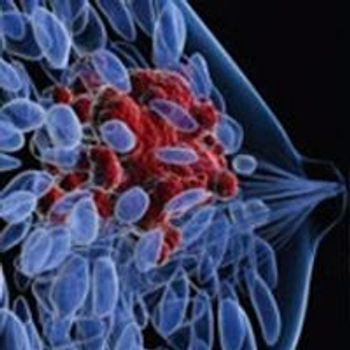
January 5, 2021 – The FDA has granted permission for a phase 1 study evaluating ON 123300, a first-in-class multikinase CDK4/6 inhibitor to proceed under the agent’s investigational new drug application.

January 5th, 2021 - The FDA has granted a breakthrough therapy designation to the anti-TIGIT therapy tiragolumab for use in combination with atezolizumab in the frontline treatment of patients with metastatic non–small cell lung cancer whose tumors are PD-L1 high and do not harbor any EGFR or ALK aberrations.

Clinical risk continues to guide treatment decisions in early-stage HER2-positive breast cancer. The presence of brain metastases has become a driving force for treatment selection in the metastatic setting.

January 5th, 2021 - Ripretinib is under investigation as a second-line treatment in patients with gastrointestinal stromal tumor versus sunitinib in the phase 3 INTRIGUE trial, which recently completed its target enrollment.

Sarah Sammons, MD, discusses the clinical significance of ESR1 mutations in HR-positive, HER2-negative breast cancer, how to determine the optimal timing to perform genetic sequencing for ESR1 mutations, and emerging agents, like lasofoxifene, that are poised to transform the paradigm for patients who harbor these mutations.

January 5, 2020 - Boehringer Ingelheim will add to its cancer cell-directed therapies portfolio with the acquisition of NBE-Therapeutics, the developer of NBE-002, an anti-ROR1 antibody-drug conjugate.
January 4th, 2021 - A marketing authorization application has been submitted to the European Medicines Agency for the approval of amivantamab as a treatment for patients with metastatic non–small cell lung cancer that harbors EGFR exon 20 insertion mutations who have experienced disease progression following platinum-based chemotherapy.

January 4, 2021 - A marketing authorization application has been submitted to the European Medicines Agency for the use of sotorasib in patients with KRAS G12C–mutated locally advanced or metastatic non–small cell lung cancer.

January 4, 2021 — The pivotal phase 2/3 RINGSIDE trial, which is evaluating the potent, selective oral gamma secretase inhibitor AL102, has been permitted to proceed and can potentially be used as a registrational study for adolescent and adult patients with desmoid tumors.
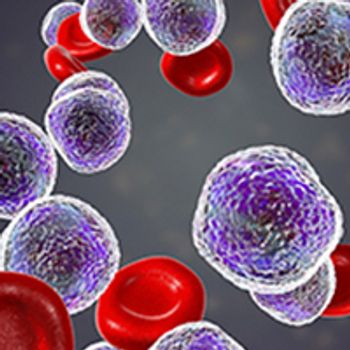
January 4, 2021 - The biologics license application for the CAR T-cell product lisocabtagene maraleucel in adult patients with relapsed/refractory large B-cell lymphoma following at least 2 previous therapies continues to be under regulatory review by the FDA, and a decision on the application has not yet been reached.

Julie Gralow, MD, discusses exciting research in HER2-positive breast cancer.
Rami Manochakian, MD, underscores the importance of looking for actionable alterations in lung cancer, barriers to genetic testing, and what is needed to overcome them.
The combination of telaglenastat plus cabozantinib failed to result in a significant improvement in progression-free survival in patients with advanced or metastatic renal cell carcinoma.

Ian E. Krop, MD, PhD, highlights the impact of the pivotal KATHERINE trial on the adjuvant treatment of patients with early-stage HER2-positive breast cancer and other recent advances that are moving the needle forward.

Leonard G. Gomella, MD, discusses the growing importance of genetic testing in prostate cancer.

Bryon Lee, MD, PhD, discusses recent advances in surgical technique, approach, and perioperative care have made radical cystectomy significantly less morbid for patients with muscle invasive bladder cancer.

Joyce A. O’Shaughnessy, MD, highlights some of the most exciting updates in triple-negative breast cancer that emerged in 2020.

Neelima Vidula, MD, discusses the current and future utility of PARP inhibitors in triple-negative breast cancer, the promise of sacituzumab govitecan, and the need for germline genetic testing.

Joseph Kim, MD, discusses pivotal trials in metastatic prostate cancer, the rise of PARP inhibitors and novel combinations under investigation, and the promise of relugolix.

Omar Mian, MD, PhD, discusses selective bladder preservation in patients with muscle-invasive bladder cancer, biomarkers of response, and the utilization of hypofractionated radiation vs traditional approaches in this population.

Phuong L. Mai, MD, discusses the situations in which genetic testing should be considered and the importance of bridging awareness and access within oncology.

December 30, 2020 - Bristol Myers Squibb has withdrawn nivolumab from the US market for the treatment of patients with small cell lung cancer who have experienced disease progression after a platinum-based chemotherapy and at least 1 other line of therapy.

Balazs Halmos, MD, discussed differences in the management of early- vs late-stage non–small cell lung cancer and the erasure of single-modality therapy across the field.

December 30, 2020 - The China National Medical Products Administration has approved surufatinib for the treatment of patients with non-pancreatic neuroendocrine tumors.

Alex A. Adjei, MD, PhD, discusses frontline treatment options for patients with advanced non–small cell lung cancer, as well as some of the nuances of selecting the optimal therapy.

Debra Patt, MD, highlights recent advancements and novel approaches in triple-negative breast cancer.

Shilpa Gupta, MD, discusses ongoing research with immunotherapy in bladder cancer, where research efforts should focus with regard to biomarkers, and other emerging agents that might move the needle forward.